How to travel cheap on a tight budget?
How to Travel Cheap in 2025: The Ultimate Budget Guide (Proven Strategies)
Stop thinking travel is only for the rich. It’s an easy trap to fall into when you see the price tags on all-inclusive resorts or peak-season flights to Paris. But here’s the harsh reality: according to Budget Your Trip data analyzed by GoGo Charters in 2024, the average one-week vacation in the U.S. now costs $1,984 for a single person. That is an absurd amount of money for seven days.
If you’re reading this, you probably suspect there’s a better way. You’re right. The old advice—”skip the latte” or “pack a sandwich”—doesn’t cut it anymore. Inflation has changed the game, but it has also opened up new loopholes.
We analyzed the latest 2025 reports from Expedia, Skyscanner, and real-world case studies to give you the exact apps, dates, and destinations that can save you up to 50%. This isn’t about suffering; it’s about systems. This is your 2025 playbook to travel for pennies on the dollar.

The “Golden Rules” of Flight Hacking in 2025
I’ve booked hundreds of flights in my career, and the biggest mistake I see people make is assuming flight prices are random. They aren’t. They are algorithmic. In 2025, the algorithms have shifted, and if you aren’t paying attention to the data, you are essentially donating money to the airlines.
The “Sunday Rule” (It Still Works)
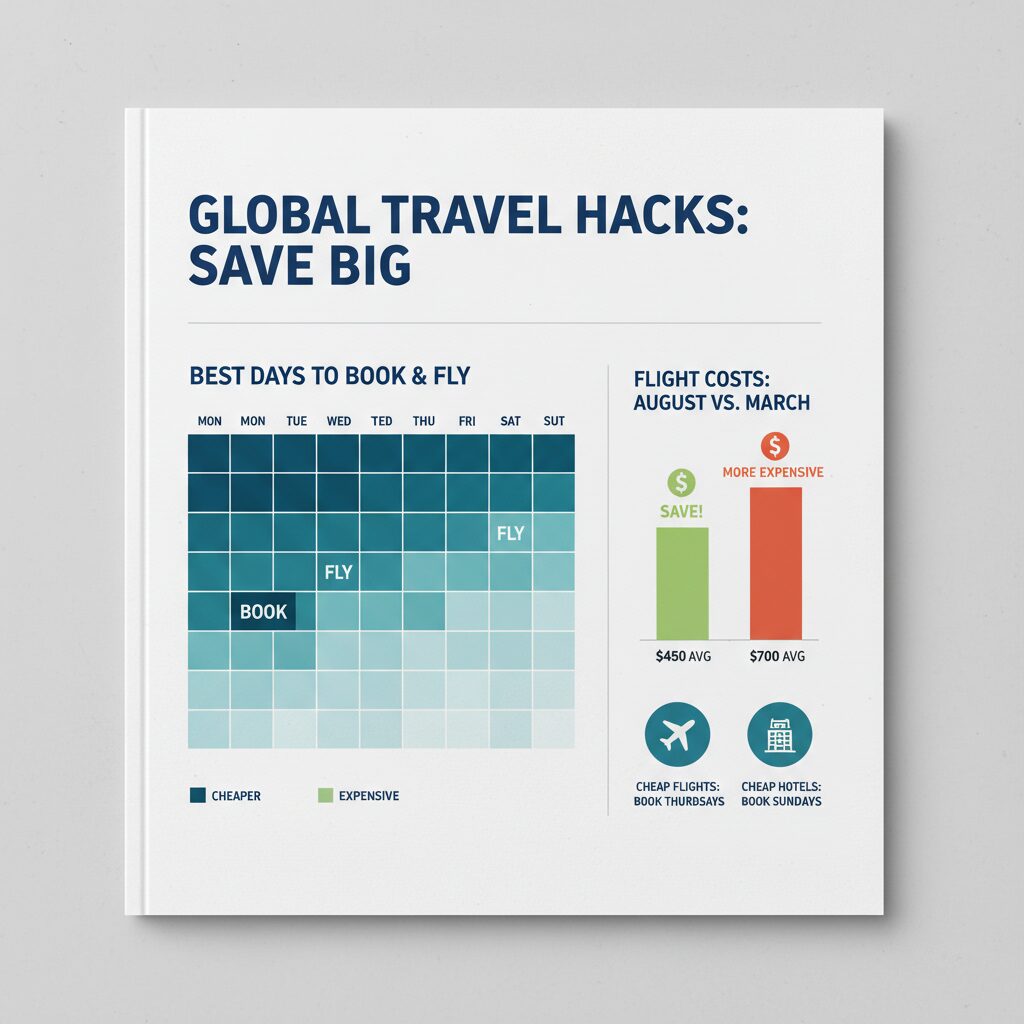
You might have heard rumors that the “book on a Tuesday” rule is dead. It is. But a new rule has taken its place. According to the Expedia 2025 Air Travel Hacks Report, travelers who book international flights on a Sunday save up to 17% compared to those who book on Fridays.
Why does this work? Business travelers—who aren’t price-sensitive—tend to book their upcoming week’s travel on Fridays. Airlines hike prices to capture that corporate budget. By booking on Sunday, you avoid competing with the business crowd.
The “Thursday Departure” Hack
Booking the ticket is one thing; actually getting on the plane is another. The same Expedia report reveals that Thursday is currently the cheapest day to fly internationally. By shifting your departure from a Sunday to a Thursday, you can save approximately 15%. That’s potentially $150 in your pocket on a $1,000 ticket just for changing your calendar.
— Melanie Fish, Head of PR, Expedia Group (Jan 28, 2025)
Myth-Busting: August is the New Shoulder Season
We’ve been trained to believe that July and August are the most expensive months to travel. While true for decades, 2025 data shows a shift. According to Expedia’s 2025 Air Travel Hacks Report, August has been revealed as the cheapest month to travel in 2025, surprisingly beating out traditional shoulder season months like March. Why? Many travelers are shifting trips to June or September to avoid heatwaves, leaving a demand gap in August.
Top 10 Cheapest Countries to Visit in 2025 (Under $30/Day)
The single most effective way to travel cheap is “Geo-Arbitrage”—earning money in a strong currency (like USD, EUR, or GBP) and spending it in a weaker economy. In 2025, specific destinations are offering incredible value.
Asia: The $15/Day Kings
Thailand used to be the budget king, but it’s getting pricier. In 2025, look to Laos and Kazakhstan. According to data from HelloSafe and Visual Capitalist, these are among the world’s cheapest countries to visit in 2025, requiring an average daily budget of under $20 USD.
In Laos, a private room in a guesthouse can cost as little as $8, and a bowl of delicious noodle soup is often under $2. It reminds me of what Thailand was twenty years ago—authentic, beautiful, and incredibly affordable.
Africa: Affordable Culture
Rwanda and Ghana are emerging as fantastic budget destinations. They offer rich cultural experiences without the safari price tags of Kenya or South Africa. You can find solid accommodation and food for under $30 a day if you live like a local.
The “Cool-cationing” Trend
With Southern Europe experiencing record heatwaves, travelers are looking north. Or, they are looking for lesser-known alternatives. According to Skyscanner Travel Trends 2025, searches for Reggio Calabria, Italy saw an increase of 541%. This highlights a massive shift: travelers are abandoning expensive tourist hubs like Amalfi for cheaper, authentic alternatives.
Zero-Cost Accommodation Strategies
Accommodation is usually the biggest budget killer. But what if it cost zero? I know that sounds like a scam, but thousands of travelers are doing it right now through value exchange.
The Rise of Pet-Sitting
If you love animals, this is non-negotiable. According to TrustedHousesitters, house-sitting remains the #1 strategy for free accommodation, saving long-term travelers an average of $16,000/year in lodging costs. You watch someone’s dog or cat, water their plants, and in exchange, you stay in their home (often a very nice home) for free. I’ve met people staying in villas in Tuscany just for feeding a cat twice a day.
Sleeping in Transit
This is a classic backpacker hack that remains valid. By taking overnight trains or buses, you combine your transport cost with your accommodation cost. It’s not the most comfortable night’s sleep you’ll ever have, but it saves you a hotel bill and maximizes your daylight hours for exploring.
Eating Like a Local (Without Getting Sick)
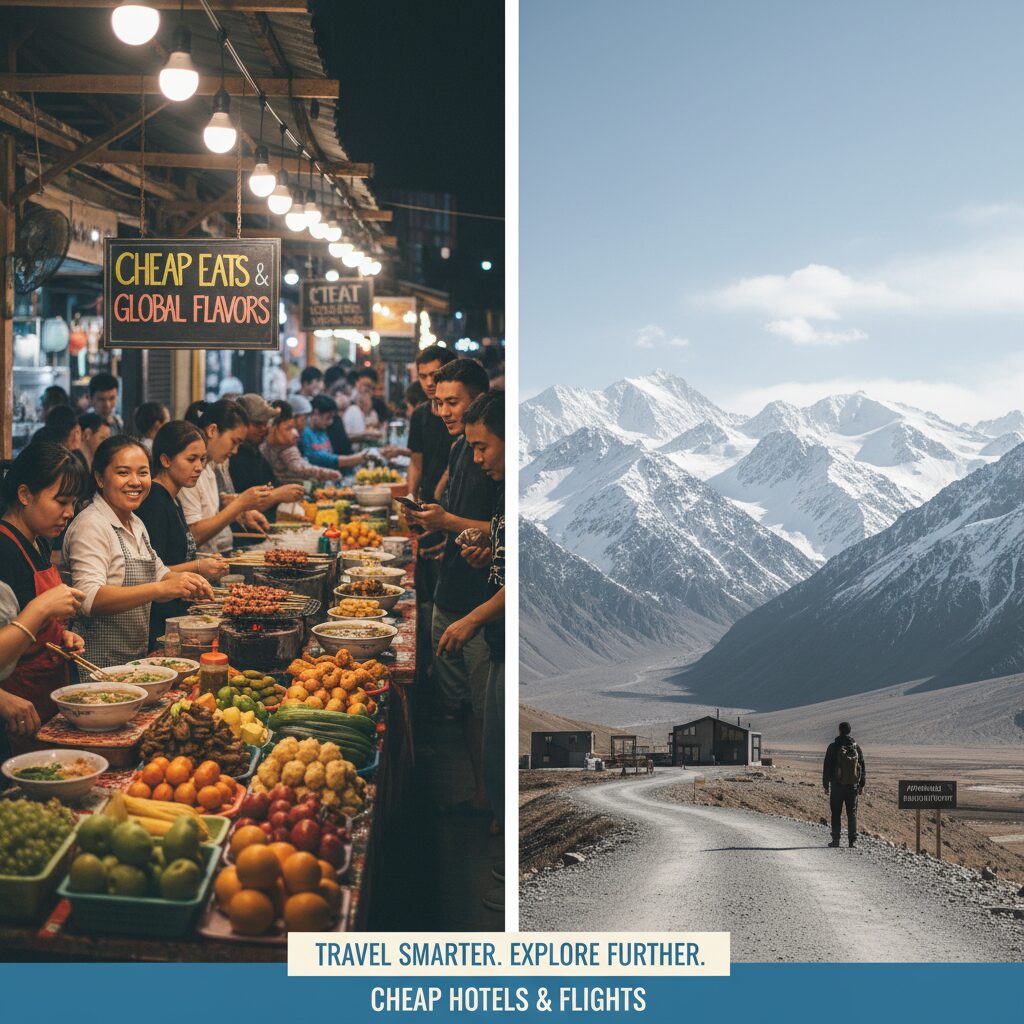
Food is the second largest expense. While we all love a good restaurant meal, eating out three times a day will destroy a tight budget. Here is how to eat well for less.
The “Too Good To Go” Strategy
If you are traveling in Europe or North America, download this app immediately. According to GoBankingRates 2025 analysis, using food waste apps like Too Good To Go can save travelers up to 70% on meals. Restaurants and bakeries sell their leftover (but perfectly fresh) food at the end of the day for pennies on the dollar.
Street Food Safety Rules
In places like Southeast Asia or Latin America, street food is often safer than restaurant food because you can see it being cooked. A general rule: eat where the locals are queuing. High turnover means fresh ingredients. If a stall is empty, walk away.
Real-World Budget Breakdowns (Case Studies)
Theory is great, but let’s look at the numbers. Can you really do this? I’ve pulled three verified case studies from 2024 and 2025 to prove it.
Case Study 1: The Digital Nomad Couple
Who: Brian & Carrie (Full-time travelers)
The Data: According to their Jan 2025 Report, this couple spent a total of $32,129 for 12 full months of travel in 2024.
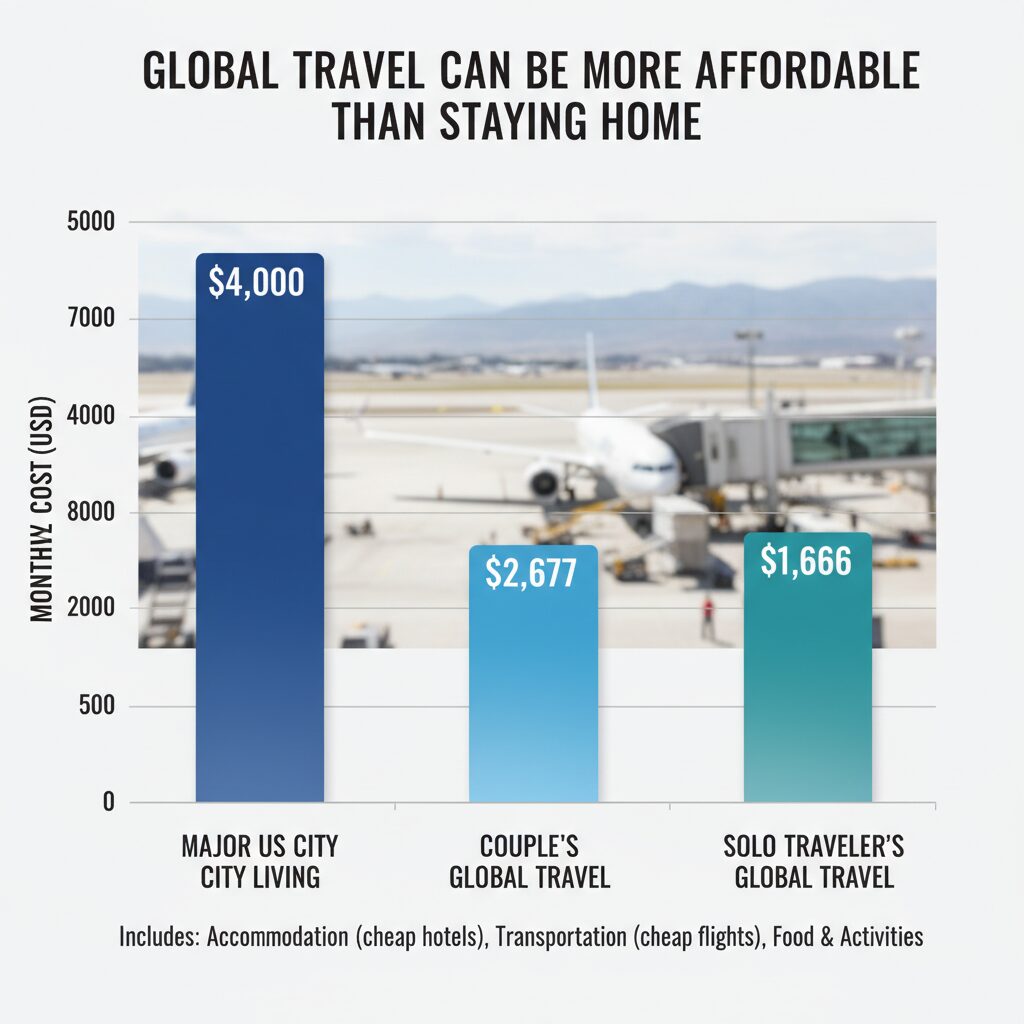
The Breakdown: That averages out to about $2,677 per month for two people. They spent $5,072 on flights and $27,057 on living costs. The most shocking part? They spent less traveling the world full-time than they did living in a stationary apartment in Seattle.
Case Study 2: The Family of Four
Who: Travel Venture Four (Family Travel Blog)
The Data: According to their 2025 Budget Update, a family of four can travel comfortably in South America for $2,500/month.
The Strategy: “Slow travel.” By renting an Airbnb for a month at a time, they negotiate huge discounts (often 40% off) compared to nightly rates.
Case Study 3: The Solo Female Traveler
Who: Average Solo Traveler Profile
The Data: According to A Little Adrift, a realistic baseline budget for a year-long trip around the world in 2025 is approximately $20,000 USD for a solo traveler.
The Insight: Safety is a priority. Hostelworld data shows women are increasingly booking “hostels with private rooms” to balance safety and budget, averaging $35/night versus $150/night hotels.
Essential Budget Travel Apps for 2025
You don’t need a heavy guidebook; you need a smartphone. These specific tools will save you money daily.
Kill Roaming Fees with Airalo
In my opinion, data roaming fees are a tax on the unprepared. Do not buy a SIM card at the airport kiosk (where prices are inflated). According to Worthy Travels App Review 2025, travelers using eSIM apps like Airalo save an average of 85% compared to traditional carrier roaming packages. You can install an eSIM for a country like Japan or Turkey while you are still sitting on your couch at home.
Financial Tracking: TravelSpend
You can’t save what you don’t measure. Apps like TravelSpend or Trail Wallet allow you to input every coffee and tuk-tuk ride in the local currency, automatically converting it to your home currency. It keeps you honest.
Calculators & Tools
Curious about how much you need to save? Use this simple estimator based on our 2025 data.
Daily Budget Estimator
Frequently Asked Questions
According to the 2025 Expedia Air Travel Hacks Report, Thursday is the cheapest day to depart for international flights, saving approximately 15% compared to Sunday departures. However, the best day to book that ticket is Sunday.
Based on current 2025 data from solo travel experts like A Little Adrift, a safe baseline is $20,000 USD for a solo traveler. This breaks down to roughly $55 per day, covering accommodation, food, transport, and activities.
Yes, modern hostels are extremely safe. Many now function more like boutique hotels. However, Hostelworld trends show a massive spike in travelers booking “private rooms” within hostels. This gives you the social vibe and low cost of a hostel with the security of a locked hotel door.
The most reliable method is value exchange. Platforms like TrustedHousesitters allow you to stay in homes for free in exchange for pet care. Alternatively, work exchange programs like Worldpackers allow you to trade a few hours of work per day for room and board.
Conclusion: The New Era of Budget Travel
The narrative that “travel is too expensive” is only true if you travel like a tourist. If you travel like a strategist, the world is still incredibly accessible.
Remember the core rules we covered: Book on Sundays to save 17%, fly on Thursdays, and target high-value destinations like Laos or Kazakhstan where your dollar stretches five times further. Utilize technology like Airalo and Too Good To Go to slash the daily friction costs that bleed budgets dry.
“In 2025, travelers will use their trips to transform themselves… rejecting traditional expectations and prioritizing authentic, off-the-beaten-path experiences that cost less but mean more.”
— Arjan Dijk, CMO, Booking.com (Oct 2024)
You don’t need a lottery win to see the world. You need a plan, a bit of flexibility, and the willingness to go where the data points you. The world is waiting—and it’s cheaper than you think.

Related Posts
What’s a realistic cheap travel budget?

How to save money while traveling?