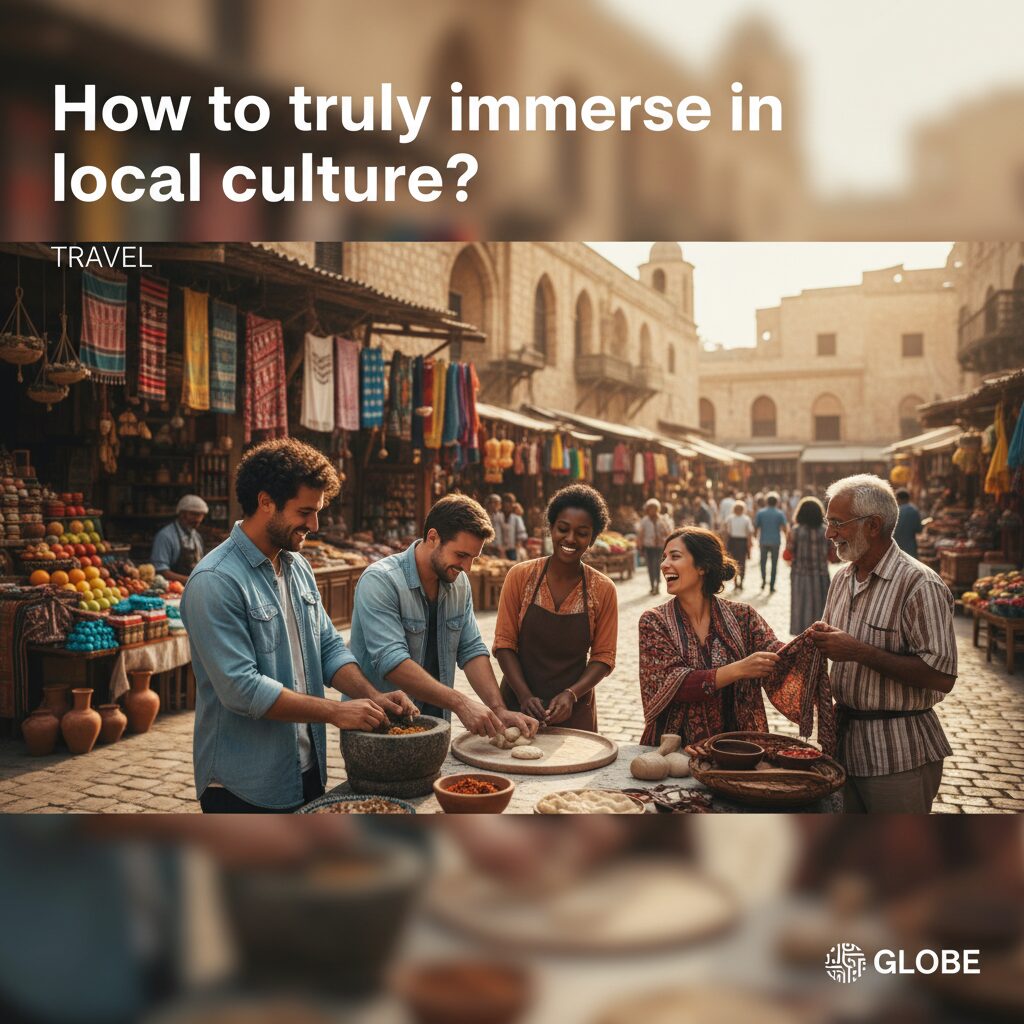
How to truly immerse in local culture?
How to Truly Immerse in Local Culture: The 2025 Guide to Authentic Travel
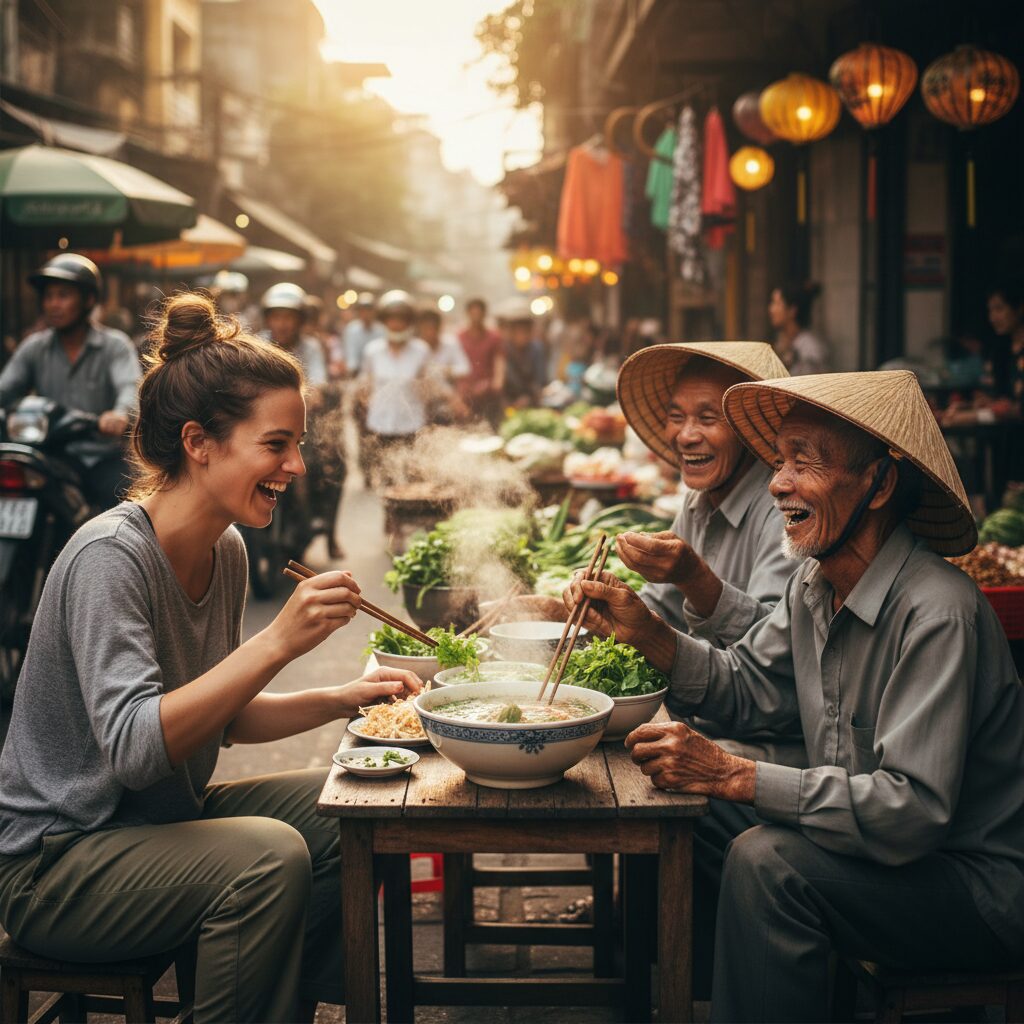
You’ve been there before. You spent months planning the “perfect” trip, researching top-rated restaurants and “must-see” landmarks. Yet, three days into your vacation, you find yourself standing in a line of tourists, eating food that tastes suspiciously like what you get at home, feeling like an outsider looking in.
You aren’t alone in this frustration. In fact, according to Hilton’s 2025 Trends Report, 74% of travelers specifically want recommendations from locals rather than generic guidebooks, yet most struggle to bridge the gap between “tourist” and “guest.”
In my decade of working in the travel industry, I’ve seen a massive shift. We are moving away from the “bucket list” era of checking boxes and into the era of Slow Travel and deep connection. We don’t just want to see a place; we want to feel it. We want to understand the rhythm of daily life, the nuance of the language, and the taste of a meal cooked in a family kitchen, not a hotel buffet.
But how do you actually do it? How do you move beyond the surface level without being intrusive? This guide isn’t about “finding yourself.” It’s about losing your tourist shell. We will explore the psychology of cultural humility, the specific digital tools dominating 2025, and the emerging trends like “Noctourism” that are redefining authentic travel.
The Psychology of Immersion: Adopting the “Guest” Mindset
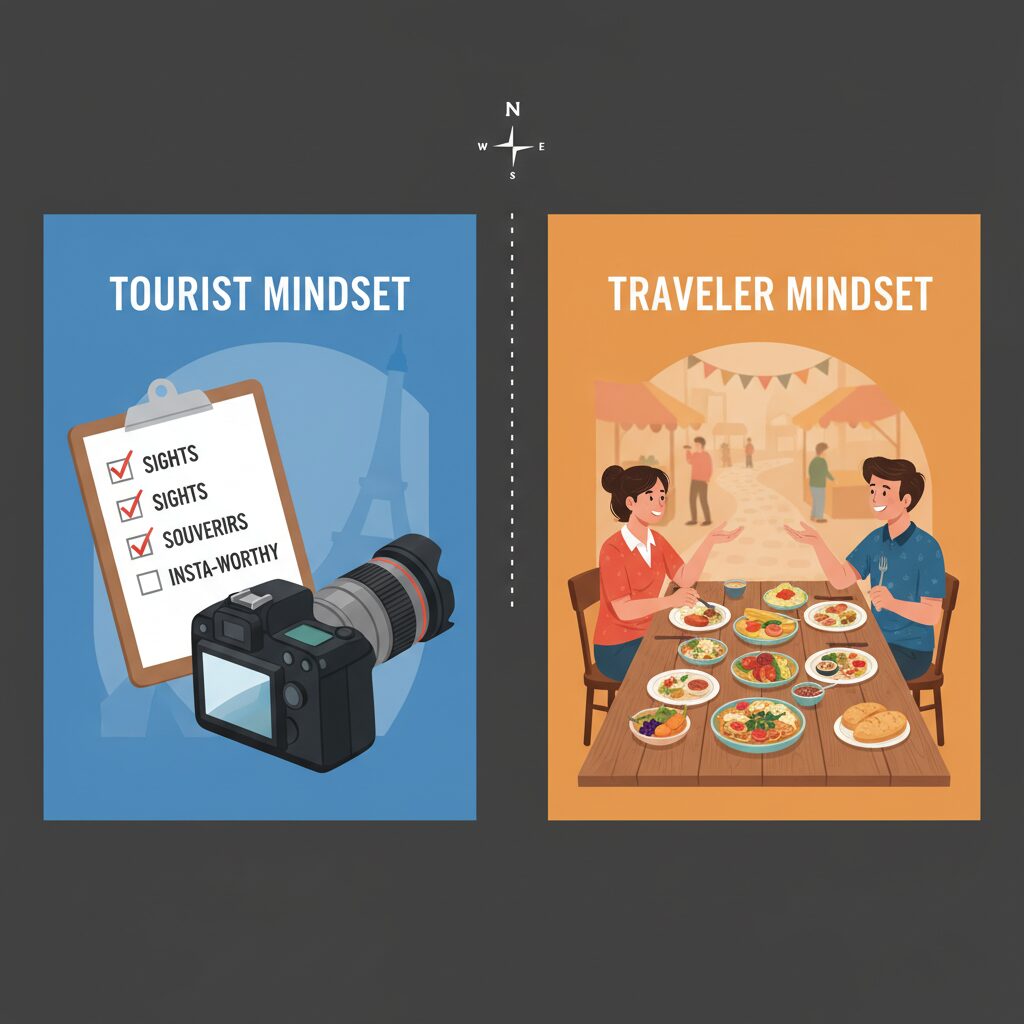
True immersion doesn’t start with a plane ticket; it starts in the mind. The biggest mistake I see well-meaning travelers make is approaching a new culture with an “observer” mindset—treating the destination like a living museum where the locals are the exhibits. This is a barrier to connection.
To truly break through, we must shift from cultural competence (knowing facts about a culture) to cultural humility.
Expert Insight: As noted in an October 2024 article by Dr. Jessica Koehler in Psychology Today, travel has the power to inspire awe, which is linked to “shifts in perspective, cognitive flexibility, and increased well-being.” However, this only happens when we drop our defenses and admit we are there to learn, not just to watch.
Cultural humility involves recognizing that your way of living isn’t the “standard” version. When you approach a local with genuine curiosity rather than judgment, the dynamic changes. You stop being a consumer of their culture and become a participant in it.
Breaking the “Observer” Barrier
I remember my first trip to Japan. I was terrified of making a mistake, so I stayed quiet. I was an observer. It wasn’t until I learned to laugh at my own clumsiness and ask for help that the walls came down. Vulnerability is a universal language.
Try this psychological shift: Instead of thinking, “I need to take a photo of this moment,” ask yourself, “What does this moment feel like?” Put the camera away for the first 24 hours of your trip. It forces you to interact rather than document.
The “Slow Travel” Framework
In 2025, speed is the enemy of immersion. The “5 cities in 10 days” itinerary is a recipe for burnout and superficiality. The industry data is clear: we are slowing down.
of travelers now leave unplanned time in their trips specifically to experience local culture.
According to Hilton’s 2025 Trends Report, one in four leisure travelers is planning to explore the world via “Slow Travel”—immersing in a destination for an extended time. Why? because you cannot build a relationship with a place in 48 hours.
The “Unplanned Time” Rule
I recommend the 70/30 rule. Plan 30% of your trip (accommodation and one major activity per day), but leave 70% completely open. This creates the space for serendipity. It allows you to accept a sudden invitation to tea or to spend three hours in a park watching a local cricket match.
Finding Your “Third Place”
Sociologists describe the “Third Place” as a social surrounding separate from the two usual social environments of home and the workplace. In travel, your hotel is the “first place,” and tourist sites are the “second.”
To immerse, you need to find the local Third Place. This could be:
- A barbershop or hair salon (great for conversation).
- A public library or community center.
- A local park at 6:00 PM (when residents walk their dogs).
- A neighborhood coffee shop (not a chain).
By returning to the same coffee shop three days in a row, you cease to be a transient tourist and become a “regular.” That familiarity is where conversations start.
Digital Tools for Real Connection (The 2025 Toolkit)
Gone are the days when connecting with locals meant awkwardly approaching strangers on the street. However, most travelers are using the wrong apps. Tinder is for dating, and Facebook groups can be hit-or-miss. In 2025, specific platforms are leading the charge for authentic connection.
Based on current user trends, here are the essential apps you should have installed:
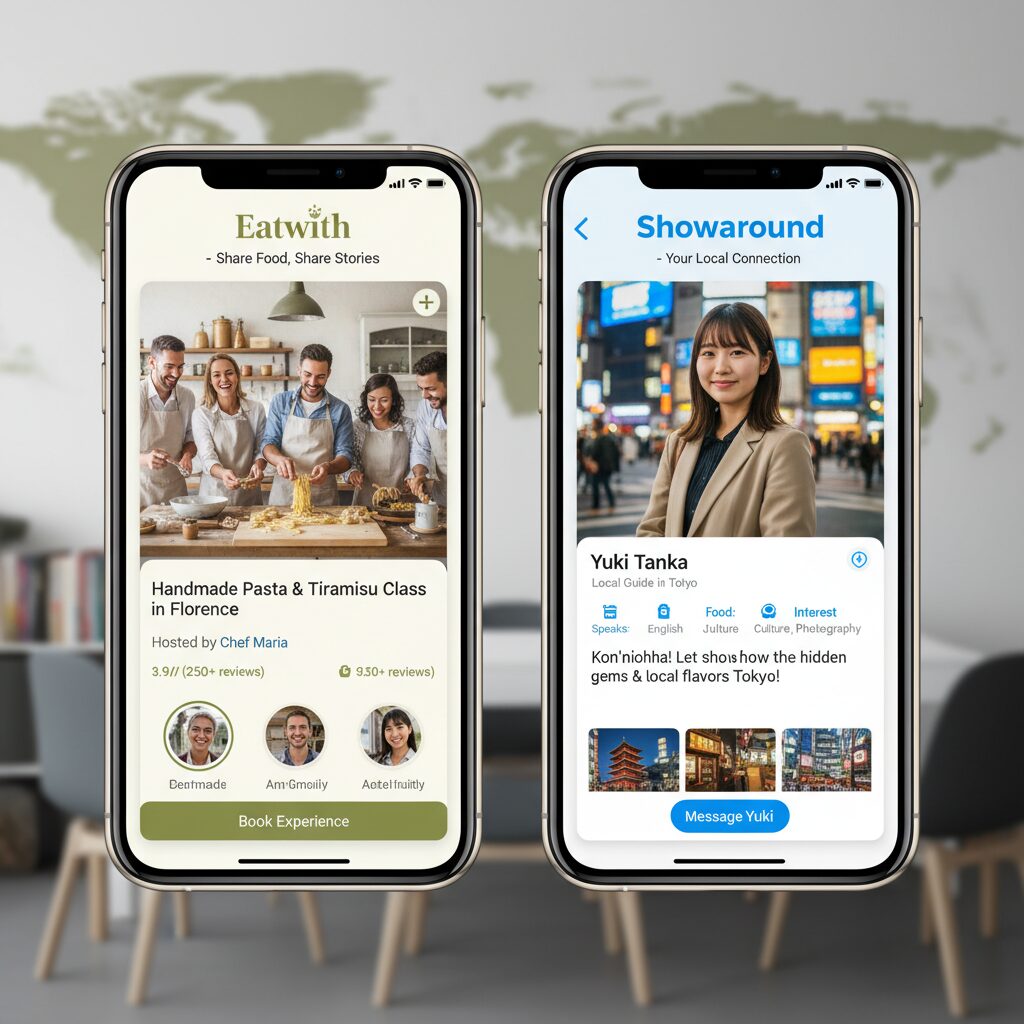
1. Eatwith
Think of this as the Airbnb of dinner parties. It connects you with locals who host dinners in their private homes. Food is the ultimate cultural bridge. Eatwith allows you to bypass the restaurant scene and step into a local’s living room.
2. Showaround
Unlike standard tour guiding apps, Showaround connects you with locals who want to show you their version of the city. It’s less about history facts and more about hanging out with a knowledgeable friend.
3. Hostelworld (Chat Feature)
Even if you aren’t staying in a dorm, the Hostelworld app has evolved. Their “Chat” feature allows you to connect with other travelers and locals attending events in the city, facilitating safer group meetups.
Emerging Trends: Noctourism & Astro-Tourism
One of the most fascinating shifts revealed in the Booking.com Travel Predictions 2025 is the rise of “Noctourism.” With global temperatures rising, travelers are shifting their exploration to the evening hours to avoid the heat and the crowds.
67% of travelers want to discover less crowded destinations to find authentic connection, according to Booking.com’s October 2024 data. The night offers a completely different cultural landscape.
Why Culture Comes Alive at Night
In many cultures—especially in Spain, Southeast Asia, and the Middle East—real life happens after sunset. The “Siesta” culture means that at 10:00 PM, families are out, kids are playing in plazas, and elders are debating politics in cafes.
If you are in bed by 9:00 PM, you are missing 50% of the culture. I challenge you to embrace the night markets, the late-night tea houses, and the dark sky reserves. In fact, Booking.com notes that 62% of travelers are interested in dark sky destinations for astro-tourism, which often involves connecting with indigenous storytelling regarding the stars.
Practical Etiquette & Language Hacks
You do not need to be fluent to immerse yourself, but you do need to show effort. Valene Smith, a noted anthropologist, famously said, “Friendship is a magic key for travelers. It doesn’t simply open doors; it opens hearts.” (Source: Montecito Journal, “The Anthropology of Tourism,” April 2025).
The “Three Phrases” Rule
Never enter a country without knowing these three phrases in the local dialect (not just the national language):
- “Hello” (Greeting is acknowledgment of existence).
- “Thank you” (Gratitude is universal).
- “Please” (Respect softens requests).
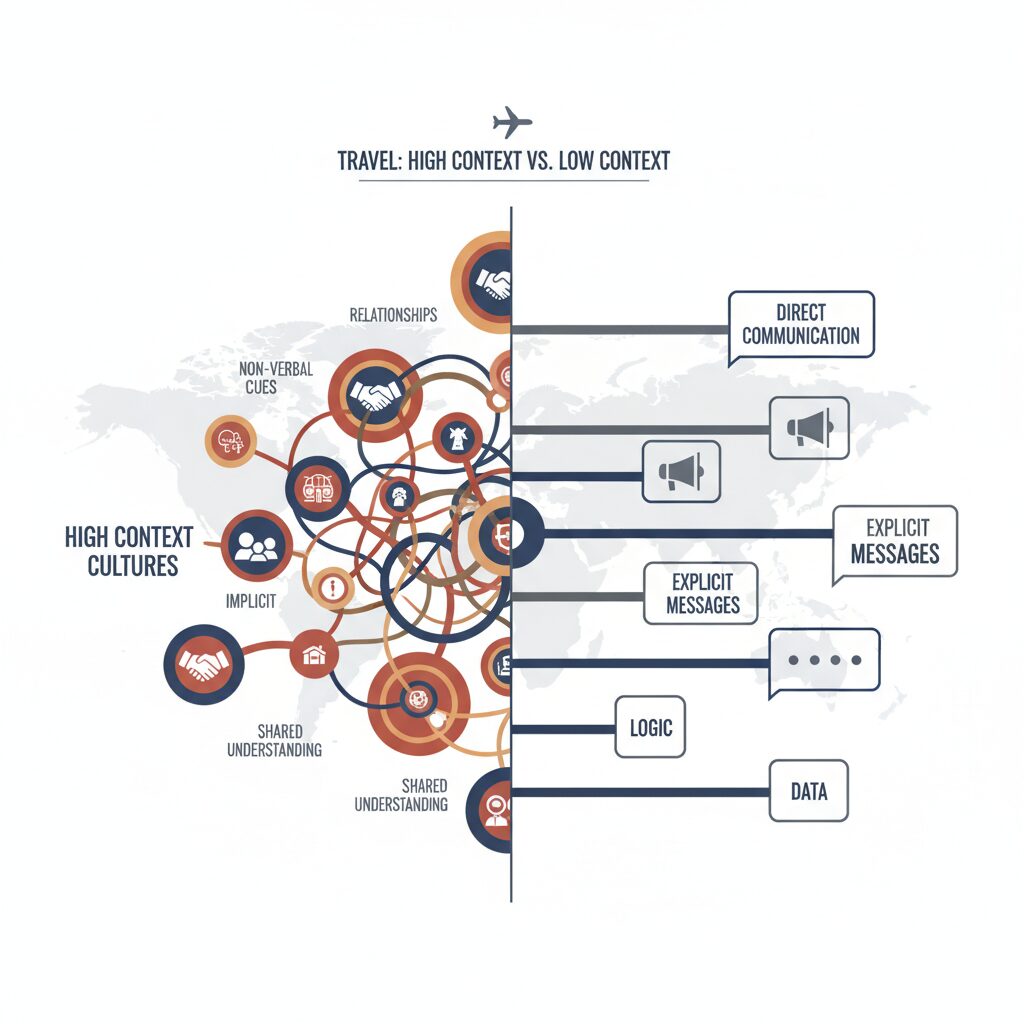
High-Context vs. Low-Context Cultures
Understanding this anthropological concept is crucial. In Low-Context cultures (like the USA or Germany), communication is direct. “Yes” means yes.
In High-Context cultures (like Japan, China, or Arab nations), communication is about reading the air. “Yes” might mean “I hear you,” not “I agree.” Being sensitive to these non-verbal cues is the mark of a culturally competent traveler.
Ethical Immersion: Avoiding “Poverty Tourism”
There is a fine line between immersion and voyeurism. We must be careful not to treat local poverty as a “cultural experience.” Ethical immersion is about exchange, not extraction.
The Mastercard Economics Institute’s Travel Trends 2024 report highlights that spending on experiences now accounts for 12% of tourism sales, the highest point in five years. This is good news, provided that money stays in the community.
How to ensure your immersion is ethical:
- Follow the Money: Does your tour operator live in the community? Do you eat at family-owned restaurants?
- Consent is King: Never photograph a local (especially children) without explicit permission. A camera lens can feel like a weapon if pointed without consent.
- Reciprocity: If you visit a remote village, what are you giving back? Are you purchasing their crafts at a fair price, or just taking photos?
Frequently Asked Questions
What is the best app to meet locals in 2025?
Based on current trends, Eatwith is the premier app for deep connection because it centers around food in private homes. For touring, Showaround is highly rated for connecting with locals who act as casual guides rather than professional historians.
Is solo travel better for cultural immersion?
Generally, yes. When you travel with a partner or group, you carry a “social bubble” with you. Solo travelers are more approachable and more likely to seek external interaction. According to Amex Trendex data, 76% of Gen Z and Millennials are planning solo trips specifically to tailor their own cultural experiences.
How do I overcome the language barrier for immersion?
Rely on non-verbal communication and technology. Translation apps like Google Translate (conversation mode) are essential, but genuine smiles and hand gestures go a long way. Focus on “shared activities” like eating or sports, where language is secondary to the experience.
What is “Slow Travel”?
Slow Travel is a mindset that emphasizes connection over counting countries. It involves staying in one location for longer (at least 5-7 days), renting apartments instead of hotels, and prioritizing local routine over tourist sightseeing.
The Immersion Challenge
Knowledge without action is just trivia. My challenge to you for your next trip is simple: Book one experience using a platform like Eatwith, and leave one full day completely unplanned.
Don’t just visit the world. Live in it, even if just for a few days.

Related Posts
How to document travel memories well?
Where to find authentic local food?