
When to book flights for best deals?
When to Book Flights for Best Deals? The 2025 Data-Backed Guide
The old rule of “book on Tuesday at midnight” is dead. In fact, if you’re setting your alarm for 12:00 AM hoping for a magical price drop in 2025, you’re likely losing sleep for nothing. In my decade of tracking airfare volatility, I’ve never seen the landscape shift quite like this.
Algorithms, not clocks, now dictate prices. Dynamic pricing has become so sophisticated that airlines adjust fares based on real-time demand profiles, not just weekly schedules. But here is the good news: while the “magic hour” is gone, the data has revealed specific booking windows that are remarkably consistent.
We analyzed recent reports covering 917 million airfares from major aggregators—including the 2024-2025 datasets from Google Flights, Expedia, and CheapAir—to give you the exact booking windows for every type of trip.
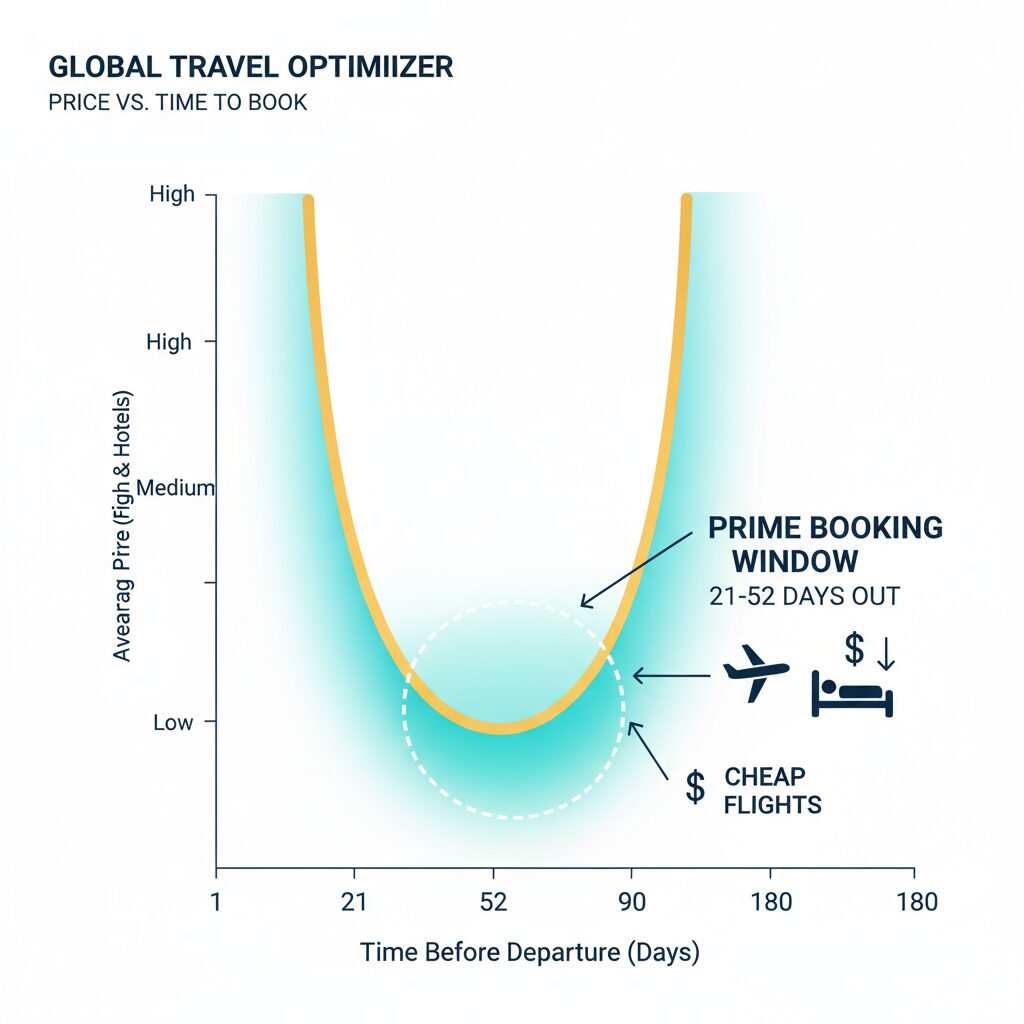
For domestic US travel, the absolute lowest prices typically appear 38 days before departure. For Europe, aim for 94 days out. Don’t book too early, and definitely don’t wait for the last minute.
The “Prime Booking Window” Explained (The 2025 Goldilocks Rule)
Travelers often ask me, “Can I book too early?” The answer is a resounding yes. Airfare pricing follows a “U-shape” curve. Prices start high (when schedules open), drop to their lowest point in the “Prime Window,” and then skyrocket as the departure date nears.
According to CheapAir’s Annual Airfare Study 2024, booking more than 280 days in advance can be nearly as expensive as booking last minute. Why? Because airlines have no incentive to discount seats almost a year out. They know the early birds—people booking for weddings or rigid schedules—will pay a premium for peace of mind.
Domestic Flights: The 21-52 Day Sweet Spot
If you are flying within the United States, you need to hit the sweet spot. Data from the Google Flights Travel Trends Report (Sep 2024) indicates that the best booking window is between 21 and 52 days before takeoff.
Within that window, the absolute bottom-dollar fares typically appear 38 days out. This is a slight shift from previous years, suggesting that algorithms are rewarding travelers who plan roughly five to six weeks ahead.
Jeff Klee, CEO of CheapAir, noted a shift in consumer behavior that benefits procrastinators slightly more than before:
The Risk of “Too Late”
While the window has extended, the penalty for missing it is severe. Booking less than a week out costs 59% more than booking during the prime window, according to CheapAir data. Unless you are using points or miles for a last-minute redemption, you are essentially subsidizing the passengers sitting next to you who booked 40 days ago.
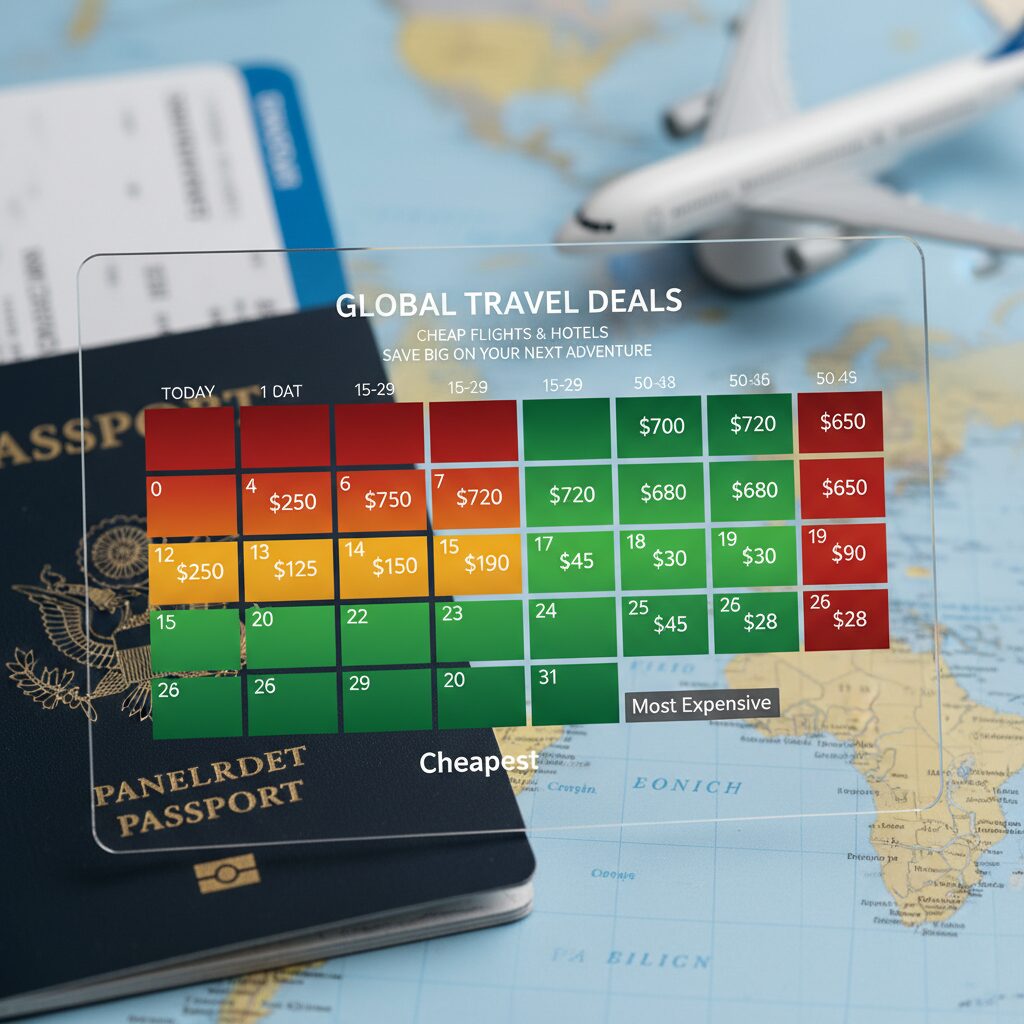
Best Day to Book vs. Best Day to Fly (The #1 Confusion)
This is where most travelers get tripped up. There is a massive difference between the best day to click the buy button and the best day to actually sit on the plane.
Does Booking on Sunday Actually Save Money?
This is a contested topic in the industry, and the answer depends on who you ask. Expedia’s Air Travel Hacks Report 2024 claims that travelers who book on Sundays instead of Fridays save, on average, around 17% on domestic flights and up to 24% on international flights.
However, Google’s data suggests the day of the week you book has a negligible impact on price—often less than $10 difference. Why the discrepancy?
In my opinion, Expedia is looking at tickets sold (average transaction value), which might skew lower on Sundays because leisure travelers (buying cheaper economy tickets) shop on weekends, while business travelers (buying expensive refundable fares) shop on Fridays. Google looks at searchable inventory.
My verdict: If you can book on Sunday, do it. It can’t hurt. But don’t delay a booking from Tuesday to Sunday just to test this theory—fares change 49 times on average, and the price could go up by then.
The “Mid-Week Fly” Rule: Real Savings
While the booking day is debatable, the flying day is not. Google Flights data (Sep 2024) confirms that flying on Monday, Tuesday, or Wednesday can be 13% cheaper than flying over the weekend.
Regional Booking Rules: Destination Matters
The “38-day rule” only applies to domestic US travel. If you are crossing an ocean, the math changes drastically.
United States to Europe
Planning a summer trip to Italy or France? You need to move faster. The best time to book flights to Europe from the U.S. is 94 days before departure, according to Google’s 2024 analysis. That’s roughly three months out.
Interestingly, interest in European destinations is shifting. Skyscanner’s Travel Trends 2025 reports that searches for Reggio Calabria, Italy, are up 541%. As emerging destinations get popular, their pricing algorithms will likely tighten, making early booking even more critical.
US to Mexico & Caribbean
For beach getaways, the window is surprisingly short. Flights are cheapest 44 days before departure (Google Flights). This makes the Caribbean an excellent option for “spontaneous” trips compared to Europe.
2025 Flight Booking Calculator
Enter your planned travel date to find your “Book By” deadline based on the latest data.
2025 Holiday Specifics: Thanksgiving & Christmas
Holiday travel breaks all standard rules because demand is inelastic—people have to fly on specific dates.
The 45-Day Rule for Thanksgiving
For Thanksgiving 2025, the cheapest fares will likely appear 45 days before departure (Google Flights). This puts your ideal booking time in early-to-mid October. If you wait until November, you are at the mercy of whatever inventory remains.
The 58-Day Rule for Christmas
Christmas is even stricter. The best deals for Christmas appear 58 days before departure. That means you should be finalizing your holiday plans before Halloween. Waiting until December is a financial mistake I see people make every single year.

Advanced Flight Hacking Tools & Tactics
Knowing when to book is half the battle. Knowing how to search is the other half.
Google’s New “Cheapest” Tab
In late 2024, Google Flights rolled out a significant update: the “Cheapest” tab. Previously, Google defaulted to “Best” flights, which balanced price with duration. The new tab throws convenience out the window to find absolute rock-bottom prices.
This might mean a 14-hour layover or a self-transfer, but if budget is your only metric, this tool is invaluable.
The “Incognito Mode” Myth Debunked
Let’s settle this once and for all: Browsing in Incognito mode does not save you money.
I have tested this hundreds of times, and the data supports it. Airlines do not use cookies to jack up the price just because you looked at a flight twice. They use complex revenue management systems based on aggregate demand, cabin load factors, and competitor pricing. The price went up because someone bought a ticket, or the fare bucket expired—not because the airline is “watching” you.
Industry Trends: What to Expect in 2025
Flying in 2025 feels different because the economics have shifted. According to Amex GBT’s Air Monitor 2025, business-class fares within North America are projected to rise by 2.7%. This creates a trickle-down effect on Economy pricing.
However, there is a silver lining for luxury travelers. Steve Solomon, Chief Commercial Officer at ARC, pointed out that the average price for airline premium seats in 2024 was the lowest in three years, dropping 2% (ARC Data Report, Feb 2025). As capacity increases—now at 102.6% of 2019 levels according to Bain & Company forecasts—airlines are competing harder to fill those front-of-bus seats.
FAQ: Answering Your Flight Booking Anxieties
Do flight prices go down on Tuesday?
Not significantly. While airlines used to load fares on Monday nights leading to Tuesday sales, modern dynamic pricing happens 24/7. Flying on a Tuesday saves money; booking on one rarely makes a difference.
How far in advance should I book for Summer 2025?
For domestic summer travel, apply the 21-52 day rule. However, note that Summer 2025 demand is high. Skyscanner’s Horizons Report shows that 70% of travelers plan to spend the same or more on flights this year. If you have specific dates, book earlier in the window (52 days out).
What is the best time of day to fly to avoid cancellations?
Morning. Expedia and ARC data reveals that flights departing after 3 p.m. have a 50% higher chance of being canceled than earlier flights. The first flight of the day is your safest bet against chaos.
Conclusion: Your 2025 Booking Checklist
Finding the best deal isn’t about luck; it’s about discipline. The data from 2024 and 2025 is clear: the era of last-minute deals is mostly over, and the era of ultra-early bird savings is a myth.
To dominate your travel planning this year, follow this simple checklist:
- Domestic: Set a calendar alert for 38 days before your trip.
- Europe: Book 3 months out (94 days).
- Holidays: Book Thanksgiving and Christmas by Halloween.
- Flexibility: Save ~13% by shifting your flight to a Tuesday or Wednesday.
- Safety: Book the first flight of the morning to avoid the 50% higher cancellation risk.
The skies are busy this year, with ticket sales already hitting $9.3 billion in January 2025 alone (ARC Data). Don’t let the algorithms win—use these windows to lock in your price and enjoy the trip.

Related Posts

How to find cheap flights fast?

Best flight search sites revealed?