Best apps for budget travel planning?
15 Best Apps for Budget Travel Planning in 2025 (Review & Guide)
Stop guessing. Start saving. Here are the tools that actually lower your trip cost per day.
Did you know that simply waiting until Sunday to book your flight could save you up to 17%? That isn’t just an internet rumor; it’s hard data from Expedia’s Air Travel Hacks Report 2025. Yet, most of us still panic-book on a Tuesday lunch break, costing ourselves hundreds of dollars.
In my decade of travel—from backpacking on a shoestring in Southeast Asia to planning complex family itineraries—I’ve learned that “budget travel” isn’t about suffering in bad hotels. It’s about logistics. It’s about having the right travel expense tracker and flight price drop alerts in your pocket.
We tested over 40 apps to find the ones that don’t just organize your trip but actively put money back in your wallet. Whether you need an offline travel map to avoid roaming fees or a cheap accommodation finder for a last-minute stay, this is your definitive guide.
According to Hilton’s 2025 Trends Report, 67% of travelers are now prioritizing their vacation budget over other savings goals. We want to travel, but we need to be smarter about it.
Best All-in-One Budget Planners
Before you book a single thing, you need a command center. Scattered emails and mental math are the enemies of a budget.
1. Wanderlog: The King of Visual Planning
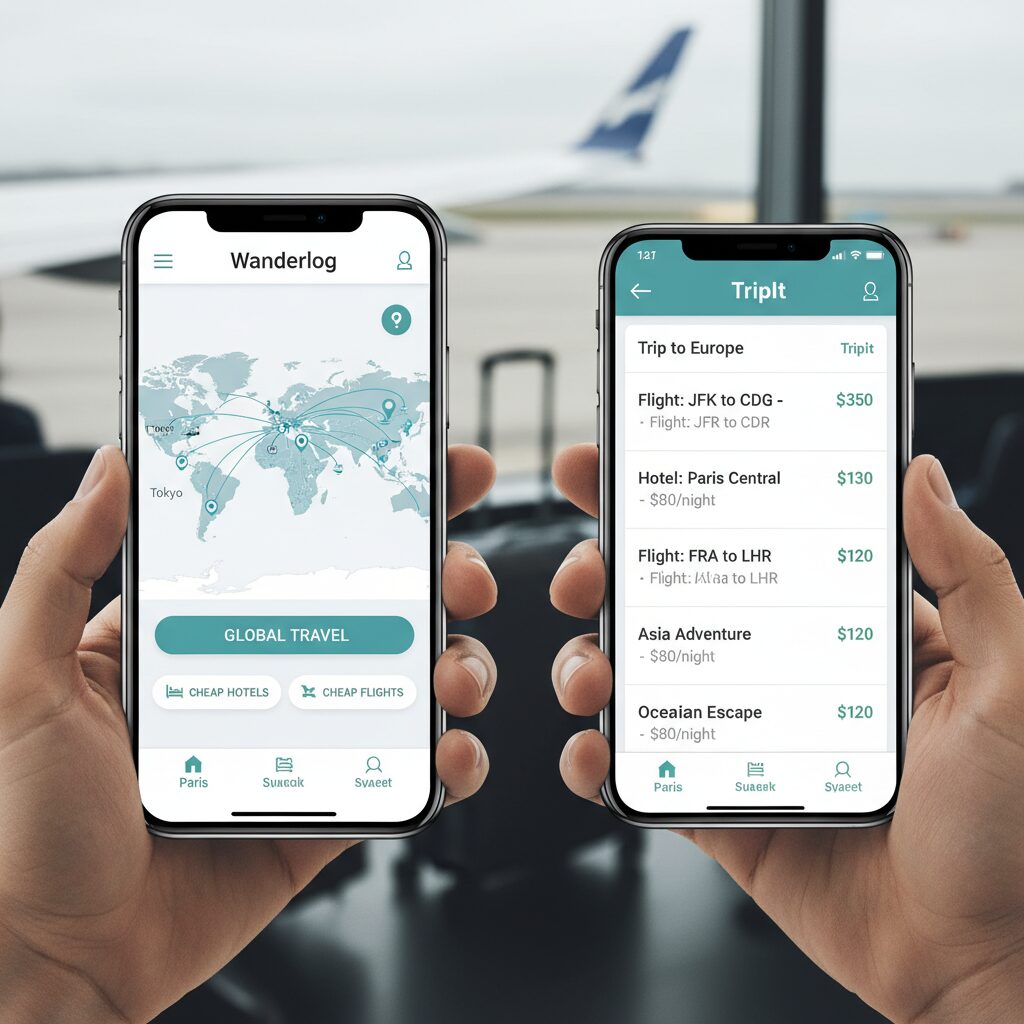
Wanderlog has completely replaced Google Sheets for me. What makes it the best app for budget travel planning? It automatically pulls in places from your “Want to go” list on Google Maps and calculates distances and costs. You can add budget caps to different categories (food, transport, stay) and see in real-time if your itinerary is breaking the bank.
The “Free” Advantage: Unlike many competitors, Wanderlog’s free tier is incredibly generous. You can access your itinerary offline—a massive perk when you’re trying to avoid data roaming charges.
2. TripIt: The Business Standard
While Wanderlog is great for planning, TripIt shines at logistics. It scrapes your email for confirmation numbers and builds a master timeline. For budget travelers using points, TripIt Pro (paid) tracks your reward balances. However, for the average backpacker, the free version is sufficient for keeping your low-cost carrier booking references in one place.
The Flight Price Hunters (Booking Intelligence)
According to Skyscanner’s Travel Trends 2025, the cost of flights remains the #1 factor in travel decision-making for 62% of people. Here is how to beat the algorithm.
3. Hopper: The Crystal Ball of Airfare
Hopper doesn’t just show you prices; it predicts the future. Using a massive historical database, it tells you whether to buy now or wait.
Hayley Berg, Lead Economist at Hopper, noted in a July 2024 interview that shifting your international travel to Monday, Tuesday, or Wednesday can save you between $300 and $500 per ticket. Hopper’s calendar view visualizes these savings instantly.
4. Skyscanner: The “Everywhere” Tool
If you have a budget but no destination, Skyscanner is unbeatable. Their “Explore Everywhere” feature lists destinations from cheapest to most expensive. It’s perfect for finding hidden city ticketing opportunities or just pivoting your plans to save money.
5. Expedia: Price Drop Protection
Expedia has stepped up its game with “Price Drop Protection.” If you book a flight and the price lowers later, they refund the difference (on select bookings). Given that Expedia’s 2025 report indicates flights departing after 9 p.m. have a 57% higher chance of cancellation, I use Expedia to filter specifically for early morning flights to save money on potential disruption costs.
Tracking Your Money (The Splitwise Exodus)
This is where most budget articles fail you. In 2024, Splitwise—the long-time favorite for splitting group travel costs—introduced daily transaction limits for free users. This caused a massive headache for travelers who log expenses multiple times a day.
6. Tricount: The Best Alternative for Groups
I recently switched a group of six friends to Tricount for a trip to Mexico, and here is the thing: it just works. No subscription needed for unlimited entries. It handles multi-currency budget issues seamlessly. If you pay in Euros but want to settle up in Dollars, Tricount does the math.
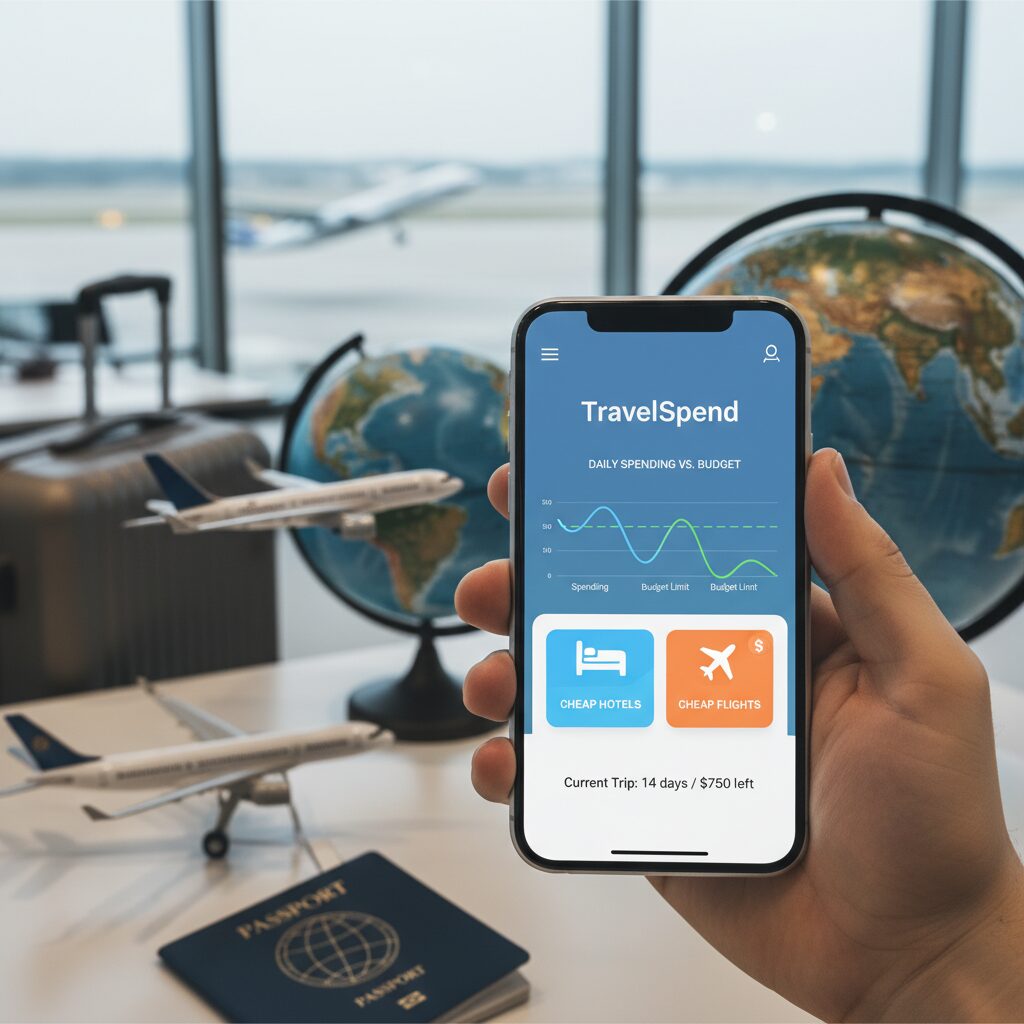
7. TravelSpend: The Solo Traveler’s Wallet
For couples or solo nomads, TravelSpend is superior. I love the “Daily Budget” feature. It visualizes your spending speed—if you overspend on lunch, the bar turns red, telling you to eat cheap for dinner.
Real-World Case Study: Full-time family travelers “Adam & Linds” used TravelSpend to track expenses across 33 countries. By using the app’s categorization features, they identified snack purchases were bleeding their budget, allowing them to adjust and save thousands over a 3-year period.
Accommodation & “Sleep Cheap” Apps
8. HotelTonight: The Risk Taker’s Friend
If you have nerves of steel, HotelTonight offers incredible discounts on unsold rooms. I’ve personally snagged 4-star hotels for 2-star prices by booking at 2:00 PM on the day of arrival. It’s the ultimate last-minute hotel deals engine.
9. Hostelworld: More Than Just Beds
Hostelworld remains the champion for backpackers, but its value has shifted. With American Express reporting that 76% of Millennials and Gen Z are planning solo trips in 2024, Hostelworld’s “Chat” feature allows you to connect with travelers in your city before you even arrive, often leading to shared costs on taxis or tours.
Hidden Gems: Food & On-the-Ground Savings
Flights and hotels are big costs, but daily “bleed” from food and fees is what kills a budget. These apps stop the bleeding.
10. Too Good To Go: Eco-Budgeting
This app allows you to buy unsold food from restaurants and bakeries for a fraction of the price (usually 1/3 of the original cost). It’s a food waste app that doubles as a budget hack.
My Experience: In London—a notoriously expensive city—I used this to grab a “Magic Bag” from Pret A Manger. For £4, I got a wrap, a soup, and a croissant (retail value £12+). Booking.com’s 2025 predictions state that 58% of travelers want to be thriftier; this app aligns that thriftiness with sustainability.
11. ATM Fee Saver
Nothing hurts more than a $5 withdrawal fee plus a terrible exchange rate. This app maps out ATMs near you and tells you their specific fees and withdrawal limits. It is an essential currency exchange calculator companion for cash-heavy destinations like Thailand or Japan.
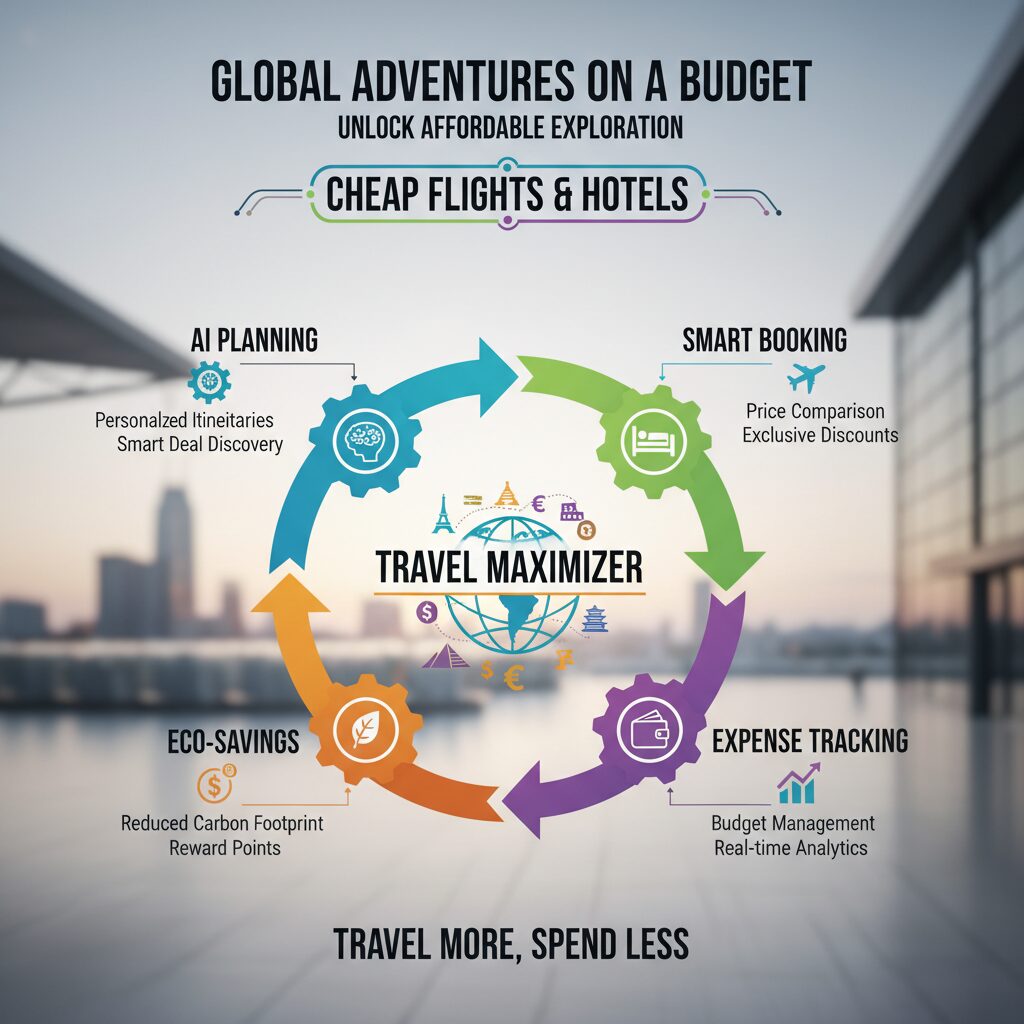
2025 Travel Trends: AI and The “Travel Maximizer”
We are entering the era of the “Travel Maximizer.” Chris Nassetta, CEO of Hilton, stated in late 2024 that “Travelers don’t just want to choose their own adventure — they want to maximize every moment.”
Apps like Booking.com are rolling out AI trip planners that suggest “Alternative Itineraries.” If a popular spot is too expensive or crowded, the AI suggests a cheaper, quieter duplicate nearby. Embracing these AI travel itinerary planner tools is the next frontier in budget travel.
Frequently Asked Questions
What is the best app to keep track of travel expenses?
For solo travelers or couples, TravelSpend is the best due to its clean interface and offline capabilities. For groups, Tricount is currently superior to Splitwise because it offers unlimited transaction logging for free.
Do these budget travel apps work offline?
Yes, this is critical. Wanderlog, TravelSpend, and Google Maps (when areas are downloaded) all function without data. Always download your maps and itinerary while on Wi-Fi before leaving your hotel.
Is Wanderlog Pro worth it for budget travelers?
For most budget travelers, no. The free version covers all the essentials. Pro is mainly useful if you need to export itineraries to Google Maps heavily or need advanced auto-scanning of emails, which TripIt Free can do for you.
How can I find cheap food while traveling?
Beyond street food, use Too Good To Go to buy surplus restaurant food at a discount. Additionally, check TheFork (popular in Europe) for restaurant reservations that offer up to 50% off the bill for booking at off-peak times.
Always check if your banking app charges foreign transaction fees. The best budget app in the world can’t save you if your bank charges you 3% on every swipe. Pair these apps with a fee-free card like Wise or Revolut.
Conclusion: Build Your App Stack
There is no single “magic app” that does it all. To truly master budget travel in 2025, you need a stack:
- Planning: Wanderlog
- Flights: Skyscanner & Hopper
- Spending: TravelSpend or Tricount
- Living: Too Good To Go & ATM Fee Saver
Technology has made the world smaller, and if used correctly, much cheaper. Download these tools before your next trip, and spend that extra money on experiences, not logistics.

Related Posts

Is solo travel cheaper to plan?
Can I travel cheap internationally?