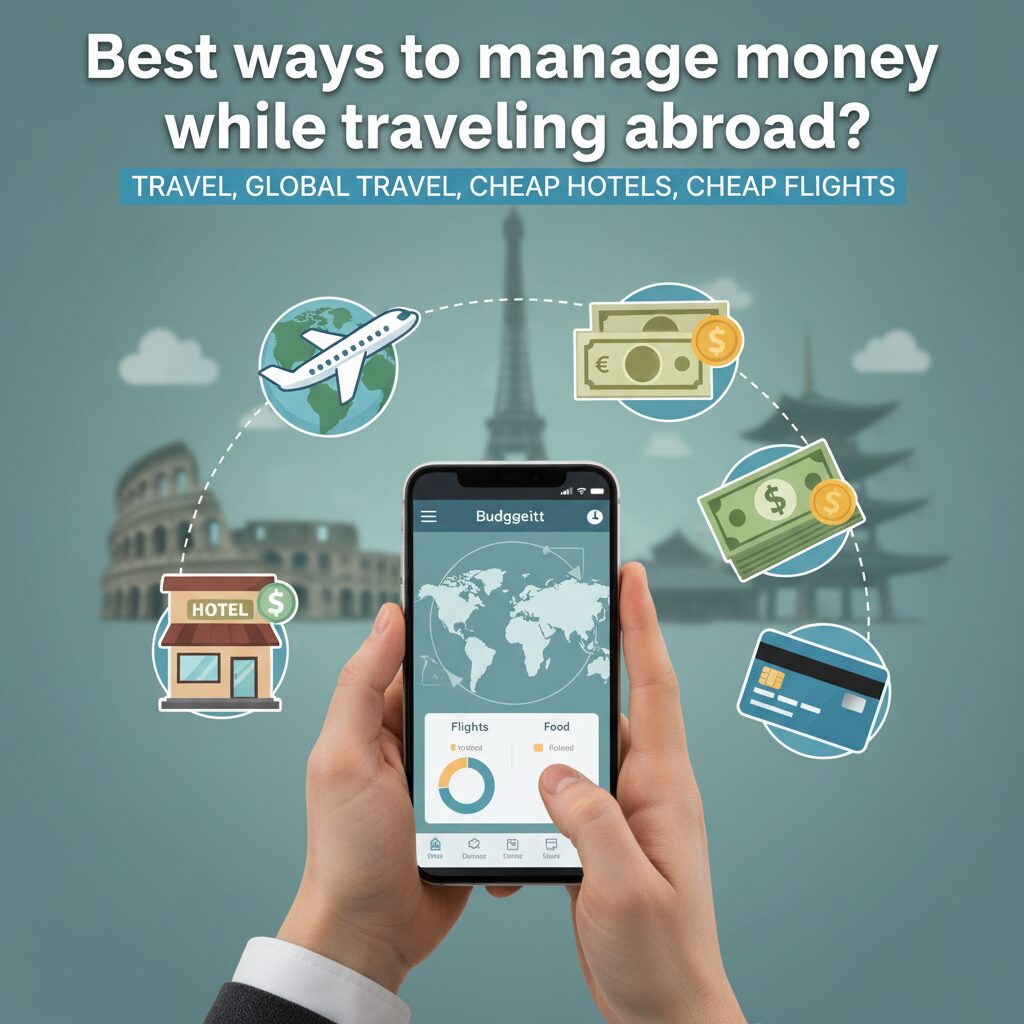
Best ways to manage money while traveling abroad?
Best Ways to Manage Money While Traveling Abroad: The 2025 Expert Guide
I still remember standing in front of an ATM in Tokyo a few years ago, staring at a screen asking if I wanted to be charged in Yen or USD. I panicked, chose USD, and walked away thinking I’d played it safe. It wasn’t until I checked my statement weeks later that I realized I had just “donated” about $40 to the bank in hidden exchange fees.
I’m not alone in this mistake. In fact, according to a January 2024 report from Wise, consumers and businesses in the EU alone lost a staggering €30 billion to hidden exchange rate markups in 2023. That is money that should have been spent on sushi, gelato, or experiences—not padding a bank’s bottom line.
Managing money abroad has changed drastically in the last 18 months. The advice to “bring traveler’s checks” is ancient history, and even “bring cash” is becoming secondary advice. We are entering the era of the digital wallet traveler.
In this guide, I’m going to break down the specific, data-backed strategies to manage your money internationally in 2025, ensuring you keep your hard-earned cash for your actual trip.
The “Golden Trio” Strategy: Cards, Cash, and Apps
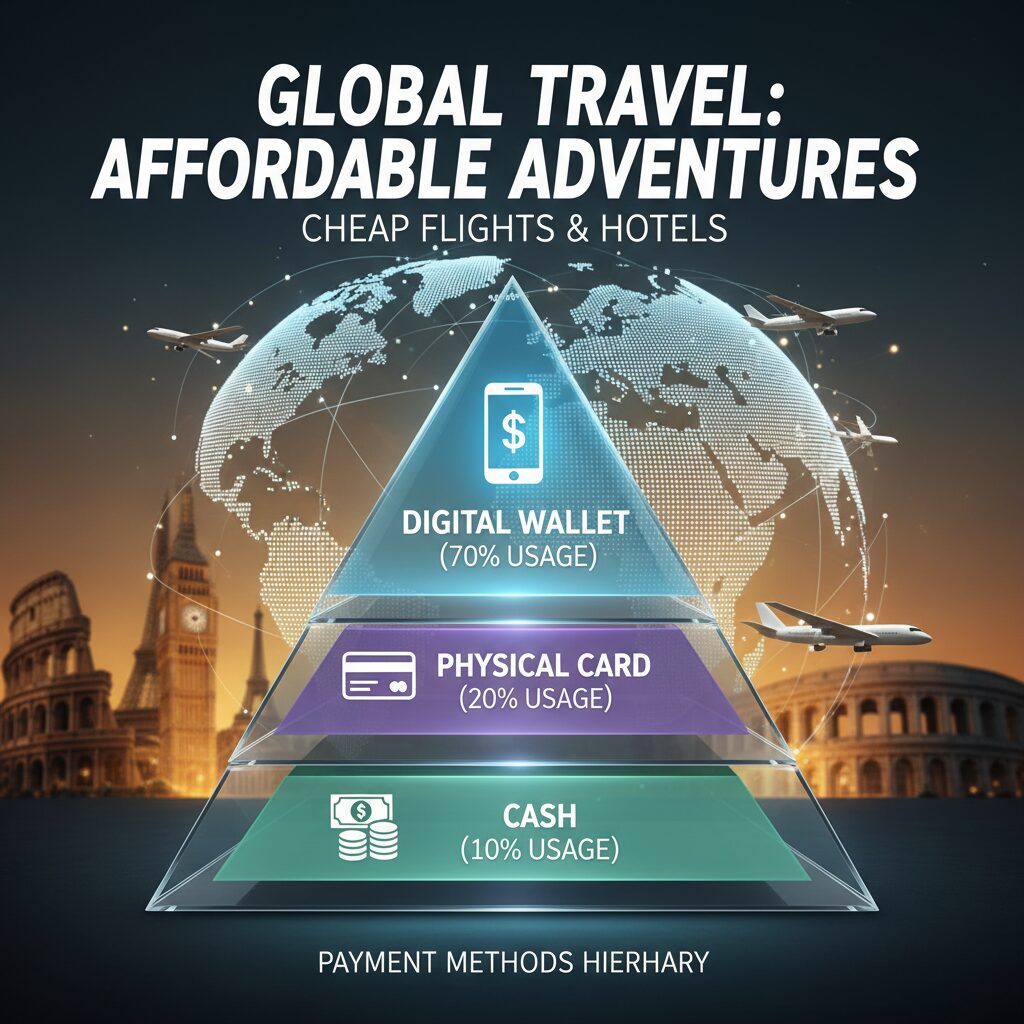
If you take nothing else from this article, remember this structure. The most financially secure travelers in 2025 don’t rely on a single method. They use a hierarchy.
1. The Primary Driver: Digital Wallets (Apple Pay / Google Pay)
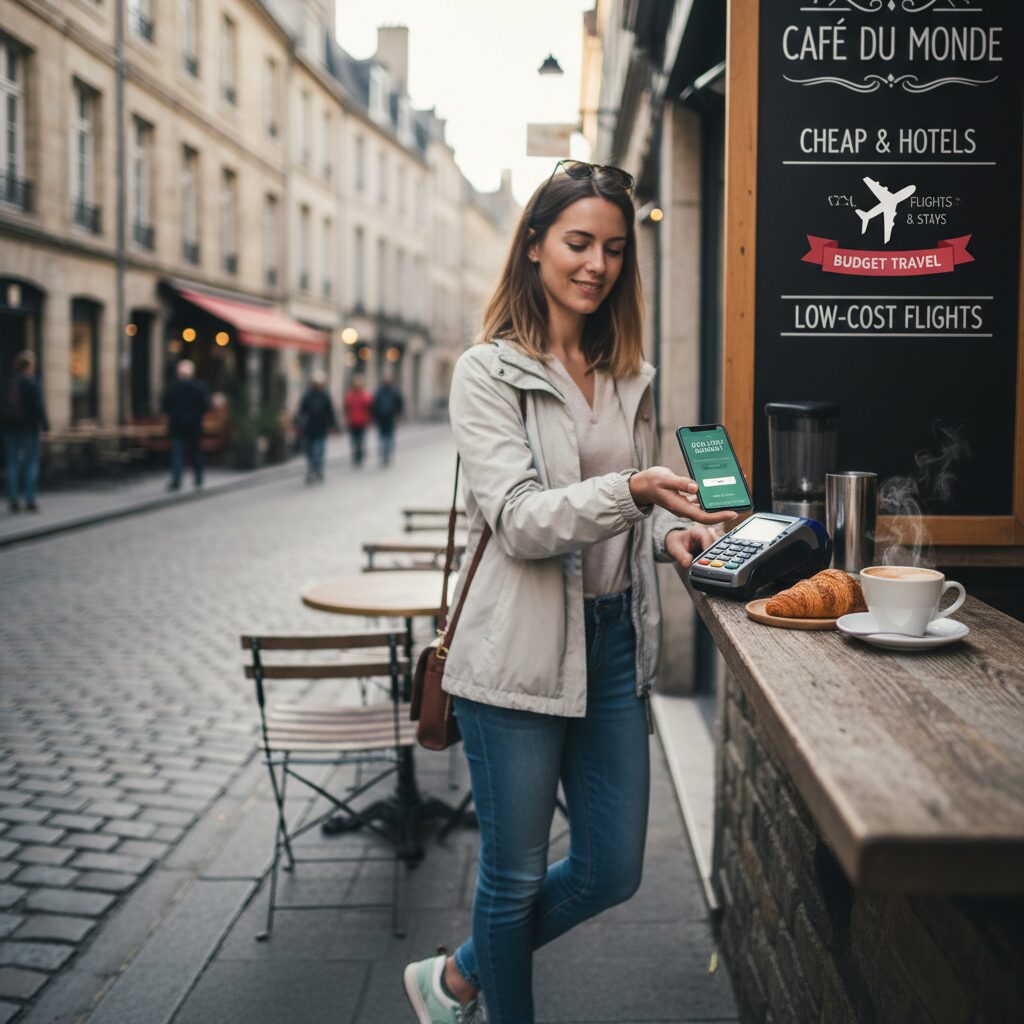
For years, physical plastic was king. But the landscape has shifted. According to the Visa Global Travel Intentions Study (Nov 2023), digital wallets have become an integral aspect of the travel experience for 74% of travelers. This adoption spikes even higher among millennials (82%).
Why the shift? It’s not just convenience; it’s security. When you use Apple Pay or Google Pay, your actual card number isn’t transmitted. The system uses “tokenization,” creating a unique code for that specific transaction. If a skimmer on a Parisian metro ticket machine tries to steal your info, they get a useless, one-time token, not your credit card number.
2. The Heavy Lifter: No-Foreign-Transaction-Fee Credit Cards
Despite the rise of apps, the credit card remains the dominant financial tool. The Federal Reserve Bank of Atlanta 2024 Payments Study confirms that credit cards accounted for 36% of all payments in 2024, continuing to dominate consumer spending.
However, not all cards are created equal. Many standard bank cards charge a 3% “foreign transaction fee.” On a $5,000 trip, that is $150 set on fire. You must carry a card that explicitly states “None” under Foreign Transaction Fees.
The Safety Net: Always bring a physical card as a backup. Batteries die, and phones get dropped in canals. A piece of plastic is your fail-safe.
3. The Declining (But Necessary) Role of Cash
Do you need cash? Yes. Do you need a lot of it? No.
For the first time in history, cash was not the most-used instrument for small-value payments of $25 or less, according to the Federal Reserve Financial Services 2024 Diary of Consumer Payment Choice. The tap-to-pay revolution has finally conquered the “pack of gum” purchase.
However, I always recommend the “One Day Rule”: Carry enough cash to survive 24 hours (transit, food, water) if the digital banking grid goes down. In Germany, Japan, and parts of Italy, “Cash Only” signs still exist, though they are becoming an endangered species.
The Hidden Fee Trap: How to Spot and Avoid It
Banks are clever. When they realized travelers were getting smarter about transaction fees, they doubled down on exchange rate markups. This is where the majority of that €30 billion loss cited by Wise comes from.
Dynamic Currency Conversion (The “Pay in USD?” Scam)
This is the single most common mistake I see travelers make. You insert your card, and the terminal asks: “Pay in Local Currency (EUR) or Home Currency (USD)?”
It looks like a courtesy. It is actually a trap called Dynamic Currency Conversion (DCC).
If you choose USD (or your home currency), the merchant’s bank sets the exchange rate, not your bank. They usually add a markup of 5% to 12%. If you choose Local Currency, Visa or Mastercard sets the rate, which is usually very close to the mid-market rate.
🛑 The DCC Cost Calculator
See how much choosing “Home Currency” actually costs you on a typical transaction.
If you choose LOCAL Currency:
If you choose HOME Currency (DCC):
You Lose: due to hidden markups!
Kristo Käärmann, CEO and Co-founder of Wise, put it bluntly in a January 2024 statement: “Banks still hide their markups and refuse to be transparent, because they believe hiding fees gets customers to overpay. They may be right.” Don’t prove them right.
Banking 2.0: Multi-Currency Accounts (Wise/Revolut)
If you are still relying solely on your traditional brick-and-mortar bank for travel, you are living in 2015. The rise of neobanks like Wise and Revolut has changed the game for frequent travelers.
Locking in Rates Before You Fly
Exchange rates fluctuate. One advantage of multi-currency accounts is the ability to “buy” the currency when the rate is good and hold it in a digital account. If the Euro dips against the Dollar three months before your trip to Italy, you can convert $1,000 instantly and lock in that rate.
The “Burner Card” for Sketchy Transactions
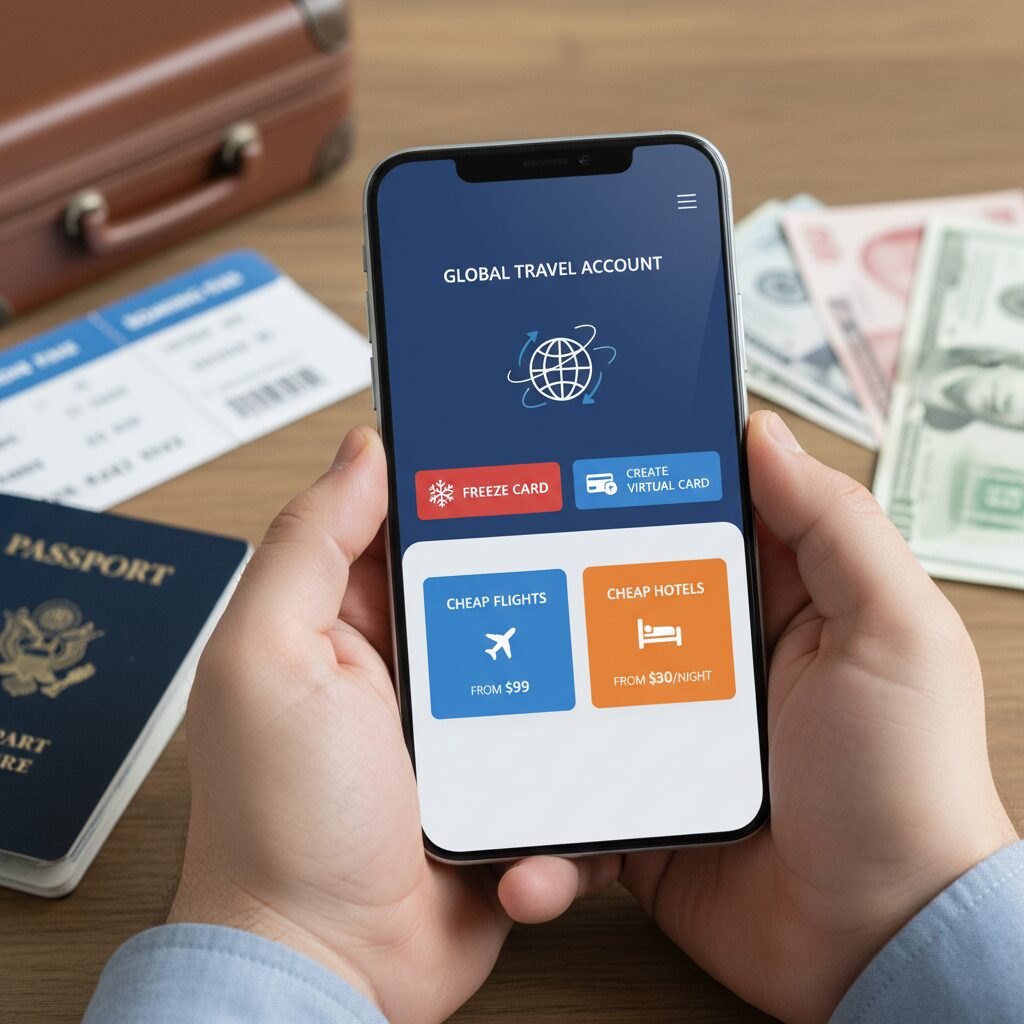
We’ve all been there—a train station kiosk that looks a bit old, or a website for a local tour that isn’t using HTTPS. Neobanks allow you to generate Virtual Disposable Cards. You use the card details once for that specific transaction, and the details immediately expire. Even if the vendor gets hacked five minutes later, your money is safe.
Financial Safety for the Solo Traveler (2025 Trend)
Solo travel is exploding. The American Express 2024 Global Travel Trends Report noted that 76% of Millennials and Gen Z respondents are planning on taking a solo trip in 2024. When you are alone, you don’t have a partner to spot you cash if your wallet gets stolen.
The Two-Wallet System
In my years of solo travel, this has been my failsafe:
- The Daily Wallet: Contains one credit card, one debit card with a small balance, and the day’s cash.
- The Vault (Hotel Safe): Contains your backup credit card, your main debit card, and your emergency cash reserve.
If you are mugged or lose your pocket, the trip isn’t over. You simply go back to the hotel, unlock the safe, and carry on.
Furthermore, FDIC Consumer News from April 2024 advises: “Only carry enough cash for local transit, tips, and other small expenses. Use credit cards when you can… [they] can easily be replaced if lost or stolen.”
Pre-Trip Financial Checklist
Before you board the plane, ensure these boxes are ticked. Missing one can lead to frozen accounts and awkward phone calls to your bank at 3 AM.
| Task | Why it matters in 2025 |
|---|---|
| Check 2FA Settings | Many banks send SMS codes to verify login. If you swap SIM cards (eSIM) abroad, you won’t get the text. Switch your bank 2FA to email or an authenticator app. |
| Travel Notices | While many modern banks (Chase, Amex) no longer require this, smaller credit unions still do. Check your app settings. |
| Download ATM Fee Saver | This app locates ATMs near you with the lowest fees and highest withdrawal limits. |
| Load Digital Wallets | Ensure your cards are verified in Apple/Google Pay before you leave home Wi-Fi. |
The “Experience Economy” Budget Shift
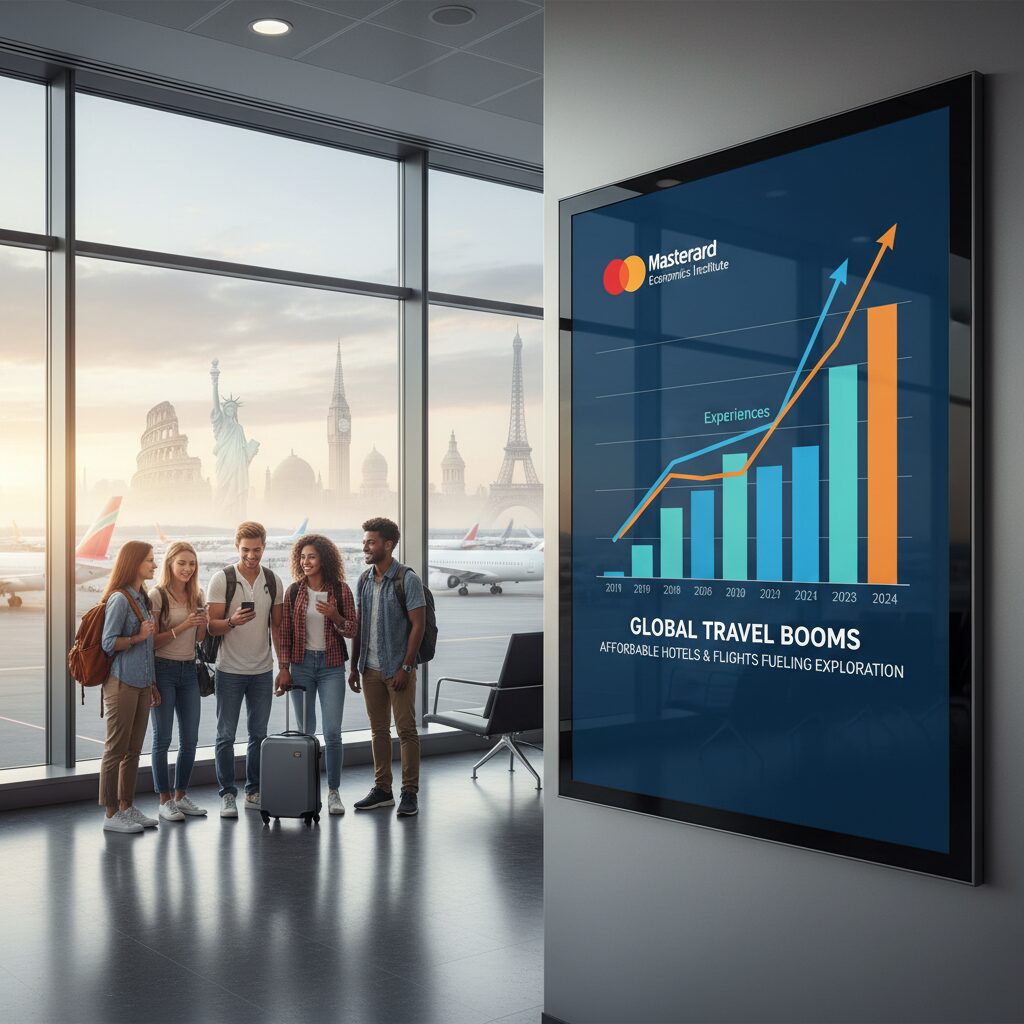
Finally, a note on how we are spending money. We are seeing a massive shift in priorities. According to the Mastercard Economics Institute Travel Trends 2024, spending on experiences now accounts for 12% of tourism sales, the highest point in at least five years.
Travelers are extending their trips by an extra day on average compared to pre-pandemic trends. This means your budget needs to account for more “doing” and less “buying things.” Budget apps like TravelSpend can help you track this daily burn rate to ensure you don’t run out of funds on day 5 of a 7-day trip.
FAQ: Managing Money Abroad
Is it better to exchange money before I travel or withdraw from an ATM?
In 95% of cases, wait until you arrive. Airport exchange kiosks often charge markups of 10-15%. Using a local ATM with a debit card that reimburses fees (like Charles Schwab or Fidelity) typically yields the closest to the mid-market exchange rate.
Should I choose local currency or my home currency on card machines?
Always choose Local Currency. Choosing your home currency triggers Dynamic Currency Conversion (DCC), which allows the merchant’s bank to set a poor exchange rate, often costing you an extra 5-7%.
What is the safest payment method for solo travelers?
A combination of a digital wallet (Apple/Google Pay) for daily use and a physical backup card kept in a separate location (like a hotel safe). Digital wallets use tokenization, making them harder to skim than physical cards.
Do I need cash for Europe in 2025?
Yes, but significantly less than before. While digital payments are dominant, cash is still required for small purchases in countries like Germany and Italy, as well as for tips, street markets, and public restrooms.
Conclusion: Travel Smarter, Not Harder
The days of wearing a bulky money belt filled with Traveler’s Checks are thankfully behind us. In 2025, managing money abroad is about leveraging technology to protect your assets and avoid the invisible fees that banks love to charge.
By prioritizing digital wallets, refusing Dynamic Currency Conversion, and utilizing multi-currency accounts, you aren’t just saving 3% to 5% on your trip costs—you are gaining peace of mind. And as Audrey Hendley, President of American Express Travel, noted in their 2024 report, “People are traveling to make memories… 77% care more about the right travel experience than about the cost of the trip.”
Don’t let financial stress ruin those memories. Set up your systems now, so when you land, the only thing you have to worry about is which restaurant to try first.