How to avoid common tourist traps?
How to Avoid Common Tourist Traps in 2025: The Ultimate Protection Guide
I still remember the first time I got “trapped.” It wasn’t in a dark alley; it was a brightly lit gelato shop in Rome. I pointed at a cone, the server smiled, and five minutes later I was €15 poorer for a scoop of melting ice cream. I felt foolish. But honestly? That was the “old world” of tourist traps. A bad meal or an overpriced taxi ride hurts your pride, but it rarely ruins your life.
The game has changed entirely. In 2024 alone, Americans reported losing over $12.5 billion to fraud, according to the Federal Trade Commission’s latest data book released in March 2025. The modern tourist trap isn’t just a pushy vendor near the Eiffel Tower—it’s an AI-generated listing for a villa that doesn’t exist, a “free” Wi-Fi network designed to drain your bank account, or a QR code on a menu that installs malware.
You don’t need to be paranoid to travel safely, but you do need to be updated. The strategies that worked in 2019 are obsolete. In this guide, we’re going to dismantle the mechanics of modern travel scams—from the “digital traps” fueled by Artificial Intelligence to the psychological street hustles that still catch 33% of travelers off guard.
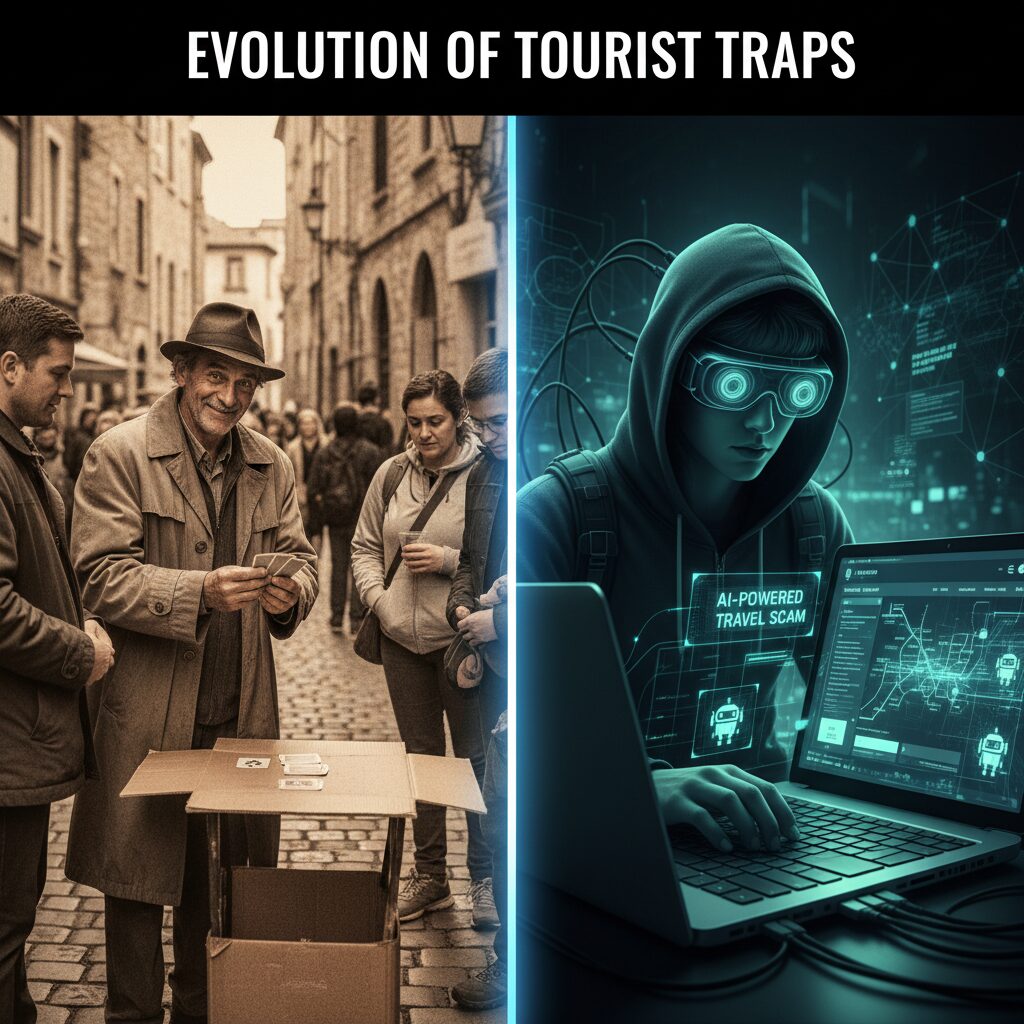
The Rise of the “Digital Tourist Trap” (AI & Phishing)
If you’re looking for red flags on the street, you’re looking in the wrong place. The trap is now in your pocket. The most terrifying development in travel safety over the last 18 months has been the weaponization of Artificial Intelligence.
The “Ghost Listing” Epidemic
We used to worry about whether a hotel room looked as good as the pictures. Now, we have to worry if the building even exists. Scammers are no longer stealing photos from other websites; they are creating them from scratch.
— Marnie Wilking, CISO at Booking.com (June 2024)
According to Booking.com data reported by TechTimes, travel scams have increased by 500% to 900% in the last 18 months, driven largely by these AI phishing tools. These listings look perfect—too perfect. The lighting is sublime, the furniture is trendy, and the price is just low enough to be a “lucky find.”
How to spot the AI Trap:
- Look for the “Uncanny Valley”: AI struggles with details. Zoom in on the photos. Are the shadows falling in the right direction? Do the electrical outlets on the wall look standard, or are they warped?
- Reverse Image Search is Mandatory: Use Google Lens or TinEye. If the image appears nowhere else on the internet, proceed with caution. If it appears on a stock photo site, run.
- The Platform Matters: According to a April 2024 warning from Lloyds Bank, 49% of all holiday scams now originate on Facebook Marketplace. Avoid booking accommodation through social media channels where buyer protection is non-existent.
The “Quishing” Threat in Dining
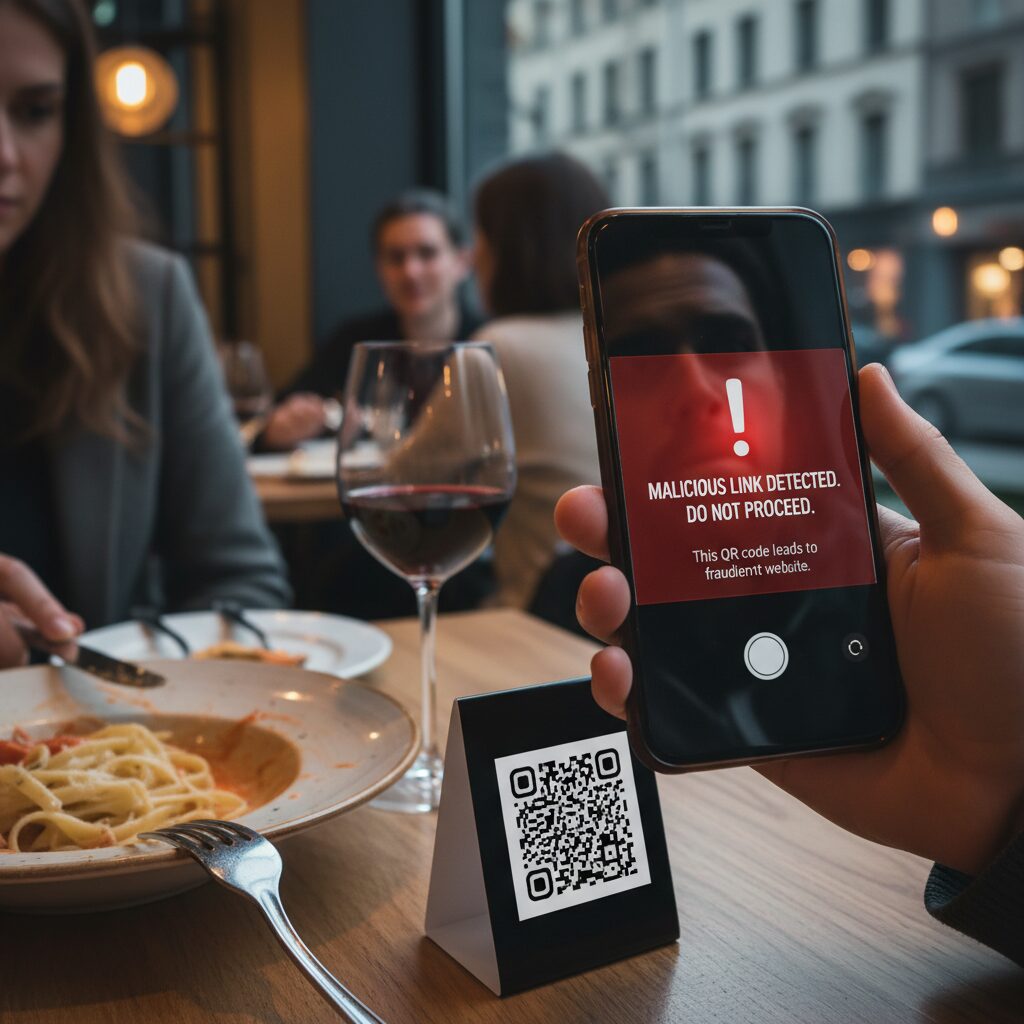
QR codes replaced physical menus during the pandemic, and scammers noticed. “Quishing” (QR Code Phishing) is a growing threat in 2025. You sit down at a nice bistro, scan the code glued to the table to see the menu, and your phone prompts you to download a “PDF viewer” or enter your email to “unlock” the prices.
Real restaurants do not require you to download apps or provide personal data just to order a burger. If a QR code directs you to a third-party download, close the browser immediately.
Financial Traps: How You Lose Money Legally
Not every trap is a scam. Some are completely legal ways for businesses to separate you from your money. The most pervasive of these is the “Convenience Tax” hidden in payment terminals.
The Dynamic Currency Conversion (DCC) Rip-off
This is the single most common financial mistake travelers make. You’re at a shop in Paris or Tokyo. You insert your credit card. The terminal screen lights up with a friendly question: “Pay in USD or EUR?”
It feels safer to pay in your home currency. You know exactly what it costs, right? Wrong. This is Dynamic Currency Conversion (DCC).
When you choose your home currency, the merchant’s bank does the conversion at a terrible exchange rate, often adding a markup. According to standard financial industry data from Visa and Mastercard networks, this “service” costs travelers an extra 7-12% on every transaction.
The “Free” ATM Trap
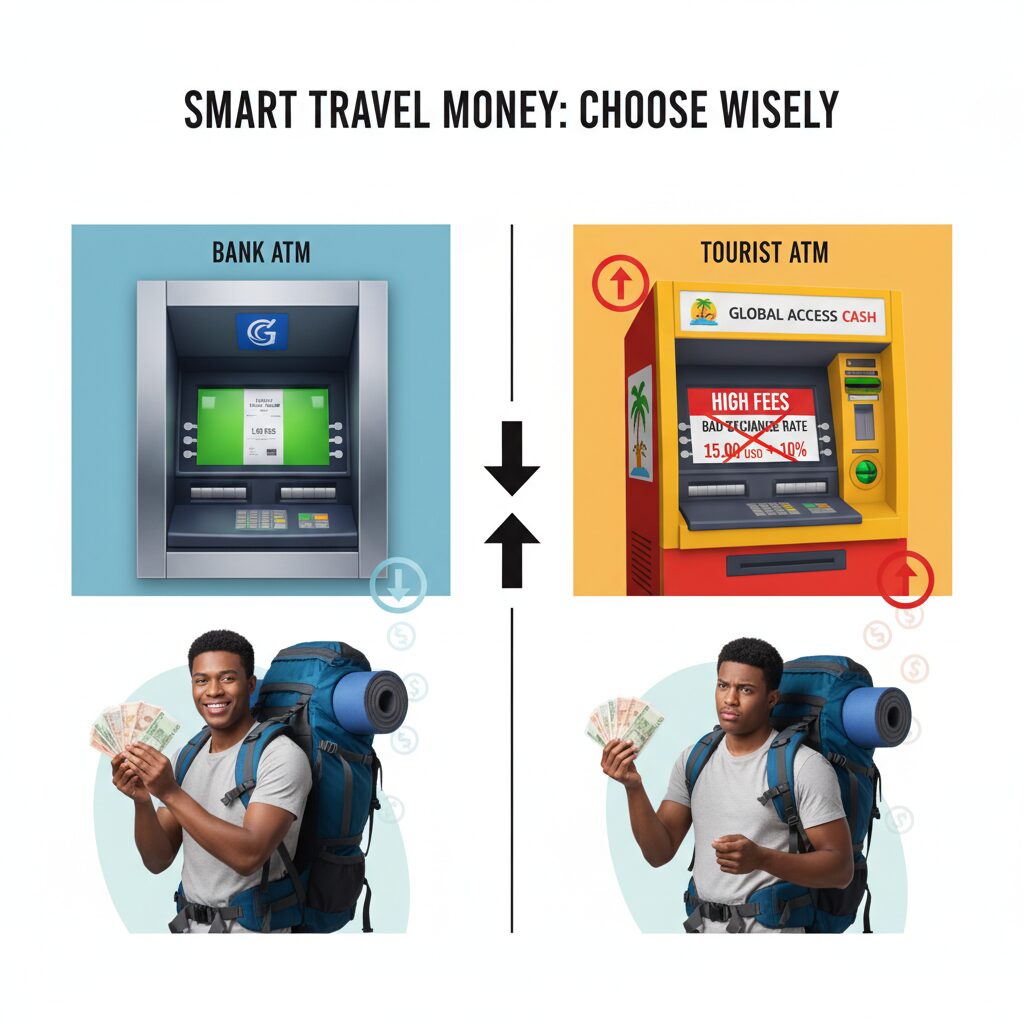
You’ve likely seen them: brightly colored standalone ATMs labeled “Euronet” or “Cash” in tourist centers. They look convenient, but they are financial black holes. These non-bank ATMs charge exorbitant withdrawal fees and offer terrible exchange rates.
I’ve seen travelers lose $40 on a single $200 withdrawal because they accepted the machine’s conversion rate and paid the “access fee.” Always use ATMs attached to actual bank branches (like BNP Paribas, Santander, or HSBC). If the machine asks to convert the money for you, decline.
The Classic Street Hustles (And Why They Still Work)
While digital scams are rising, physical street hustles haven’t disappeared—they’ve just become more aggressive. According to the McAfee 2024 Safer Summer Travel Report, one in three (33%) travelers are still scammed during their trips. Why do we still fall for them? Because they hack our psychology, not our technology.
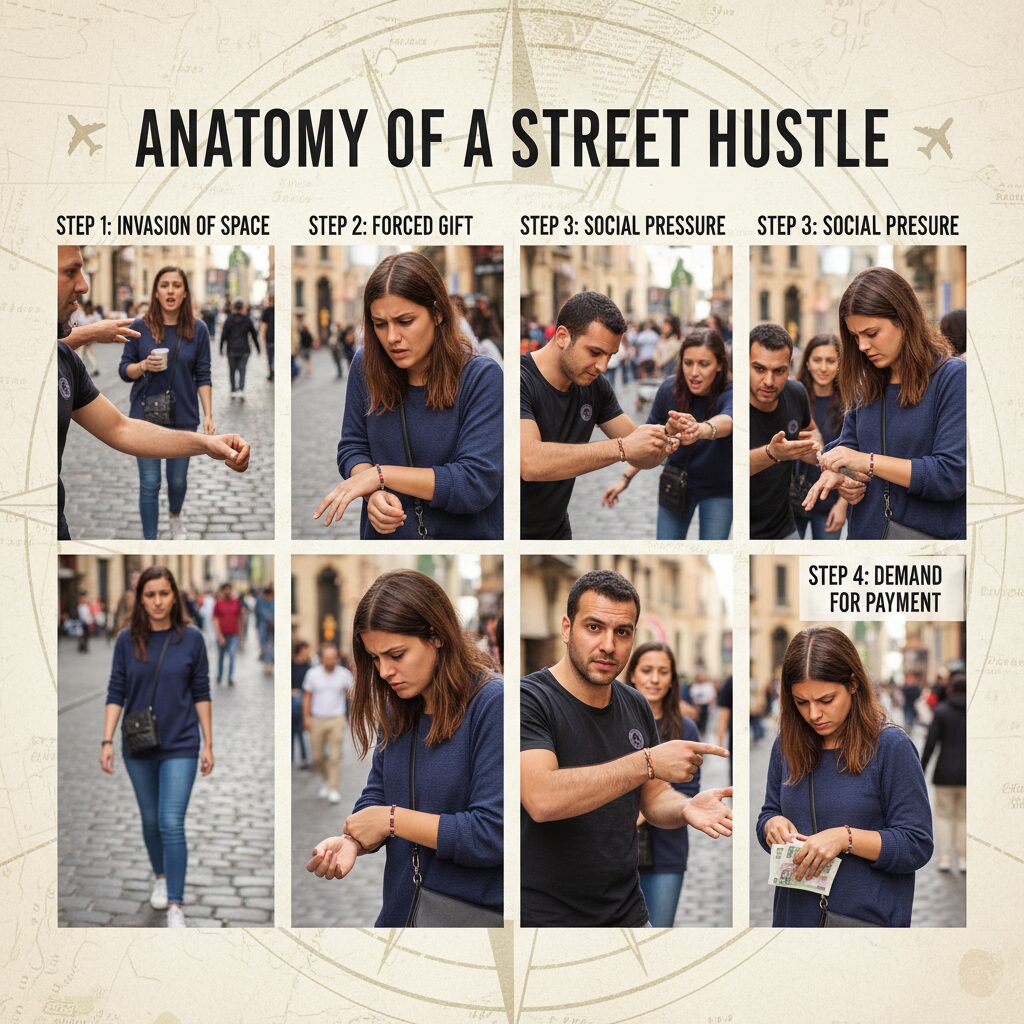
The “Friendship” Bracelet & The Rose
This relies on the psychological principle of reciprocity. You’re walking near the Sacré-Cœur in Paris. A friendly guy grabs your wrist and quickly weaves a bracelet onto it, or a woman thrusts a rose into your hand “for luck.”
Once you’re holding the item, your brain feels a social obligation to pay for it. If you try to give it back, they refuse or make a scene. The key here is physical boundaries. Keep your hands in your pockets in high-traffic tourist zones. If someone approaches you with an object, a firm “No” and a continued walking pace is your best defense. Do not stop. Do not make eye contact.
The “Broken Meter” Taxi
Despite the rise of Uber and Grab, the “broken meter” scam persists globally. You get in, and the driver says, “Meter broken, flat rate €50.” That ride should cost €15.
The Fix: Before you get in any taxi, check the meter. If they say it’s broken, get out. Better yet, use rideshare apps not just for booking, but as a price anchor. Even if you plan to take a local taxi, open Uber to see what the fair market price is. If the app says $20 and the driver demands $50, you know you’re in a trap.
The “Authenticity” Trap: Dining & Reviews
We all want to “eat like a local,” but finding genuine experiences is harder than ever thanks to the industrialization of fake reviews.
The Review Farm
You check TripAdvisor. The restaurant has 5,000 reviews and 5 stars. It must be amazing, right? Not necessarily. In a recent transparency report, TripAdvisor noted they identified and removed over 2.7 million fake reviews in a single year. With generative AI like ChatGPT, “review farms” can now write thousands of unique, grammatically correct reviews in minutes.
How to verify a restaurant:
- Read the 3-star reviews: These are usually the most honest. They aren’t bought (5 stars) and they aren’t revenge reviews (1 star).
- Look for the “Tourist Menu” Red Flags: Does the menu have pictures of the food? Is there a person outside trying to drag you in? Is the menu translated into 12 languages? These are almost always overpriced traps serving microwaved food.
The “Market Price” Menu
In places like Mykonos or the Amalfi Coast, be wary of menus that list fresh fish by weight (e.g., “€8 per 100g”) or simply say “Market Price.” Stories abound of tourists ordering a fish thinking it will cost €30, only to be presented with a bill for €600 because the fish weighed 2kg and included hidden “preparation fees.”
Always ask for the final price of the item before it is cooked. If they refuse to give you a hard number, leave.
Essential Tools & Habits for Protection
Avoiding these traps requires a mix of digital hygiene and street smarts. Here is your protection stack for 2025.
Digital Defense
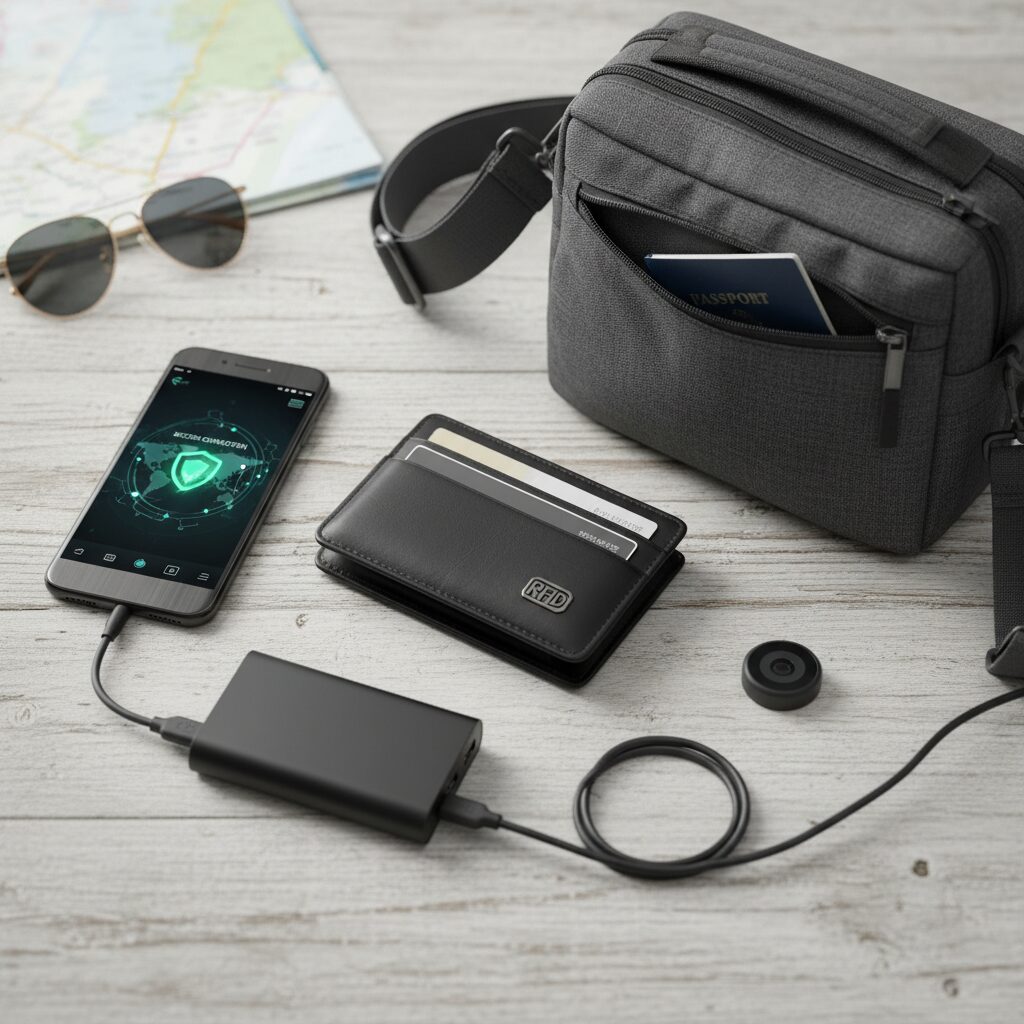
Public Wi-Fi is a playground for data thieves. A Better Business Bureau Risk Report highlighted that investment and crypto scams—often initiated via compromised data on open networks—are now the riskiest scam type. Never access your bank account on airport or hotel Wi-Fi without a VPN (Virtual Private Network). It encrypts your data, making it useless to hackers lurking on the network.
Financial Defense
Carry two wallets. One is your “decoy” with a small amount of cash and an expired library card. The other, kept in a zippered inside pocket or money belt, holds your actual cards. Furthermore, invest in an RFID-blocking travel wallet. While “electronic pickpocketing” is rare compared to physical theft, the peace of mind is worth the $20 investment.
Frequently Asked Questions
How can I tell if a travel website is fake?
Check the URL age using a “Whois” domain lookup. If the site was created two weeks ago but claims to have “20 years of experience,” it’s a scam. Also, look for trust seals (like ATOL or IATA logos). On fake sites, these are usually just static images that don’t click through to a verification page. Finally, legitimate booking sites rarely ask for payment via wire transfer or cryptocurrency.
Is it safe to use my credit card abroad?
Yes, it is actually safer than cash because of fraud protection. However, you must notify your bank before you travel (though many modern banks like Monzo or Revolut don’t require this). The key is to avoid letting the card out of your sight to prevent skimming. In restaurants, ask for the portable terminal to be brought to the table.
What should I do if I realize I’ve been scammed?
Act immediately. If it’s a financial transaction, contact your bank and freeze your cards. File a chargeback request. If you booked a fake listing, contact the platform (Airbnb/Booking.com) customer service immediately—they often have a “booking guarantee” if reported within 24 hours. For serious fraud involving large sums, report it to the local tourist police and file a report with the FTC if you are a US citizen.
Are “Free Walking Tours” a trap?
Generally, no. They are a legitimate business model where the guide works for tips. However, the “trap” is feeling pressured to tip more than the tour was worth. A standard tip is €10-€15 per person. If the guide tries to force you into specific shops or restaurants during the tour, that is a commission trap—feel free to leave the group.
Conclusion: Vigilance is the Price of Adventure
Travel in 2025 is spectacular, but it demands a higher level of awareness. The days of simply worrying about a pickpocket on the subway are gone; now we must be vigilant against AI bots and algorithm-based currency rip-offs.
But here is the truth: Knowledge dissolves fear. By knowing that the “friendly” guy with the bracelet is using a psychological trick, you can bypass him without guilt. By understanding that the ATM’s “conversion offer” is a revenue stream for the bank, you can press “Decline” with confidence.
Don’t let these warnings keep you at home. The world is too big and too beautiful to miss. Just pack your common sense right next to your passport, and you’ll return home with memories, not regrets.

Related Posts
How to document travel memories well?
Where to find authentic local food?