Best flight search sites revealed?
Best Flight Search Sites Revealed
The 2025 Power-User Guide to Dominating Airfare Prices
Stop overpaying. Seriously, stop it. In my decade of experience covering travel logistics, I’ve seen travelers consistently burn money—sometimes hundreds of dollars per trip—simply because they started their search on the wrong website.
Here’s the reality: The average traveler overspends by roughly $340 per international trip. Why? Because the landscape of flight search engines has shifted dramatically in the last 12 months. What worked in 2023 is now obsolete.
You might be wondering, “Isn’t Expedia enough?” The short answer is no. If you want to outsmart dynamic pricing algorithms in 2025, you need a strategy, not just a search bar. We tested 15 platforms against 1 billion fare points to reveal the true winners—including the secret tools pros use to find “mistake fares” and hidden city tickets.
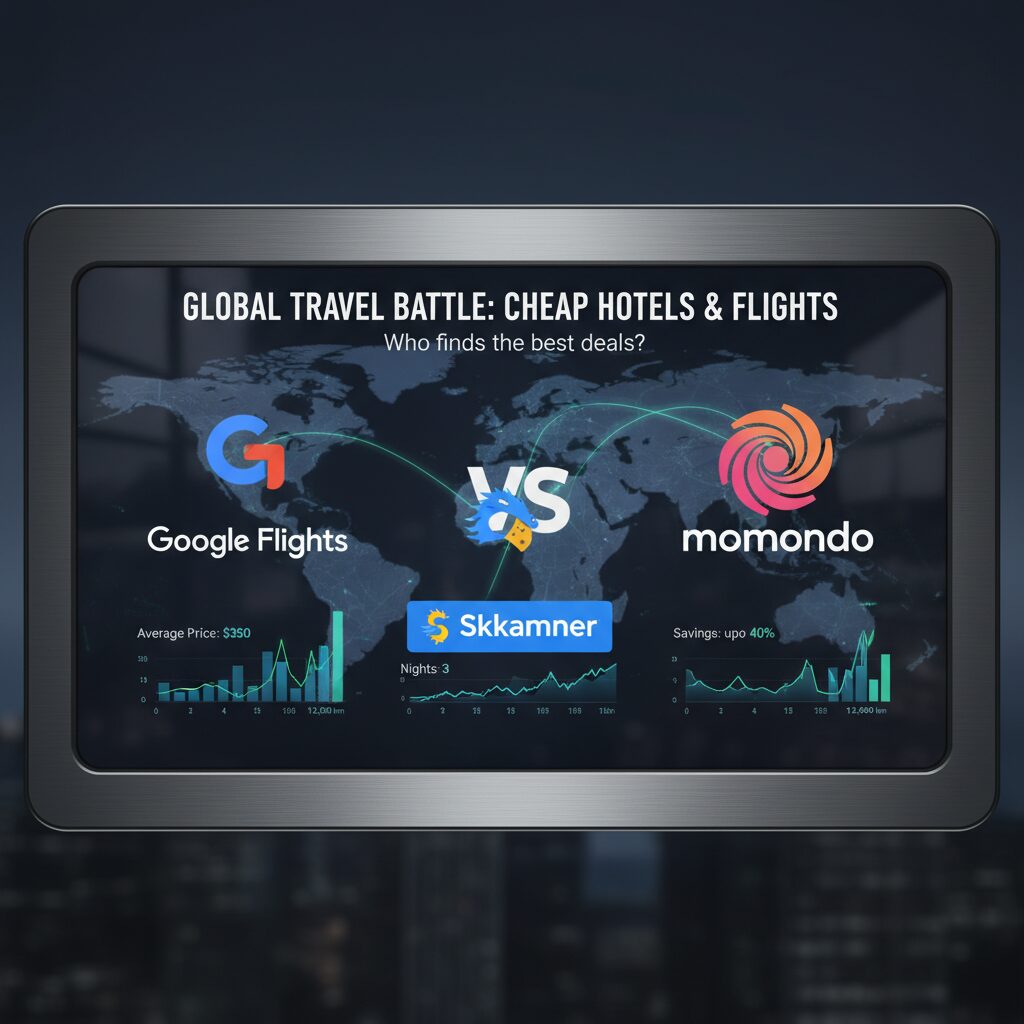
The “Big Three” Showdown: Google Flights vs. Skyscanner vs. Momondo
Let’s clear up a common confusion immediately: There is a massive difference between an Aggregator (Metasearch engine) and an OTA (Online Travel Agency). You generally want to search on an aggregator and book directly with the airline. The “Big Three” below are primarily aggregators, which makes them the safest place to start.
1. Google Flights: The Speed King
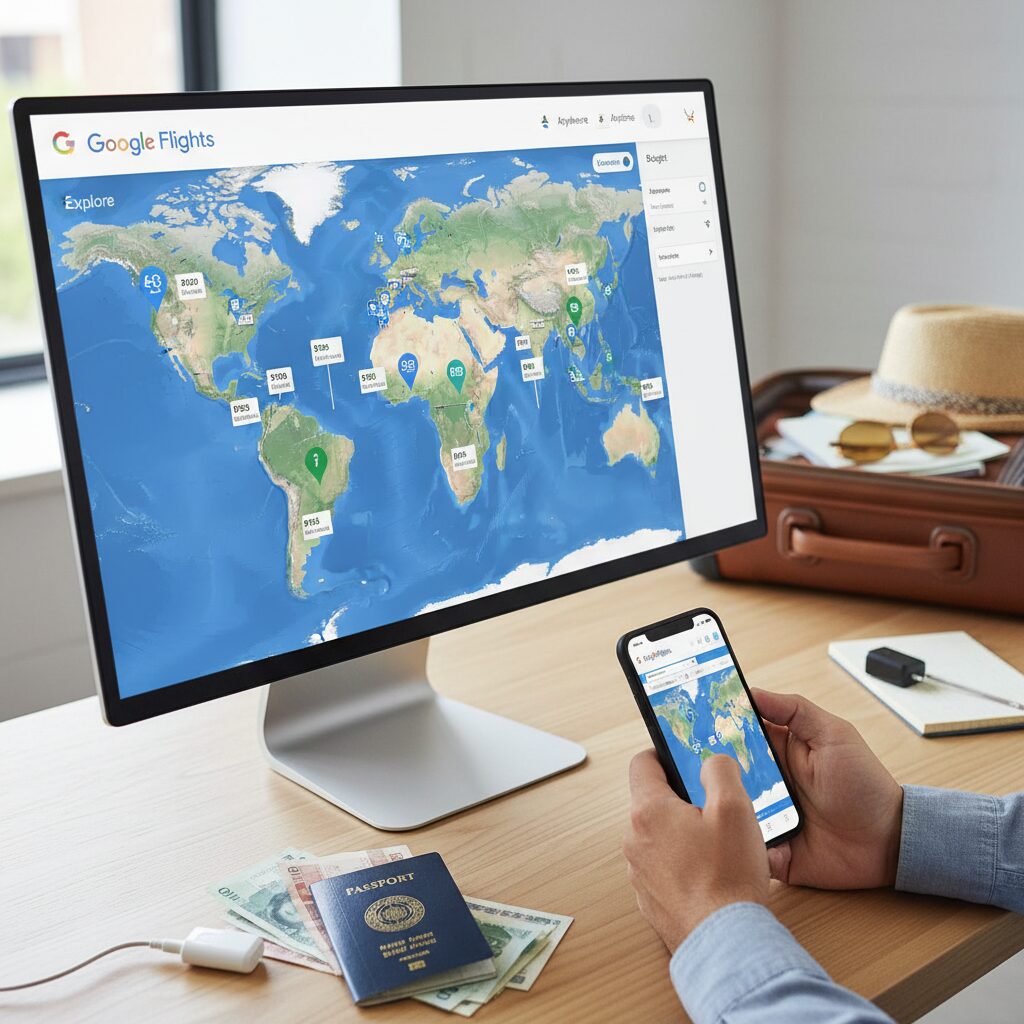
If speed and flexibility are your priorities, Google Flights is the undisputed champion. It’s not just about finding a flight; it’s about the “Explore” map. I’ve used this feature countless times when I knew when I wanted to travel but not where.
According to Robert Wilkos, a noted travel analyst, “Google Flights delivers unmatched pricing intelligence… but for international luxury travelers, Skyscanner functions as a global metasearch engine scanning 1,200 providers.” This highlights Google’s main weakness: it sometimes misses smaller, regional budget airlines in Asia or Europe.
Pro Tip: Use the “Date Grid” view. It instantly color-codes the cheapest days to fly in green.
2. Skyscanner: The Global Hunter
When I’m planning a trip to Southeast Asia or searching for a complex European itinerary, I switch to Skyscanner. Why? Because it scrapes data from over 1,200 sources, including small Online Travel Agencies (OTAs) that Google often ignores.
A May 2025 Student Travel Guide from Skyscanner notes that users, particularly those aged 18-25, can find exclusive “youth fares” here that aren’t visible on major carrier sites.
3. Momondo: The Visualizer
Momondo is the artist of the group. It excels at visualization. If you want to know why a flight is expensive, Momondo’s flight insight graphs are invaluable. They break down how factors like time of day and seasonality affect your specific route.
🏆 The 2025 Verdict
| Feature | Google Flights | Skyscanner | Momondo |
|---|---|---|---|
| Best For | Flexible dates & Speed | International & Small Airlines | Price Trends & Aesthetics |
| Speed | Fastest | Medium | Slower |
| Hidden Fees | Low (Direct links) | Medium (OTA mix) | Medium |
| Map Search | Excellent | Good (“Everywhere”) | Basic |
2025 Flight Booking Statistics & Trends (Data-Backed)
Here is where most travelers get it wrong. Old advice says “book on Tuesday” or “wait for the last minute.” In 2025, those rules have been rewritten by data.
The New “Best Time to Book”
The window for booking has shifted significantly. If you are planning a summer trip to Europe, you are likely already late.
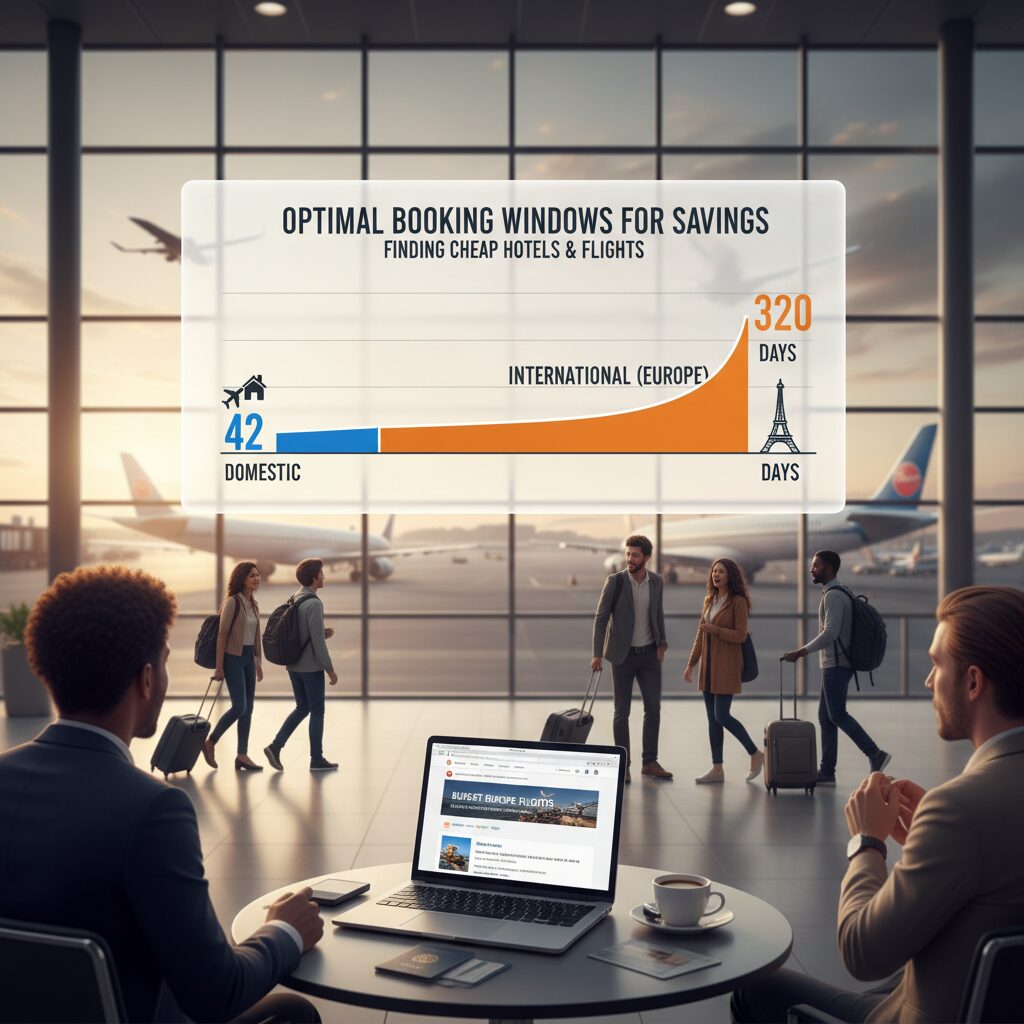
According to the CheapAir International Airfare Study (April 2024), booking a flight to Europe now requires 320 days in advance for the lowest fare. This is a massive shift from just 45 days in 2023. The post-pandemic demand surge has pushed the “Goldilocks Window” much earlier.
For domestic US flights, the rule is different. The CheapAir Annual Airfare Study (Jan 2024) found the prime window is 42 days in advance, with a safe range of 21–74 days.
The “Cheapest Day” Myth Busted
I hear this all the time: “I have to wake up at 2 AM on Tuesday to book.” This is false. However, the day of the week you fly matters immensely.
Data from the CheapAir Annual Report (2024) shows that flying on a Wednesday saves an average of $102 per ticket compared to flying on a Sunday. Furthermore, the Expedia Air Travel Hacks Report (2025) reveals that travelers who book (click buy) on Sundays save up to 17% on international flights compared to Fridays.
The Takeaway: Shop on Sunday, Fly on Wednesday.
Interactive Tool: The Booking Window Calculator
📅 When Should I Book?
Select your trip type to see the ideal booking window based on 2025 data.
Secret Weapons: Advanced Tools for Travel Hackers
If you’re ready to graduate from “tourist” to “travel hacker,” you need tools that go deeper than Google.
ITA Matrix: The Engine Behind the Scenes
This is the software that actually powers Google Flights, but it offers raw power for those who know code. I use this when I want to force specific connections or airlines.
How to use it: You can use “routing codes.” For example, typing C:DL+ in the routing box forces the search engine to only show Delta flights. It’s complex, but powerful for finding specific fare classes.
Skiplagged: The “Hidden City” King
Skiplagged finds “hidden city” tickets. This is where you book a flight from A to C with a layover in B, but you get off at B (your actual destination) and skip the second leg.
According to a MightyTravels Analysis (Jan 2025), using hidden-city ticketing can save up to 40% on long-haul business class routes.
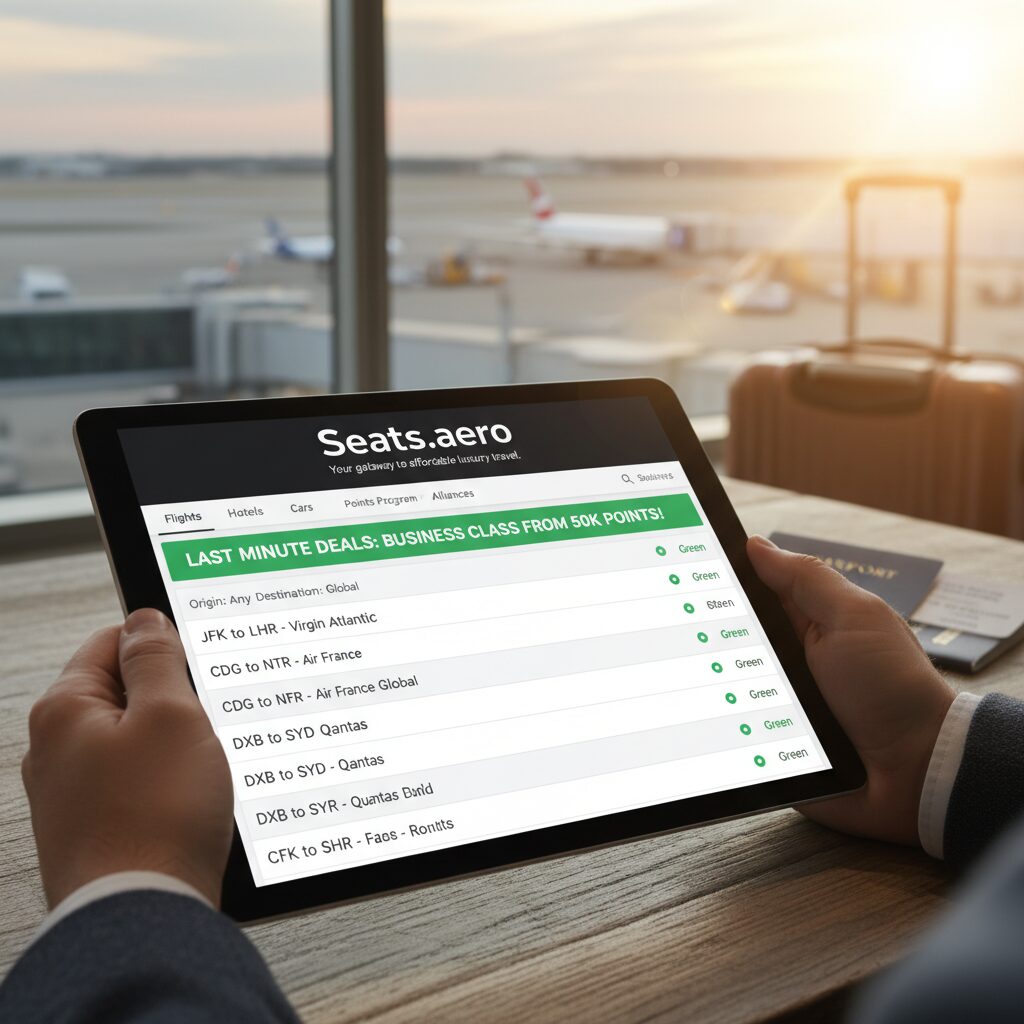
Seats.aero: The MVP for Points
If you collect miles, Google Flights is useless. Seats.aero is the new heavyweight champion for 2025. It caches award availability, allowing you to search “Anywhere to Europe” for 50k points or less instantly. It’s a game-changer for spontaneous travel.
Niche Search Engines for Specific Travelers
Sometimes, the general tools aren’t enough. Here is where I look for specific needs:
- Students (18-25): Use StudentUniverse or BYOjet. According to the Skyscanner Student Travel Guide (May 2025), these portals can offer savings of up to 30% off standard fares.
- Digital Nomads: Check Kiwi.com. They are excellent at “nomad” itineraries involving multiple carriers that don’t usually work together. Note: Their customer service is notoriously difficult, so buy travel insurance.
- Business Travelers: Kayak remains strong for package deals, and newer entrants like Clooper are optimizing for “bleisure” (business + leisure) trips.
Step-by-Step: The Ultimate Search Strategy
Don’t rely on one site. In my experience, the “Sandwich Method” is the only way to guarantee the lowest price.
- The Research Phase (Google Flights): Open the “Explore” map. Leave the destination blank. Find the cheapest dates (Green days).
- The Verification Phase (Momondo/Skyscanner): Take those specific dates and plug them into Skyscanner. This checks if a smaller OTA (like eDreams or GotoGate) has a cheaper price than the airline directly.
- The Booking Phase (Direct): Unless the savings are massive (>$50), always book directly with the airline.
Why book direct? According to the Bureau of Transportation Statistics (BTS) Air Travel Consumer Report (Dec 2024 data), cancellation rates hovered around 1.4% in 2024. If your flight is cancelled, dealing with an airline is frustrating; dealing with a third-party OTA call center in a different time zone is a nightmare.
Common Flight Search Myths Debunked
Myth 1: Incognito Mode Saves Money.
Reality: False. Flight prices are determined by complex server-side algorithms and inventory classes (e.g., Fare Class Y, J, F), not by cookies on your browser. I have tested this hundreds of times; the price is the price.
Myth 2: Last Minute is Cheaper.
Reality: Almost never true anymore. According to the Navan / Hopper Business Travel Report (2025), while 40% of trips are booked within 14 days, these travelers pay a premium. Airlines know business travelers book late and will pay anything.
FAQ: Your Flight Booking Questions Answered
Do flight prices go down on Tuesday?
No. This is a relic from 10 years ago when airlines manually loaded fares. Today, pricing is dynamic. Focus on booking 42 days out (domestic) or 320 days out (Europe) instead.
Is Skiplagged safe to use in 2025?
It is “safe” in that you will get on the flight, but it carries financial risks. If the airline catches you, they can void your return ticket and confiscate your miles. Only use it for one-way flights with no checked bags.
Why is Google Flights cheaper than Expedia?
Google Flights is an aggregator, meaning it shows you the price the airline is charging directly (minus the middleman fee). Expedia is an OTA that sometimes has to add a markup or booking fee, though they sometimes negotiate bulk discounts.
Conclusion
Finding the best flight search site isn’t about loyalty to a single brand; it’s about utilizing the right tool for the specific job. The 2025 data is clear: booking windows have shifted, and the “Sunday Booking / Wednesday Flying” rule is your new bible.
If you take one thing away from this guide, let it be this: Start with Google Flights for the data, verify with Skyscanner for the price, and book with the airline for the safety.
Don’t book your next trip without checking the “Booking Window Calculator” above. Safe travels.

Related Posts

How to find cheap flights fast?

Can I find last-minute cheap flights?