Can I travel cheap internationally?
How to Travel Cheap Internationally in 2025: The Data-Backed Guide
Forget the old myths. We analyzed the latest 2025 reports from Expedia, Skyscanner, and the Post Office to give you the economic blueprint for affordable travel.
I used to believe that the only way to travel cheap internationally was to sleep in crowded hostel dorms, eat instant noodles, and book my flights six months in advance. For years, I operated under the assumption that “early bird gets the worm.”
But the travel landscape has shifted beneath our feet. The strategies that worked in 2019 are practically obsolete today.
If you are still booking your international flights 90 days out, you might actually be overpaying. If you are avoiding weekends for booking, you’re missing out. In 2025, data is your passport to affordability. We’ve poured over the latest reports from global travel authorities to answer the question: How to travel cheap internationally?
The answer isn’t about deprivation; it’s about timing and “geo-arbitrage.” According to Expedia’s 2025 Air Travel Hacks Report, simply shifting your booking habits by a few days can save you nearly 17%. Let’s dive into the numbers.
The New Rules of Flight Hacking (2025 Edition)
For years, the “Golden Rule” of travel was to book as early as possible. However, recent data suggests this advice is outdated. The sweet spot has moved, and if you aren’t paying attention to the new window, you’re leaving money on the table.
1. The “Sunday Booking” Rule
There has been a long-standing myth that Tuesday at midnight is the best time to book. Forget it. The data is clear: weekends are where the savings are.
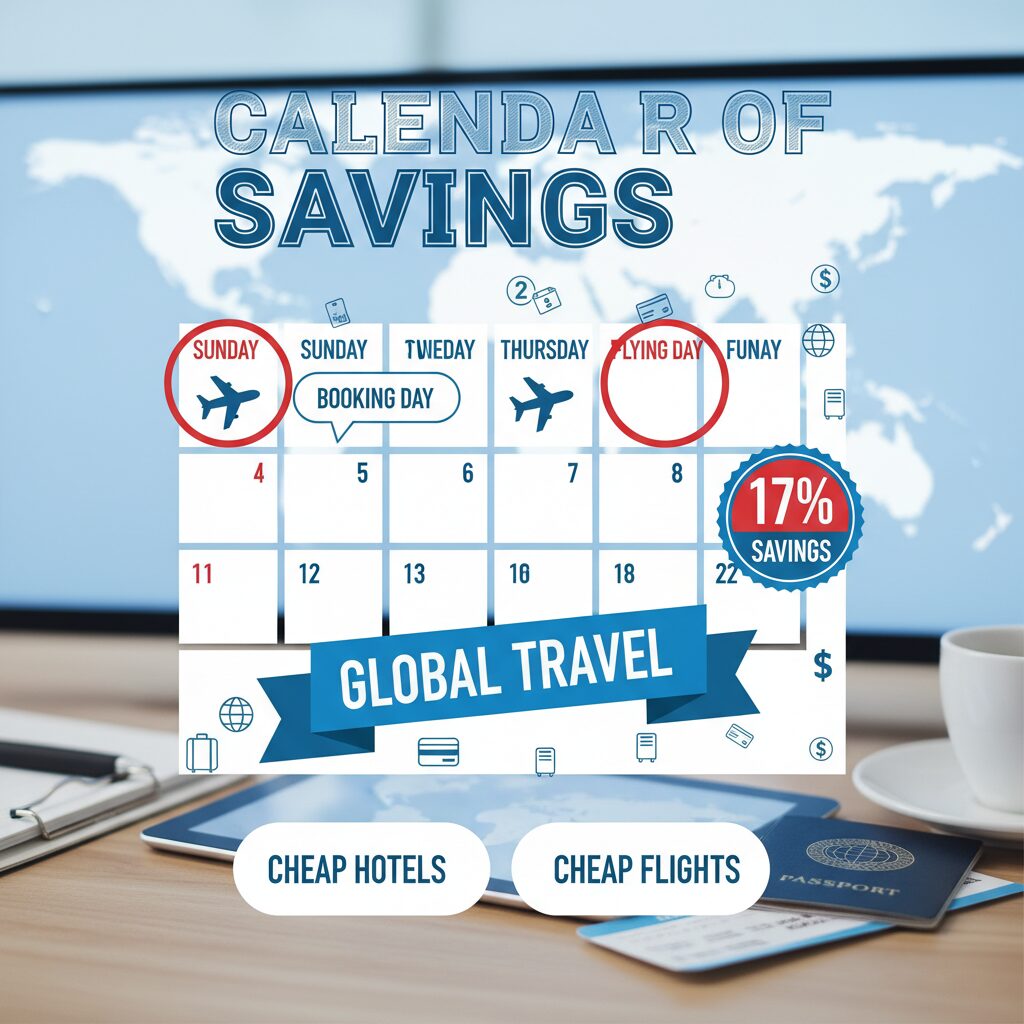
According to Expedia’s Air Travel Hacks Report 2025, travelers who book international flights on a Sunday can save up to 17% compared to those who book on a Friday. On a $1,000 flight to Tokyo or London, that is an instant $170 savings—enough to cover a few nights of accommodation in many countries.
2. The Thursday Departure Hack
Once you’ve booked on a Sunday, you need to choose the right day to actually get on the plane. Most people try to fly on weekends to maximize vacation time, but that convenience comes at a premium.
By combining a Sunday booking with a Thursday departure, you are stacking discounts. This isn’t luck; it’s algorithmic logic. Airlines price flights based on demand, and business travelers—who pay the highest fares—rarely fly mid-week.
3. The New “Sweet Spot” Window
Here is the most counter-intuitive finding for 2025. We used to think booking 3 to 6 months out was ideal. But the window has shrunk.
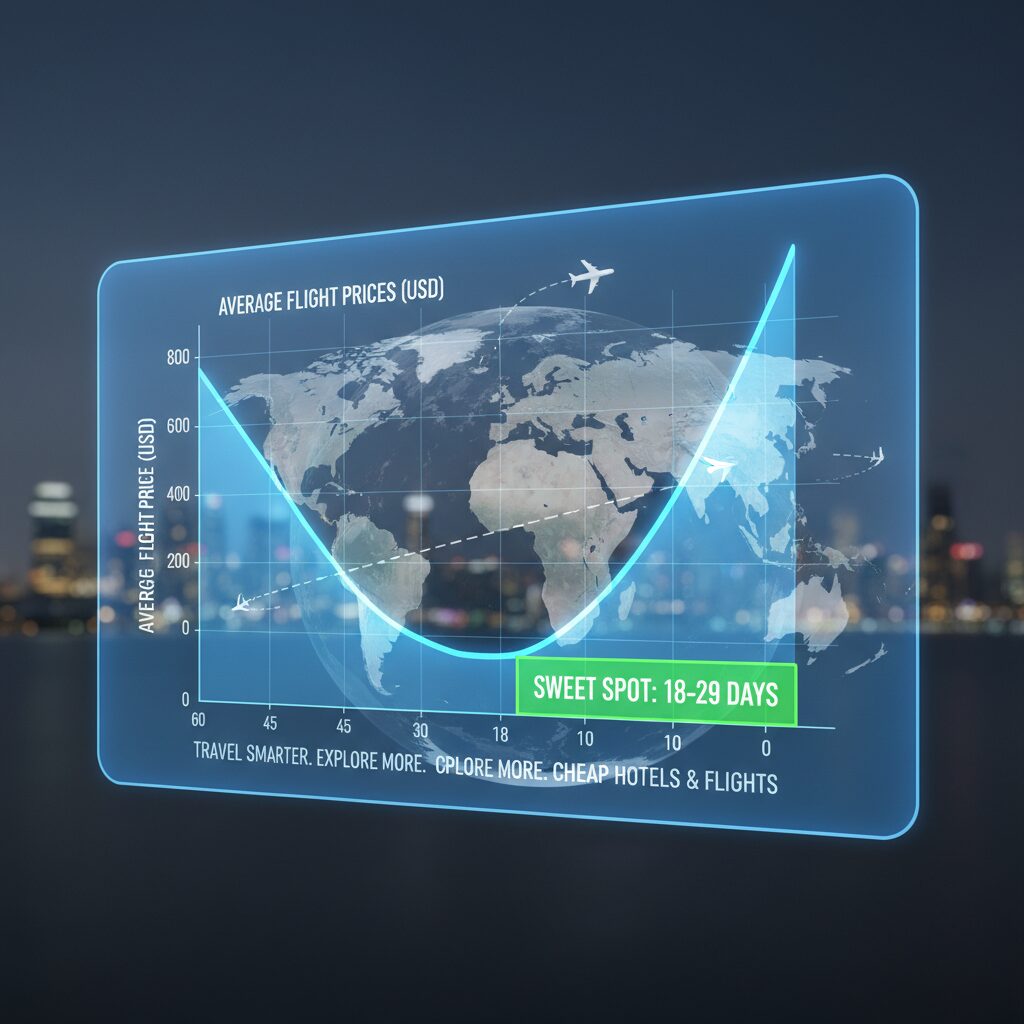
According to Expedia data, the sweet spot for international flights is now between 18 and 29 days before departure. Travelers booking in this window can save up to 17% versus booking three or more months out.
Melanie Fish, Head of Expedia Group Brands Public Relations, puts it perfectly: “The best hack is to let technology find the best value… Airfares are down, the end of summer is the cheapest time to fly, and booking too far out can actually cost you money.”
Strategic Destination Choice (The “Geo-Arbitrage” Method)
You can save $200 on a flight, but if you land in a country where a sandwich costs $20, your budget will evaporate. The most effective way to travel cheap internationally is Geo-Arbitrage: earning in a strong currency (like USD, GBP, or EUR) and spending in a currency where your purchasing power is higher.
The 2025 “Best Value” Leaderboard
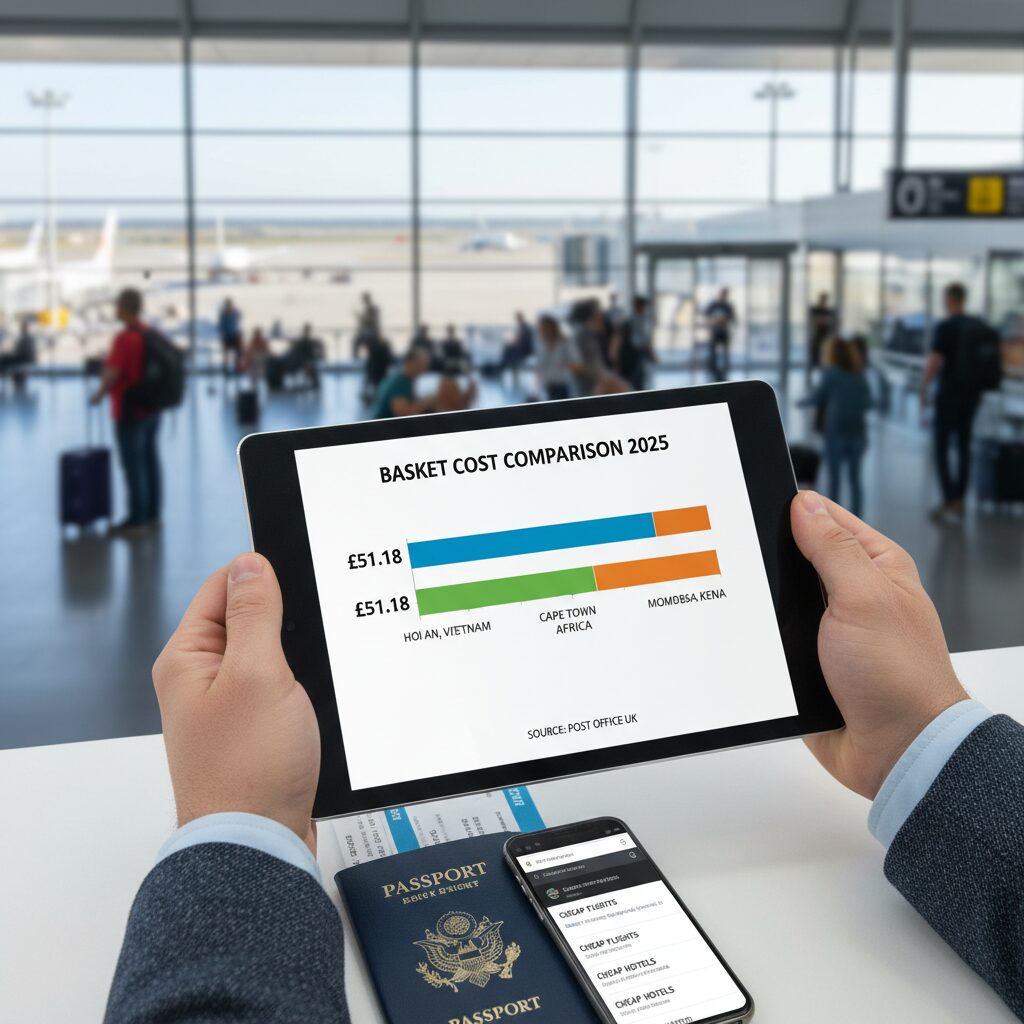
Don’t just look for cheap hotels; look at the “basket cost.” The Post Office UK releases an annual barometer that measures the cost of essential tourist items (dinner for two with wine, coffee, beer, sunscreen, etc.).
According to the Post Office Worldwide Holiday Costs Barometer 2024, Vietnam has taken the crown for the first time. The report notes that a specific basket of goods in Hoi An costs just £51.18 (approx. $65 USD). This represents a price drop of 14.4% compared to the previous year.
Compare this to Switzerland. According to Numbeo’s Cost of Living Index 2024, Switzerland ranks #1 with an index of 101.1. Vietnam and India have indices significantly lower, meaning your money stretches three to four times further.
Destination Dupes: The “Swap” Strategy
One of my favorite strategies is the “Destination Dupe”—finding a city that offers a similar vibe to a famous capital but at a fraction of the price.
Everyone wants to go to Paris or Rome, but have you considered Eastern Europe? According to the Skyscanner Travel Trends 2025 Report, Bucharest, Romania, is seeing a massive shift in affordability. The report highlights a 35% price drop in flights to Bucharest. It offers the “historic charm and modern flair” of Western Europe without the Western European price tag.
Similarly, for a coastal vibe, look at Trabzon, Turkey. Skyscanner reports a 31% fare reduction here. It’s a stunning alternative to the overpriced Amalfi Coast.
Expert Insight
Laura Plunkett, Head of Post Office Travel Money, advises: “The barometer results make it clear how important it will be this year to consider how sterling’s strength has impacted individual destinations.” Always check the exchange rate trend before booking.
The Rise of the “Experience Economy”
Traveling cheap doesn’t mean doing nothing. In fact, 2025 is defined by a shift in how we spend money. We are moving away from buying souvenirs and toward “communitas”—shared experiences.
According to the Mastercard Economics Institute Travel Trends 2024 report, spending on experiences now accounts for 12% of tourism sales, the highest point in at least five years. Why does this matter for your budget?
Because experiences—like hiking, walking tours, and street food markets—are often cheaper than “goods” like shopping or high-end dining. Laura Lindsay, a Skyscanner Travel Expert, notes in their 2025 Trend Report: “In 2025, we’re seeing travellers looking to embark on more communal and immersive adventures… This shift highlights a growing desire for shared, meaningful moments.”
Eat Like a Local
Food is often the second biggest expense after flights. In high-value destinations like Vietnam, street food isn’t just a budget hack; it’s a cultural staple. The Post Office Barometer highlights that Hoi An’s affordability is largely driven by low local prices for food and drink.
Financial Logistics: Hidden Costs That Bleed Your Budget
You can book the cheapest flight and find the cheapest hostel, but if you ignore financial logistics, you will leak money through fees. I’ve learned this the hard way.
ATM Fees and Exchange Rates
Never exchange money at the airport. The rates are predatory. Instead, use a debit card that reimburses ATM fees (like the Charles Schwab Investor Checking in the US or Starling/Monzo in the UK). Always choose to be charged in the local currency (e.g., Dong, Lira, Lei) rather than your home currency when using a card machine. The latter uses “Dynamic Currency Conversion,” which has terrible rates.
The Cost of Not Having Insurance
It seems paradoxical to spend money on insurance to save money, but medical emergencies are the quickest way to bankruptcy abroad. With trip interruptions becoming more common, insurance is vital.
However, you don’t need premium plans. Many “budget” policies cover the essentials. Just ensure they cover medical evacuation. As Michelle Meyer from the Mastercard Economics Institute notes regarding the sector’s resilience, “consumer demand has translated to a strong tourism rebound,” meaning crowded destinations and higher likelihood of minor mishaps.
Timing Your Trip: Seasonality Hacks
If you have flexibility, the month you travel matters just as much as the destination.
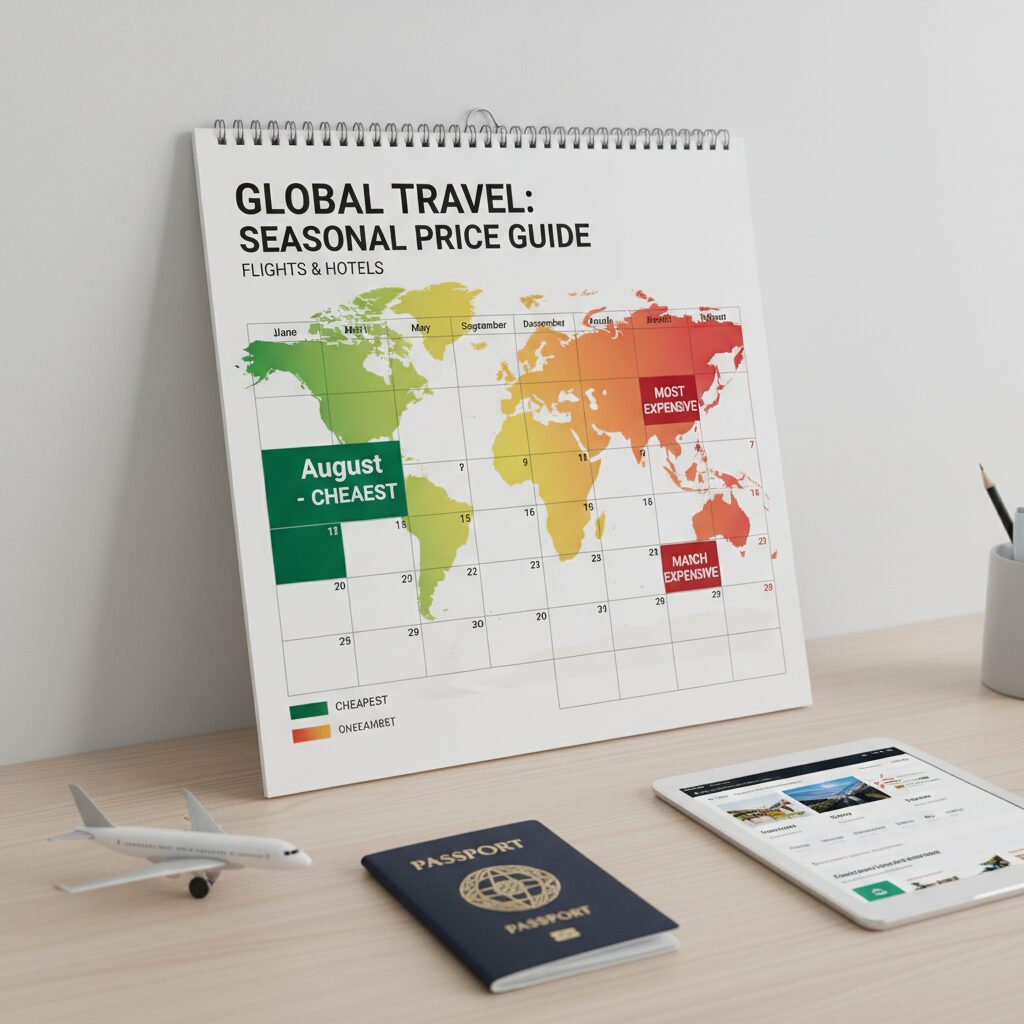
According to Expedia’s 2025 data, August is surprisingly the cheapest month to fly internationally. This goes against the grain, as August is often seen as peak summer. Conversely, February and March are the most expensive times to fly, likely due to spring break demand and post-holiday lulls ending.
Furthermore, if you’ve ever dreamed of flying business class, the gap is narrowing. Expedia reports that the price gap between economy and premium classes is down 10% compared to 2019. While still a splurge, “affordable premium” is becoming a reality for savvy budgeters who use points or spot sales.
FAQ: Common Budget Travel Questions
What is the absolute cheapest country to visit in 2025?
Based on the Post Office Worldwide Holiday Costs Barometer 2024, Vietnam is the leader for value, with a total basket cost of just £51.18. Other top contenders include South Africa (Cape Town) and Kenya (Mombasa).
Is it cheaper to book flights last minute or in advance in 2025?
Neither extreme is good. The Expedia Air Hacks Report 2025 identifies the “sweet spot” as 18 to 29 days before departure. Booking too far out (3+ months) can actually cost you more, as can booking very last minute.
Does incognito mode actually lower flight prices?
There is no definitive data from major travel reports (Expedia, Skyscanner, ARC) that validates the “incognito mode” myth. Prices are determined by complex algorithms based on demand, fuel costs, and booking class availability, not your browser cookies. Focus on the “Sunday Booking” rule instead.
How can I afford to travel if flight prices are high?
Look for price drops in specific regions. For example, Skyscanner’s 2025 report notes a 35% price drop for flights to Bucharest, Romania, and a 31% drop for Trabzon, Turkey. Be flexible with your destination to find these savings.
Conclusion
Traveling cheap internationally in 2025 isn’t about luck. It is about leveraging data to make smarter decisions. The romantic idea of showing up at the airport with a backpack and no plan is expensive. The new budget traveler is a data analyst.
To summarize your strategy:
- Book on a Sunday: Save up to 17%.
- Fly on a Thursday: Save up to 15%.
- Wait for the Window: Book 18–29 days out, not 6 months out.
- Go East: Choose high-value destinations like Vietnam or “dupes” like Romania.
Chuck Thackston, Managing Director of Data Science at ARC, said it best: “In 2025, affordable premium and economy fares can help passengers as they continue to prioritize international travel with their discretionary spending.”
The world is open, and with these numbers in your back pocket, it is more affordable than you think. Now, go check your calendar—is it Sunday yet?