Can VPNs really save on flight bookings?
Can VPNs Really Save Money on Flights? The 2025 Data-Backed Truth
You’ve seen the viral TikToks. An influencer switches their VPN location to a remote country, refreshes the page, and suddenly a $1,200 flight to Tokyo drops to $600. It looks like magic. It feels like a secret code that unlocks the “real” prices airlines are hiding from you. But is it actually true, or is it just a clever marketing trap designed to sell VPN subscriptions?
I’ve spent the last decade analyzing travel technology and digital privacy, and I’ve seen firsthand how the “VPN flight hack” has evolved from a legitimate loophole into a widely misunderstood myth. The reality in 2025 isn’t black and white. It’s a complex shade of grey involving algorithmic pricing, global currency fluctuations, and advanced user profiling.
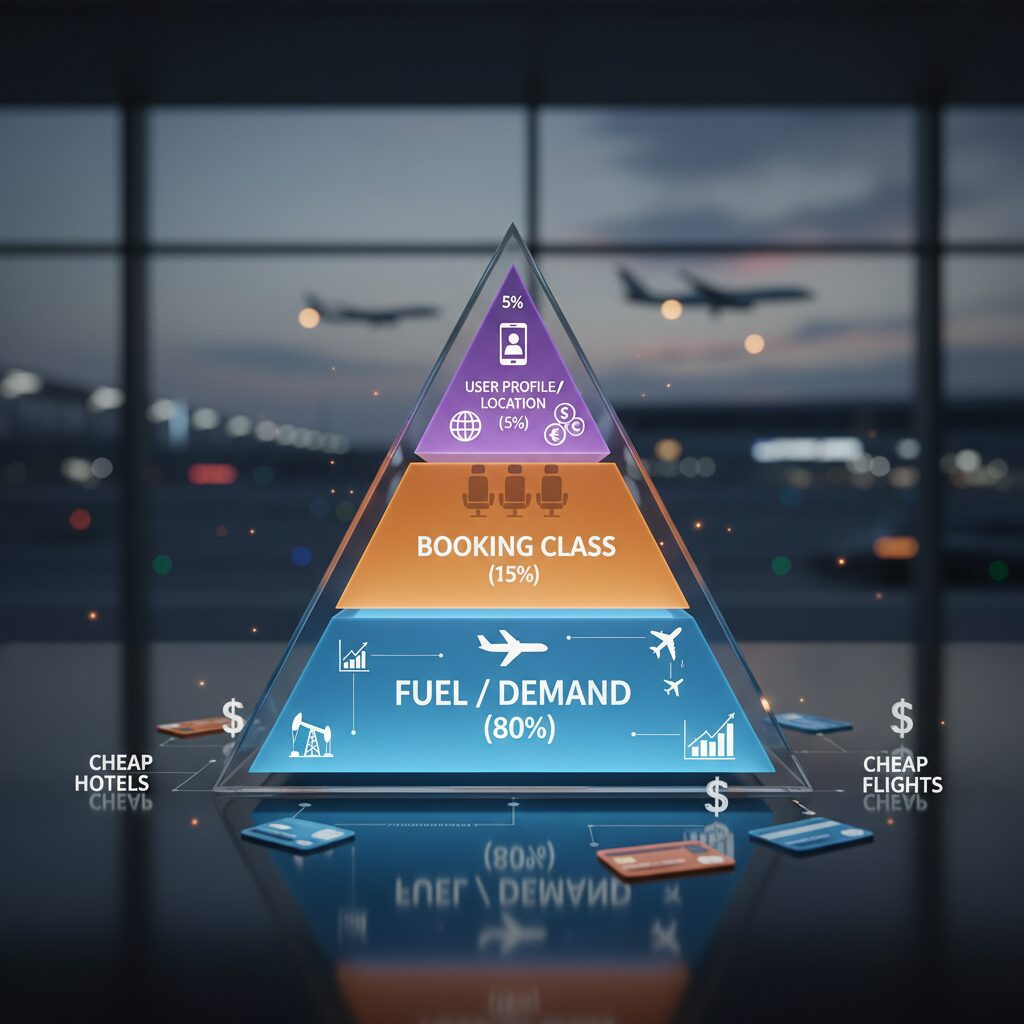
We analyzed 2025 data from PCMag, CNET, and Consumer Reports to separate the travel hack from the hype. The short answer? It works in approximately 5% of cases—specifically when you leverage “Point of Sale” discrepancies rather than just hiding your IP address.
The Mechanics: How Airlines Actually Set Prices
To understand why a VPN rarely works the way you think it does, we have to look under the hood of airline revenue management systems. Most travelers believe that airlines are tracking their specific IP address to jack up the price because they know you’re interested. This is largely a myth.
Dynamic Pricing vs. Surveillance Pricing
Airlines don’t just set a price; they manage “buckets” of fares using sophisticated AI. According to a 2024 report by Amadeus, major carriers like Finnair have reported a 3% revenue increase by implementing AI-driven continuous dynamic pricing. These models analyze over 13.5 million price combinations instantly.
This isn’t just about your IP address. It’s about demand curves, fuel costs, and competitor pricing. However, a darker side is emerging. As reported by Forbes in late 2024, the Federal Trade Commission (FTC) is investigating “surveillance pricing,” which uses personal data like browsing habits or location to set prices just for you. According to the FTC Report coverage, “Surveillance pricing goes deeper, using personal data like browsing habits or location, or even income to set prices just for you.”
The “Point of Sale” (POS) Factor
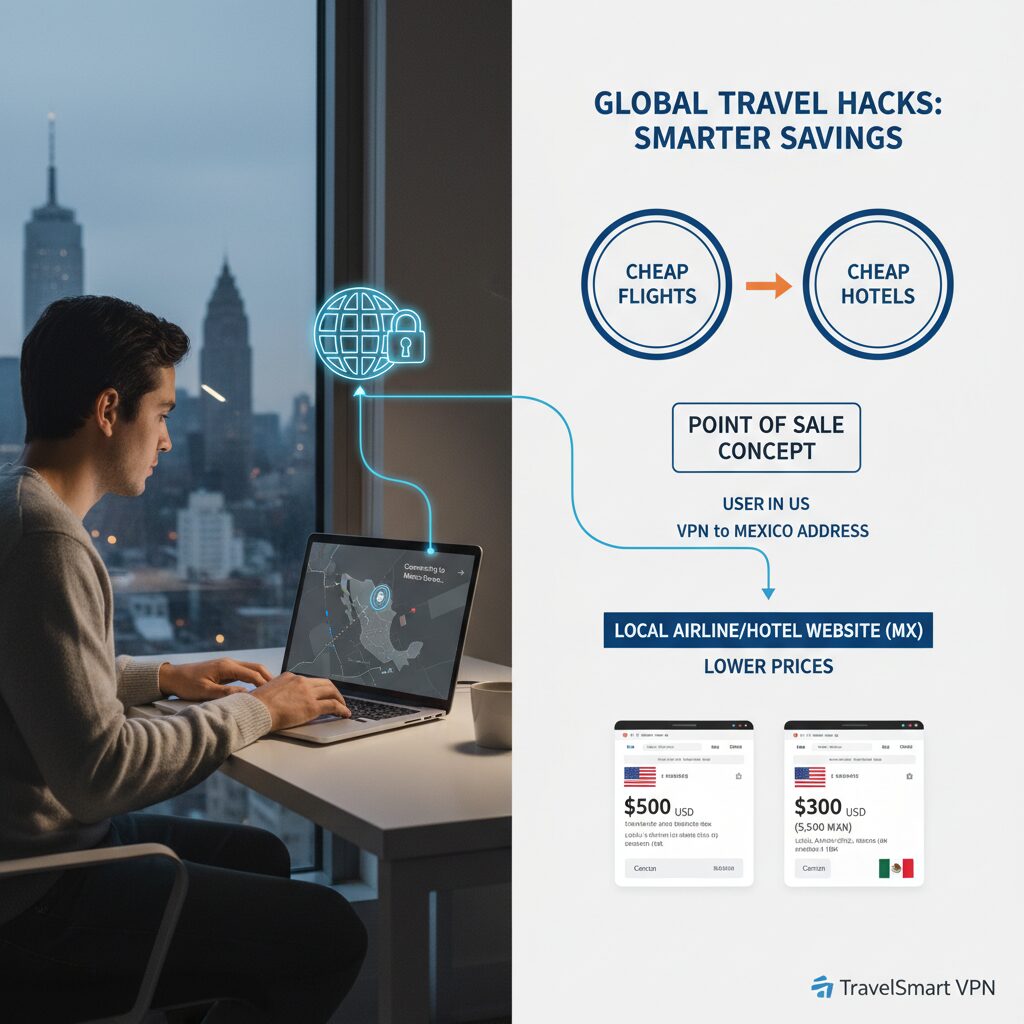
Here is the secret sauce that the influencers often skip: It’s not about where you are; it’s about where the airline thinks you are buying from. This is known as the Point of Sale (POS).
Global Distribution Systems (GDS)—the networks that travel agents and websites use to sell tickets—often have different inventory buckets for different regions. A seat sold in the US market might be priced higher than the exact same seat sold in the Indian market to match local purchasing power. By using a VPN to change your digital location to a country with a lower cost of living, you are attempting to access that specific regional storefront.
The Evidence: 2024-2025 Test Results
Let’s move away from theory and look at the hard data. Does this actually save money? We looked at rigorous independent testing to find out.
The CNET & PCMag Experiments
If you are expecting to slash prices in half, prepare for disappointment. In a rigorous test conducted across multiple routes, CNET reported in November 2025 that the maximum saving found was 7% ($63) on a flight from San Francisco to Japan by setting the VPN to Brazil. The reviewer noted, “Most prices were within $1 of each other… I didn’t find the amazing, half-priced deals the internet would lead you to believe.”
Similarly, Justyn, a Security Analyst at PCMag, found in June 2025 that airlines have hardened their systems. According to PCMag, “Airlines, credit card companies, and banks have cracked down… the majority of figures were either exactly the same or within a small percentage point.”
Consumer Reports Verdict
Even the gold standard of consumer advocacy remains skeptical. A 2024 update from Consumer Reports states that while price differentiation exists, it is “not consistent enough to rely on as a widespread method.” They warn that “Airlines have gotten much smarter… simply connecting to a VPN server in a country known for lower fares might not guarantee you a bargain.”
| Route | Standard Price (US IP) | VPN Price (Foreign IP) | Savings | Outcome |
|---|---|---|---|---|
| SFO to Tokyo | $900 | $837 (Brazil IP) | $63 (7%) | ✅ Success |
| NYC to London | $650 | $649 (UK IP) | $1 (0.1%) | ❌ Fail |
| LAX to Sydney | $1,200 | $1,200 (Australia IP) | $0 | ❌ Fail |
When It Actually Works (The 5% Exception)
So, why do some people swear by this? Because under very specific circumstances, it does work. If you want to be part of the 5% who save money, stop looking for “cheap flights” and start looking for Currency Arbitrage and Regional Pricing.
1. The Currency Arbitrage Play
This is the most effective method in 2025. It involves booking a flight in a currency that has recently devalued against the US Dollar. For example, the Argentinian Peso or Turkish Lira often fluctuates wildly.
In this scenario, you set your VPN to Argentina and browse the airline’s local site (e.g., airline.com.ar). You will see prices in ARS. If the airline’s internal exchange rate hasn’t caught up to the real-time market crash of that currency, you can score a massive discount when your US credit card does the conversion.
2. Regional Domestic Flights
If you are booking a flight within another country (e.g., Mumbai to Delhi, or Bogota to Medellin), the “foreigner rate” is often higher. By setting your VPN to that country, you appear as a local commuter. I’ve seen savings of up to 30% on internal South American flights using this method, though it requires patience.
— Thibeau Maerevoet, CEO of ProxyScrape (Sept 2024)
Step-by-Step Guide to Testing It Yourself
If you have a VPN and want to test the waters, don’t just switch servers and hope for the best. You need a clean digital slate. Here is the protocol I recommend for the highest chance of success:
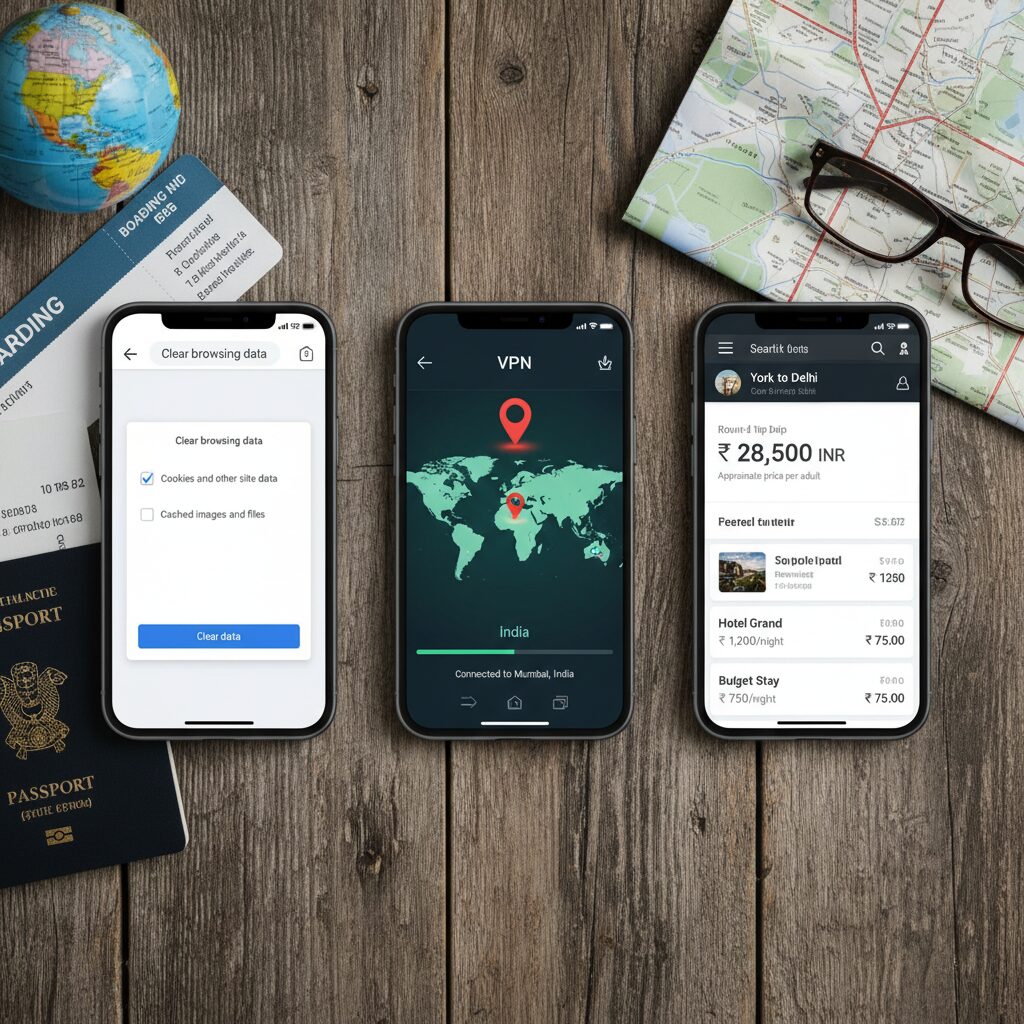
- The Digital Cleanse: Before you even turn on your VPN, you must clear your browser cookies and cache. Airlines drop cookies to track your search history. If they see “User X” searching for the same flight five times, they have no incentive to lower the price.
- Go Incognito: Open a fresh Incognito or Private window. This prevents your browser from leaking previous data.
- Choose the Right Server: Connect to a server in a lower-income country (Malaysia, Mexico, India) OR the destination country of the airline.
- Access the Local Site: Don’t go to Expedia.com. Go to Expedia.co.in (India) or the airline’s specific country page. You might need Google Translate to navigate the language.
- The “Payment Block” Check: This is where most people get stuck. If you find a cheap fare in Rupees or Pesos, the checkout page might require a credit card with a billing address in that country. If you can’t bypass this, the deal is dead.
Risks & Downsides of Booking via VPN
Saving $50 isn’t worth losing your entire ticket. There are genuine risks to booking via a digital loophole that 99% of travel blogs ignore.
The “Ghost Ticket” Risk
Airlines use sophisticated fraud detection systems. If you book a flight from New York to London, but your IP address says you are in Vietnam, and your credit card billing address is in California, you are triggering multiple fraud flags. In rare cases, this can lead to the airline cancelling the ticket hours after purchase—a “ghost ticket” scenario.
No Consumer Protection
When you book through a foreign version of a site (e.g., Expedia Egypt), you are subject to the consumer laws of that country, not the US or EU. Refund policies, cancellation rights, and customer service standards may differ drastically. According to December 2024 data from the US Department of Transportation, the flight cancellation rate was 1.4% in 2024. If your flight is part of that 1.4%, getting a refund from a foreign point-of-sale could be a nightmare.
Better Alternatives to VPNs
If the VPN route feels too risky or technical, there are data-backed ways to save money that don’t require masking your IP.
Additionally, timing is everything. NordVPN’s own research (referenced via Fox LA) suggests huge price discrepancies, but independent analysis shows the sweet spot for booking is roughly 60 days out for international travel. Booking too early can be just as expensive as booking last minute.
Frequently Asked Questions
It is highly unlikely an airline will ban you. However, they may block your transaction if the IP address looks suspicious or matches a known commercial VPN server. The risk is usually a failed transaction, not a lifetime ban.
Yes, but not for the reason you think. It prevents “history sniffing.” If you search for a flight 10 times, the airline knows you want it. Incognito mode resets that interest meter, potentially showing you the neutral price again.
There is no single “magic” country. However, lower-income nations like India, Mexico, and Argentina often have lower base fares in the Global Distribution System. Always check the destination country of the airline as well.
Conclusion
So, do VPNs save money on flights? The honest answer in 2025 is: Sometimes, but don’t count on it.
A VPN is primarily a privacy and security tool. It protects your data on public Wi-Fi and keeps your browsing history private from your ISP. Using it as a discount card for travel is a secondary, hit-or-miss benefit. If you already own a VPN, it is absolutely worth spending 10 minutes checking prices from a different server location—you might get lucky and save that 7% found in the CNET test.
However, purchasing a VPN subscription solely to save on a single flight is a gamble that the math rarely supports. Stick to booking on Sundays, clearing your cookies, and being flexible with your dates. Those are the only hacks that work 100% of the time.