How to plan a cheap global trip?
How to Plan a Cheap Round the World Trip (2025 Budget Guide)
The $20,000 question: Can you really travel the globe for a year on a minimum wage budget? In 2025, the answer is yes—but the rules have changed.
I remember sitting in a hostel in Bangkok back in 2018, listening to travelers brag about surviving on $10 a day. That world is gone. Post-pandemic inflation has shifted the baseline. But here’s the thing: while prices have risen, technology and new visa frameworks have opened doors we didn’t have five years ago.
Planning a round the world (RTW) trip today isn’t just about finding the cheapest hostel bed; it’s about geo-arbitrage, strategic banking, and understanding airline algorithms.
According to UN Tourism, international tourism recovered to 96% of pre-pandemic levels by mid-2024. The crowds are back, which means you need a smarter plan to beat the prices. This is your 7-step blueprint using 2025 inflation-beating hacks, the new “slow travel” visa rules, and updated flight data.

Step 1: The New Math of RTW Budgeting (2025 Estimates)
Let’s rip the band-aid off immediately. If you are reading blogs from 2022 that tell you $15,000 is enough for a comfortable year, they are setting you up for failure.
The Baseline Number
In my experience coaching travelers, under-budgeting is the number one reason trips end early. You need to be realistic. A rough estimate for a year-long trip in 2025 is between $25,000 to $35,000 USD per person. This aligns with recent data from Earth Trekkers, which updated their estimates in late 2025 to reflect global inflation.
Does that sound like a lot? It is. But that averages out to about $68–$95 per day, covering flights, insurance, food, and accommodation. You can go lower—much lower—if you stick to the “Geo-Arbitrage” strategy.
The “Geo-Arbitrage” Strategy
This is the most critical concept for 2025. You earn (or save) in a strong currency (USD, EUR, GBP) and spend in a weaker one. While Western Europe and North America have become prohibitively expensive, other regions offer incredible value due to currency fluctuations.
According to the Post Office UK City Costs Barometer 2024, Vilnius, Lithuania, is currently the best value city break in Europe. Similarly, relying on 2025 data from Skyscanner, destinations like Trabzon (Turkey) and Krabi (Thailand) remain budget sanctuaries where $30 a day still buys a king’s lifestyle.
Global Trip Savings Calculator
How much do you need to save per month to leave in 1 year?
Step 2: Route Planning for Maximum Savings
The “Golden Era” of cheap flights is over, but the “Data Era” is here. You can’t just wing it anymore if you want to save money.
The “August Hack”
Conventional wisdom says “travel in the off-season.” However, data is flipping the script. According to Expedia’s 2025 Air Hacks Report, released in January 2025, August is now the cheapest month to travel, while February and March have become the priciest. This is likely due to shifting business travel patterns and shoulder-season demand.
“The best hack is to let technology find the best value… Airfares are down, the end of summer is the cheapest time to fly.”
— Melanie Fish, Head of Expedia Group Brands PR
Booking Strategies that Work
When you book matters as much as where you go. The same 2025 Expedia report highlights that booking international flights on a Sunday can save travelers up to 17% compared to booking on a Friday.
RTW Tickets vs. One-Way
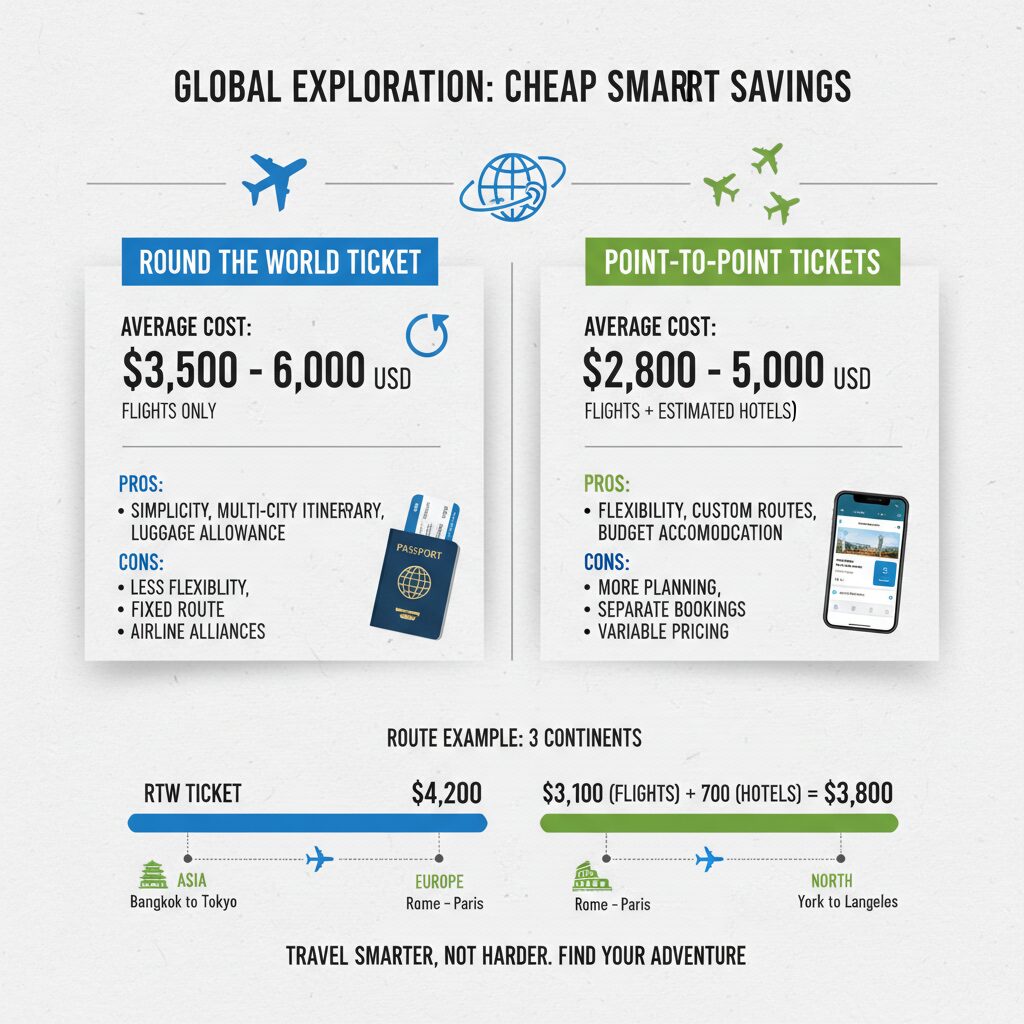
Should you buy a “Oneworld Explorer” pass or just book as you go?
- Buy the RTW Ticket If: You are moving fast (changing cities every 3-4 days) and have a strict schedule. It protects you from last-minute price spikes.
- Book One-Way If: You are practicing “slow travel.” One-way tickets allow you to stay in a cheap country like Vietnam for a month if you love it. This flexibility usually saves more money than the ticket cost itself.
Step 3: Banking & Logistics (Where Competitors Fail)
This is the boring part that saves you thousands of dollars. Most travelers bleed money through ATM fees and poor exchange rates without realizing it.
The 2025 Fee-Free Stack
You need a two-card system. I cannot stress this enough—if you lose one card, you need a backup.
- The ATM Card: If you are American, the Charles Schwab High Yield Investor Checking card remains the gold standard in 2025. They refund all ATM fees worldwide at the end of the month. I’ve personally saved over $400 in fees in a single year using this card.
- The Spending Card: For daily swipes, Wise (formerly TransferWise) is the verified best alternative. It allows you to hold 40+ currencies and converts at the mid-market rate, avoiding the hidden 3% “foreign transaction fee” most banks charge.
The Visa Game & The ETIAS Delay
Here is where many travel blogs are currently giving you wrong information. You might read that you need an “ETIAS” visa waiver to enter Europe.
Correction: The EU’s ETIAS system has been postponed until at least late 2026 or 2027. According to the official European Union website, this system is not yet operational for travelers in 2025. Do not pay third-party websites for “ETIAS applications”—they are scams.
Instead, look into Digital Nomad Visas. Even if you aren’t working full-time, countries like Spain and Portugal offer these visas which allow stays longer than the standard 90 days. According to Global Citizen Solutions, the 2025 minimum income requirement for Spain’s Digital Nomad Visa is approximately €2,763/month. If you qualify, this lets you rent long-term apartments, which are 40% cheaper than Airbnbs.
Step 4: Accommodations That Cost $0
Accommodation will be your biggest expense unless you opt out of the system entirely. In 2025, the sharing economy has matured into a reliable way to travel for free.
House Sitting & Pet Sitting
Platforms like TrustedHousesitters connect travelers with homeowners who need pet care while they are away. You get a free house (often a nice one) in exchange for walking a dog or feeding a cat. The annual fee pays for itself after one night.
Work Exchanges
If you are willing to trade a few hours of labor for a bed and food, look at Worldpackers or Workaway.
I prefer Worldpackers for first-timers because they offer verified hosts and support insurance if a host cancels on you. This isn’t just about saving money; it’s about connection. You stop being a tourist and start becoming a temporary local.

Step 5: Travel Insurance: The “Boring” Essential
I get it. Paying for something you hope you never use feels like throwing money away. But if you can’t afford travel insurance, you can’t afford to travel.
Medical evacuations can cost upwards of $100,000 without insurance. I’ve seen GoFundMe campaigns for travelers who broke a leg in Bali and couldn’t pay the hospital bill. Don’t be that person.
The Price War: SafetyWing vs. World Nomads
In 2025, the landscape has split into two camps:
- Budget/Digital Nomad: SafetyWing is the clear winner for cost. Their Nomad Insurance starts at approximately $56.28 USD per 4 weeks for travelers aged 18-39 (verified March 2025 pricing). It works like a subscription you can cancel anytime.
- Adventure/High Risk: If you plan on mountaineering above 4,500 meters or scuba diving, World Nomads or Genki generally offer more robust coverage for extreme activities, though at a higher price point.
Step 6: Gear That Saves Money
Packing light isn’t just about comfort; it’s a financial strategy.
Carry-on Only
Budget airlines make their profit on baggage fees. Checking a bag on an international flight can cost $75+ each way. Over 10 flights, that’s $750—enough for a month of living expenses in Vietnam.
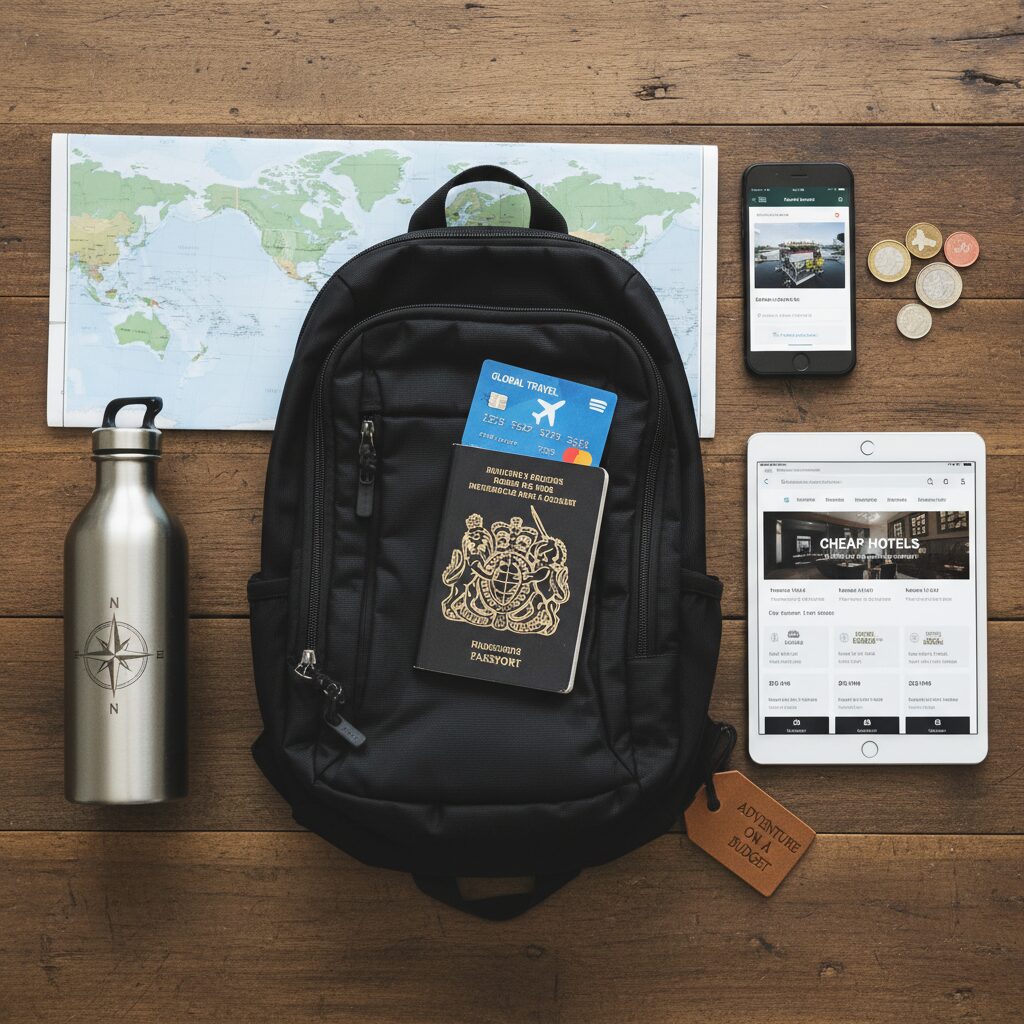
Invest in a solid 40L backpack (like the Osprey Farpoint or Fairview). If it fits in the overhead bin, you save money every time you move.
Water Purification
Buying bottled water daily costs ~$2/day. That’s $730 a year. Bring a Grayl or LifeStraw bottle. You can drink tap water safely anywhere in the world, saving money and reducing plastic waste.
FAQ: Planning Your Global Adventure
How much does a world trip cost for 1 year?
A realistic budget for 2025 is between $20,000 and $30,000 USD. This assumes a mix of cheap (Asia/South America) and expensive (Europe/Oceania) destinations.
Is it safe to travel solo in 2025?
Yes, but “safe” is relative. While violent crime against tourists is rare, digital theft is rising. Use a VPN, don’t flash wealth, and trust your gut. According to American Express 2025 Global Travel Trends, 58% of Millennial and Gen Z travelers are even bringing family along, indicating a high confidence in travel safety.
What about student loans?
If you have federal US loans, look into Income-Driven Repayment (IDR) plans. If you earn $0 while traveling, your monthly payment could be $0. Always consult a financial advisor before leaving.
Conclusion: The “Just Go” Manifesto
Planning a round the world trip on a budget in 2025 is a balancing act between inflation and innovation. Yes, flights are more expensive, but remote work tools, digital banking, and the sharing economy have made the lifestyle of travel more accessible than ever.
You have the data. You know that August is the cheapest time to fly. You know Vilnius is cheaper than Paris. You know that SafetyWing can cover you for $56 a month.
The biggest barrier left isn’t money; it’s the fear of leaving your comfort zone. But remember what Nick Careen from IATA noted: passengers today want flexibility and transparency. The tools are there. The world is open.
Start saving, book that Sunday flight, and go.