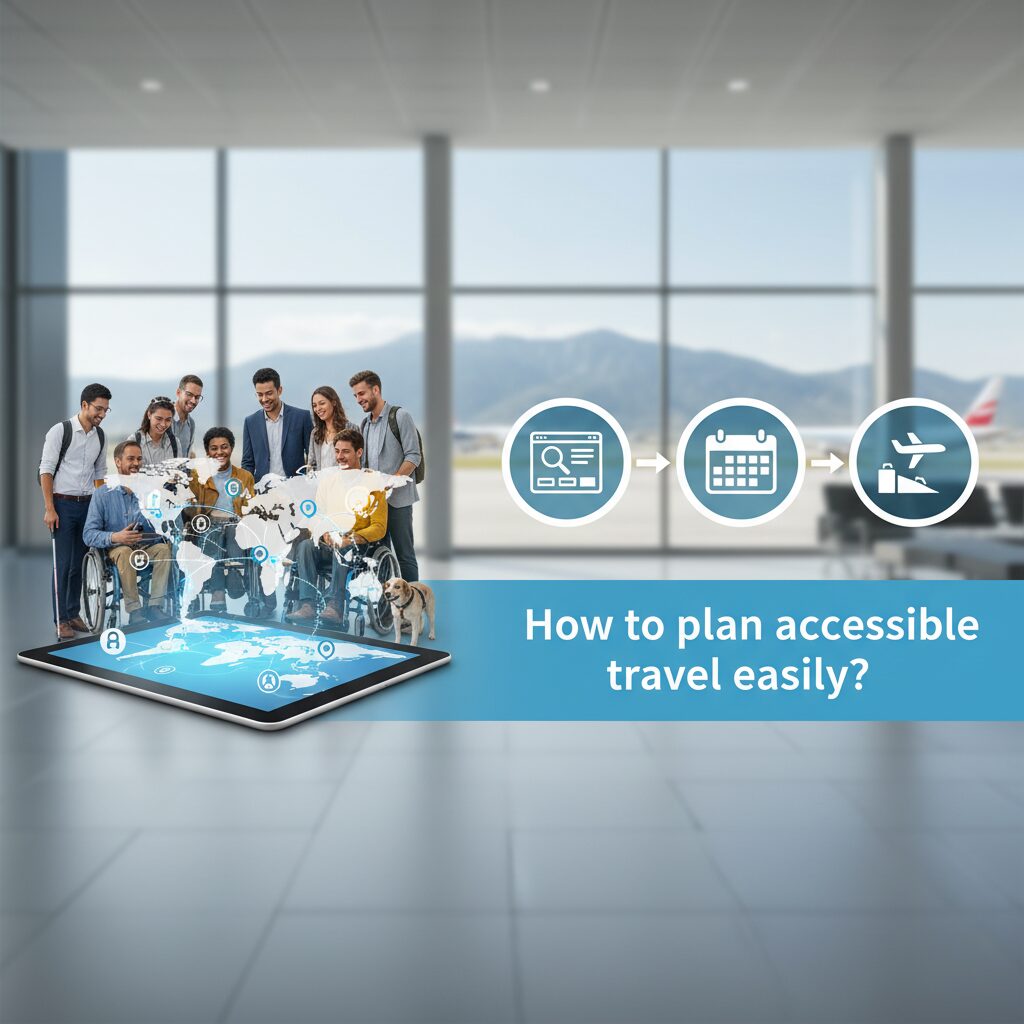
How to plan accessible travel easily?
How to Plan Accessible Travel Easily: The Ultimate 2025 Guide
By Expert Travel Writer | Updated for 2025
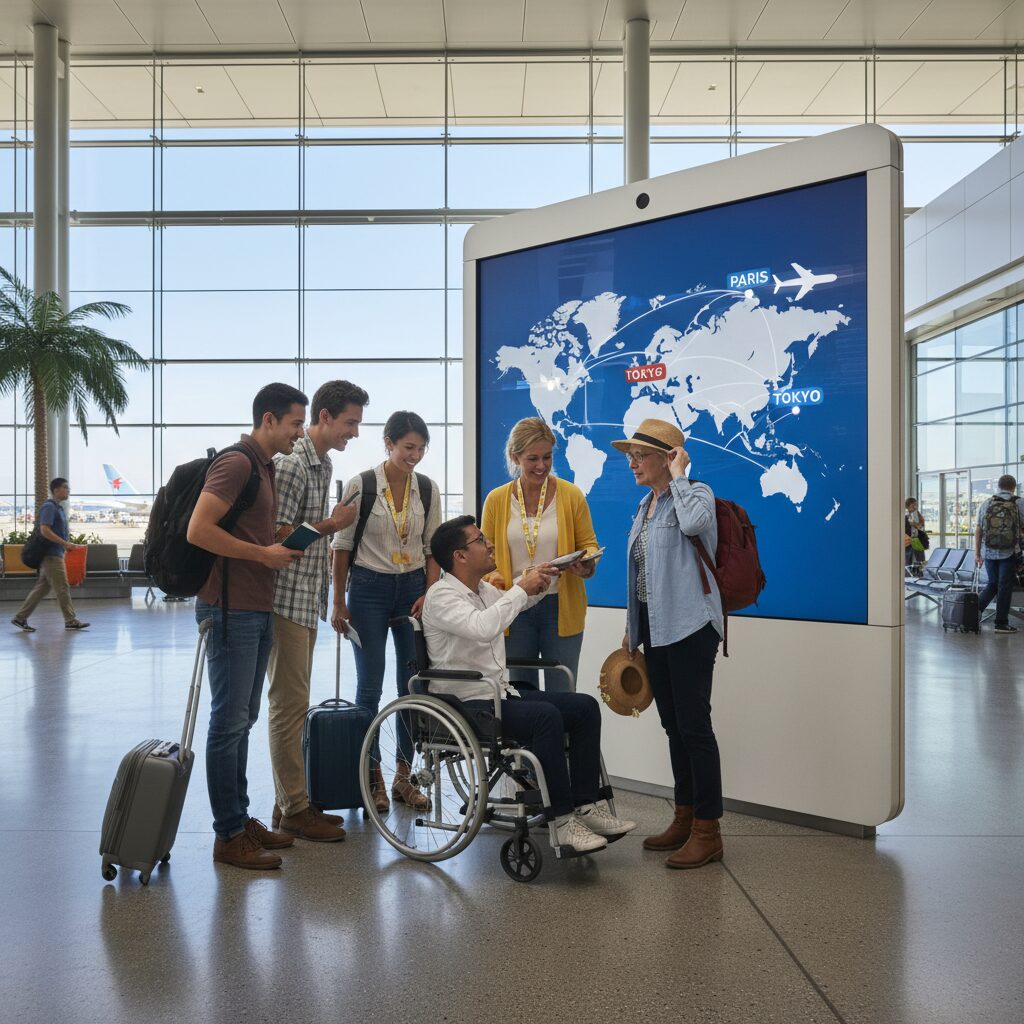
Let’s be real for a moment. For the 1.3 billion people globally who live with a disability, booking a vacation isn’t just about picking a nice beach. It’s a logistical military operation.
You aren’t just worried about the weather; you’re worrying if the airline will break your mobility device, if the “accessible” hotel room actually has a step at the entrance, or if the museum has sensory quiet zones.
I’ve spent years analyzing the travel industry, and the numbers are staggering. According to the World Health Organization (WHO), roughly 16% of the world’s population faces these hurdles daily. Yet, the industry is still playing catch-up.
But here is the good news: The world is opening up. With the accessible tourism market projected to hit $105 billion by 2027 according to Allied Market Research, companies are finally paying attention. This isn’t just a blog post; this is your 2025 strategic dashboard. We are going to move beyond basic advice and tackle the hard stuff: specific SSR codes, insurance loopholes, and how to verify accommodation like a pro.
In 2023 alone, U.S. airlines mishandled 11,527 wheelchairs and scooters, a rate of roughly 1.5% of all loaded wheelchairs, according to the U.S. Department of Transportation. Planning isn’t paranoia; it’s protection.
Step 1: Assessing Your ‘Accessibility Profile’
Most travel guides make the mistake of assuming “accessible” just means “wheelchair friendly.” But in my experience, accessibility is a spectrum. Before you open Expedia, you need to define your non-negotiables.
The Physical, Sensory, and Cognitive Audit
Don’t just say, “I need help.” Be specific. Are you part of the 70% of travelers with disabilities who would travel more if logistics were clearer? Write down your hardware and software needs:
- Mobility: Do you need a roll-in shower or just grab bars? What is the width of your power chair? (Measure it in cm and inches).
- Sensory: Do you need low-lumen lighting or noise-canceling zones?
- Medical: Do you require a fridge for insulin or power for a CPAP/Oxygen concentrator?
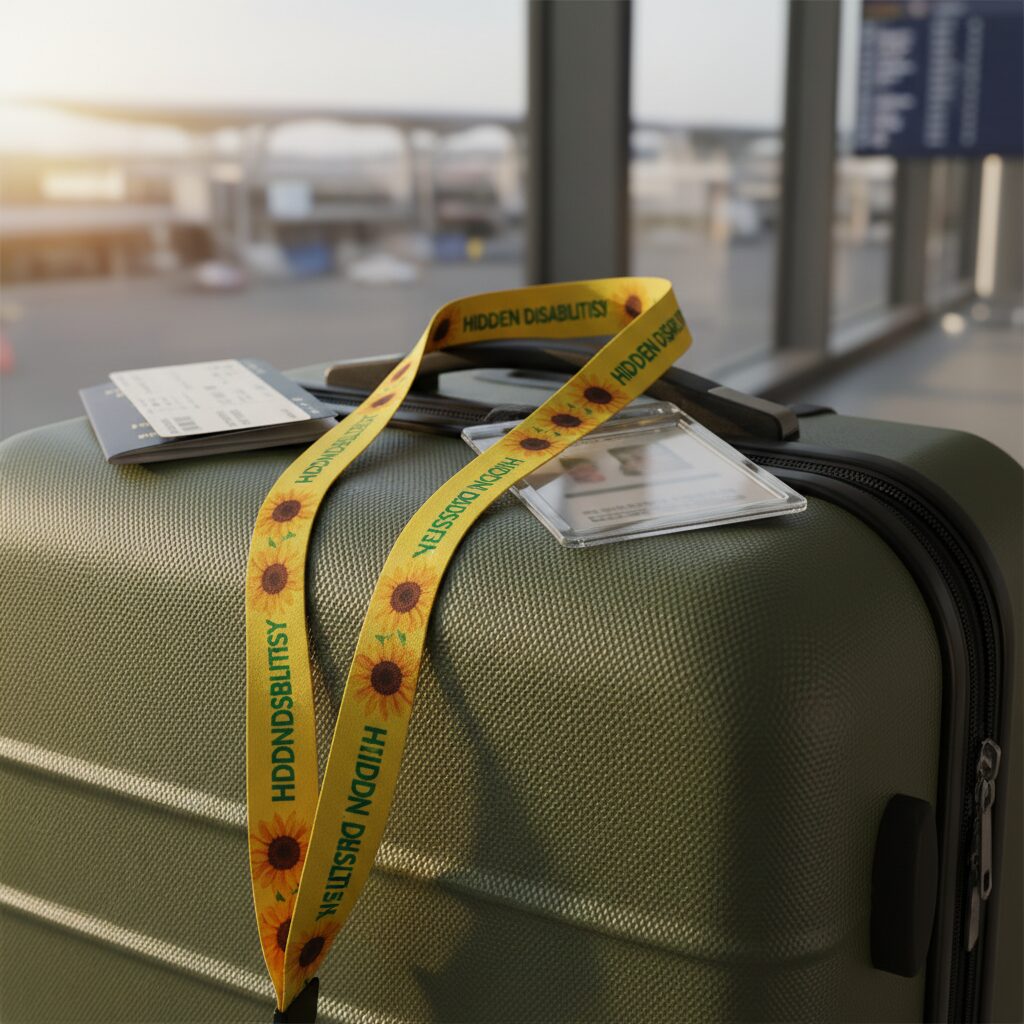
The Sunflower Lanyard
If your disability isn’t immediately visible—like autism, dementia, or chronic pain—you need the Sunflower Lanyard. As of 2024, the Hidden Disabilities Sunflower scheme is recognized in over 230 airports globally. Wearing this discreet green lanyard signals to airport staff that you may need extra time or assistance without you having to explain your medical history to every security agent.
Step 2: Choosing Accessible Destinations (Data-Backed)
Not all cities are created equal. While you might dream of the cobblestones in Rome, they are a nightmare for wheels. You want destinations that are investing in infrastructure.
In 2025, cities like Singapore, Barcelona, and Berlin are leading the pack. Why? Because they have integrated accessibility into their public transit systems.
How to Vet a Destination
Don’t rely on general travel blogs. Use specialized tools. I recommend checking Wheelmap and AccessAble. However, keep in mind that 98% of the world’s top websites fail WCAG 2 standards, according to WebAIM. This means digital maps often lack detail. You have to cross-reference.
For families with neurodivergent members, look for the Certified Autism Center™ badge. IBCCES certified over 150 new destinations in 2024 alone, ensuring staff are trained to handle sensory overloads.
Step 3: Mastering Air Travel (The “SSR” Codes)
This is where most plans fall apart. The U.S. DOT reported a 28% rise in disability-related complaints in 2023. To survive air travel, you must speak the airline’s language.
The Secret Language of SSR Codes
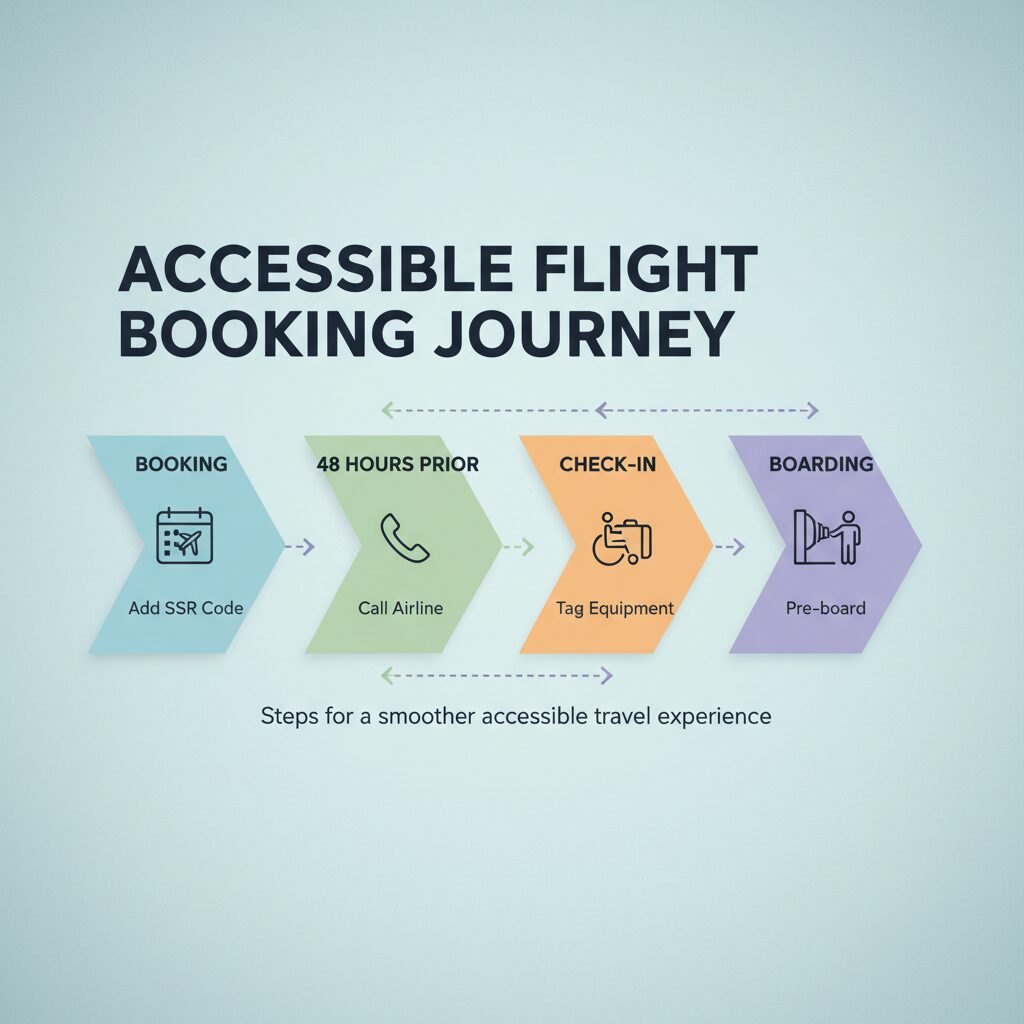
When you book, you can’t just check a box saying “wheelchair.” You need to ensure the correct Special Service Request (SSR) code is attached to your ticket. Call the airline 48 hours before flight and verify these codes:
- WCHR: You can walk short distances but need help to the gate.
- WCHS: You cannot climb stairs but can walk to your seat.
- WCHC: You are completely immobile and need an aisle chair to get to your seat.
- DPNA: Disabled Passenger with Intellectual or Developmental Disability Needs Assistance (Crucial for cognitive disabilities).
The “Damage Protocol” Defense
Senator Tammy Duckworth famously said regarding airline damage:
To protect your equipment, create a “Handling Instruction Card.” Laminate a sheet of paper (English on one side, destination language on the other) detailing exactly how to lift your chair, where the brakes are, and how to disengage the drive mode. Zip-tie this to the frame. Do not assume baggage handlers know how to drive your specific model.
Step 4: Accommodation Vetting (Trust No One)
Here is a shocking stat: Sage Traveling audits found that only 68% of hotels listing “accessible rooms” actually meet full ADA or European standards upon inspection. “Accessible” is often a marketing term, not a guarantee.
The Photo Verification Method
I never book a room without the “Photo Verification” method. As accessible travel expert John Morris advises:
Send an email asking for specific measurements:
- Width of the bathroom door (needs to be 32+ inches).
- Clearance under the bed (if you use a portable hoist).
- Height of the bed (too high makes transfers impossible).
Step 5: Specialized Gear and Medical Logistics
Traveling with medical equipment adds weight and complexity. Did you know that parties including a person with a disability spend 15% more per trip? Much of this is equipment rental.
Instead of hauling a shower chair across the Atlantic, rent at your destination. Companies like Scootaround or local mobility shops can deliver hoists, scooters, and oxygen concentrators to your hotel before you arrive.
Step 6: The Insurance Gap
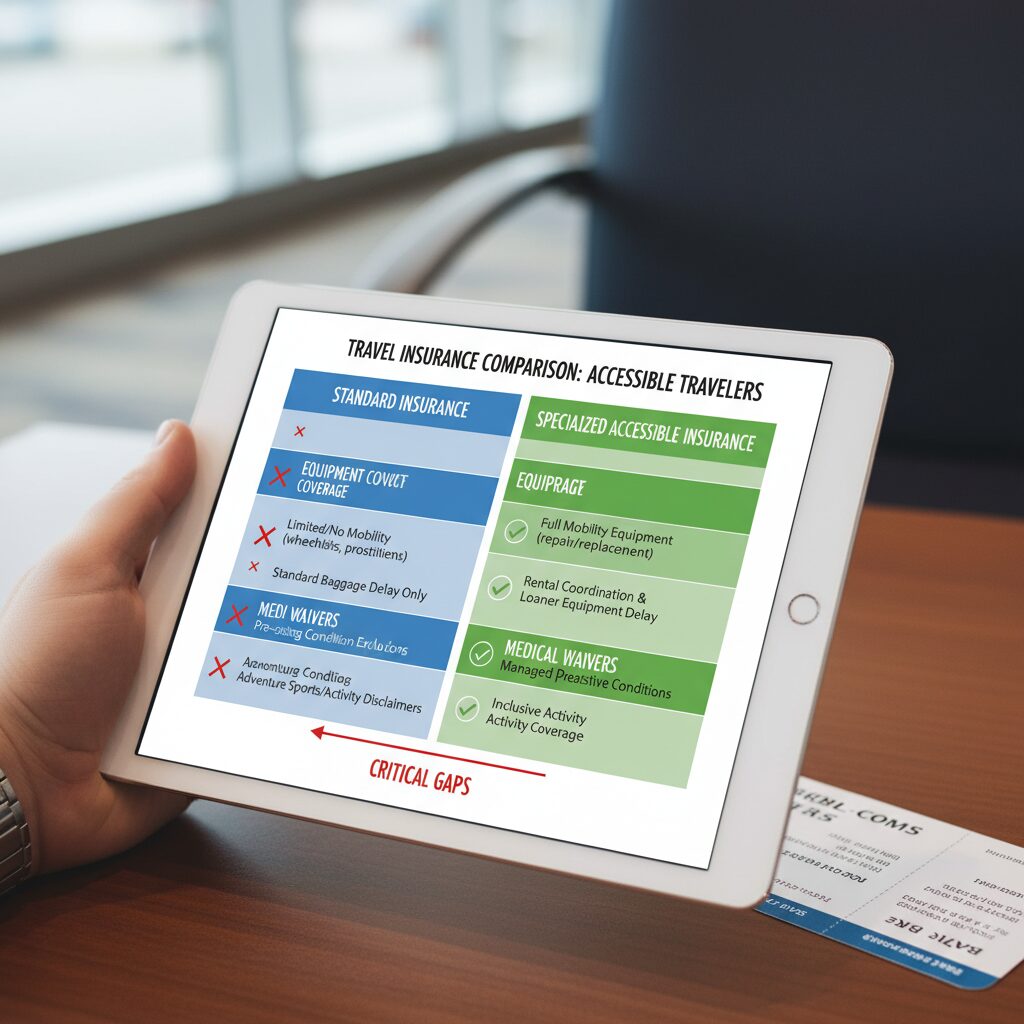
Standard travel insurance is often useless for PWDs. Why? Because they cap baggage coverage at $500 or $1,000. If an airline crushes your $30,000 custom wheelchair, a standard policy won’t even cover the wheels.
You need to look for two specific clauses:
- Pre-Existing Medical Conditions (PEMC) Waiver: Most policies exclude anything related to your disability unless you buy the waiver within 14-21 days of your first trip deposit.
- Mobility Equipment Coverage: Some specialized insurers (or add-ons from companies like Allianz or Travel Guard) offer higher caps for medical devices. Read the fine print.
Step 7: Technology & Apps for 2025
Your smartphone is your best accessibility tool. Beyond Google Maps, download these specific apps:
- Be My Eyes: Connects blind/low-vision travelers with sighted volunteers via video call to read signs or menus.
- Aira: A paid service offering professional visual interpretation for navigating airports.
- AccessNow: A crowdsourced map where users rate the accessibility of restaurants and hotels globally.
FAQ: Common Accessible Travel Roadblocks
Does travel insurance cover broken wheelchairs?
Rarely fully. Standard baggage policies have low limits. You must declare the wheelchair as a high-value item or rely on the DOT Airline Passengers with Disabilities Bill of Rights which mandates airlines in the US cover the full cost of repair or replacement (up to the original purchase price) for domestic flights.
How do I request wheelchair assistance at the airport?
Do not wait until you arrive. Request it during booking using the SSR codes mentioned above. Arrive at least 3 hours early. According to Expedia Group’s 2024 insights, travelers with disabilities book 4 months in advance—use that time to confirm your assistance request multiple times.
Are emotional support animals (ESAs) allowed on international flights?
Generally, no. Since the 2021 DOT rule change, airlines are only required to accept trained Service Animals (dogs). ESAs are now treated as pets. However, over 500,000 service animals flew in 2023. If you have a legitimate service dog, you must fill out the DOT Service Animal Air Transportation Form.
What if the “accessible” hotel room isn’t accessible when I arrive?
This is a major issue. If you are in the US, this is an ADA violation. Demand to be moved to a suitable room or upgraded to a suite that fits your needs at no extra cost. If they cannot accommodate you, they are often legally liable to find you a comparable room at a nearby hotel.
Conclusion: The World is Yours (With Preparation)
Travel is a human right. It connects us, educates us, and brings us joy. While the logistics of accessible travel can feel overwhelming, remember that you have economic power. The “Purple Pound” (the spending power of disabled households) is significant, and the industry is waking up to it.
By following this framework—getting the right SSR codes, verifying hotels with photos, and securing the right insurance—you shift the power dynamic. You aren’t asking for favors; you are managing a complex project.
Pack your bags, tag your chair, and go see the world. It’s waiting for you.