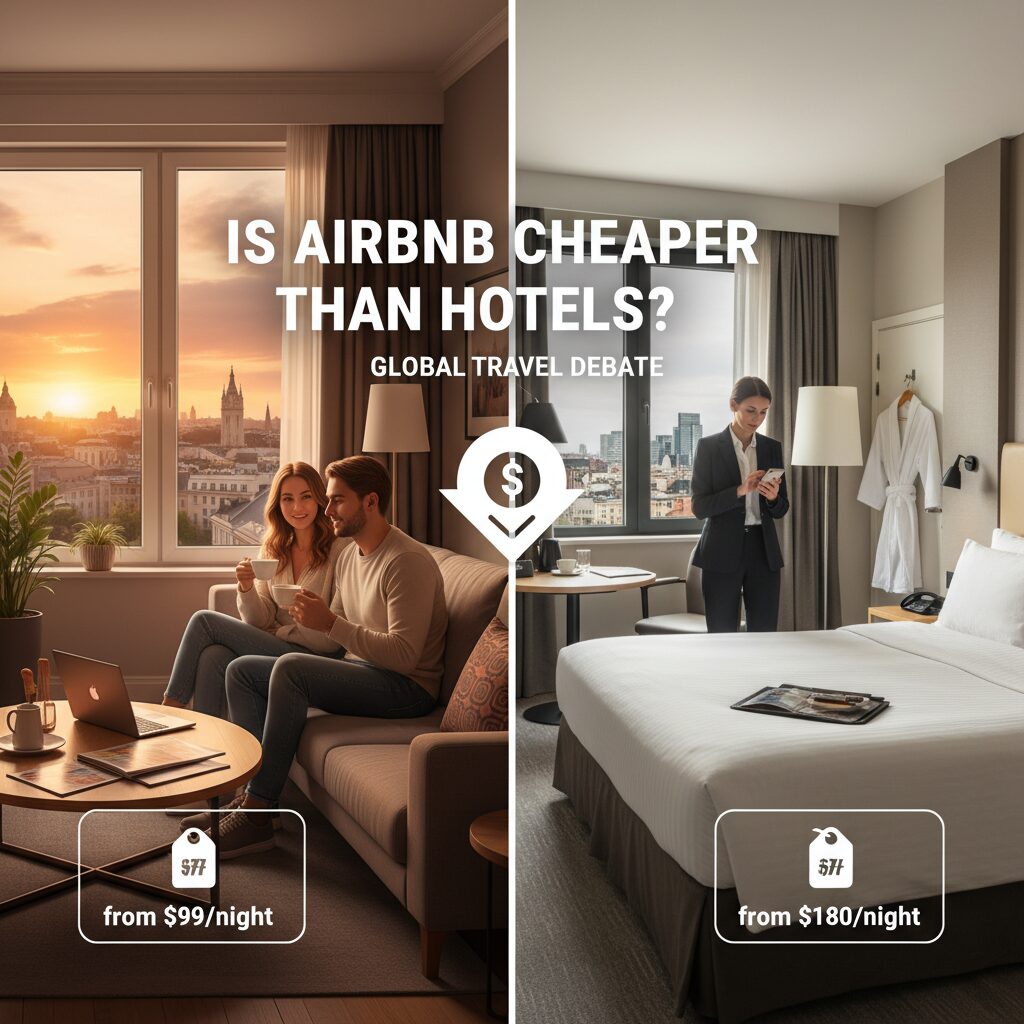
Is Airbnb cheaper than hotels?
Is Airbnb Cheaper Than Hotels? The 2024-2025 Cost Comparison Study
I remember booking my first Airbnb back in 2014. It was a quirky loft in Seattle, and it cost me half of what the downtown Sheraton was charging. It felt like I had hacked the system.
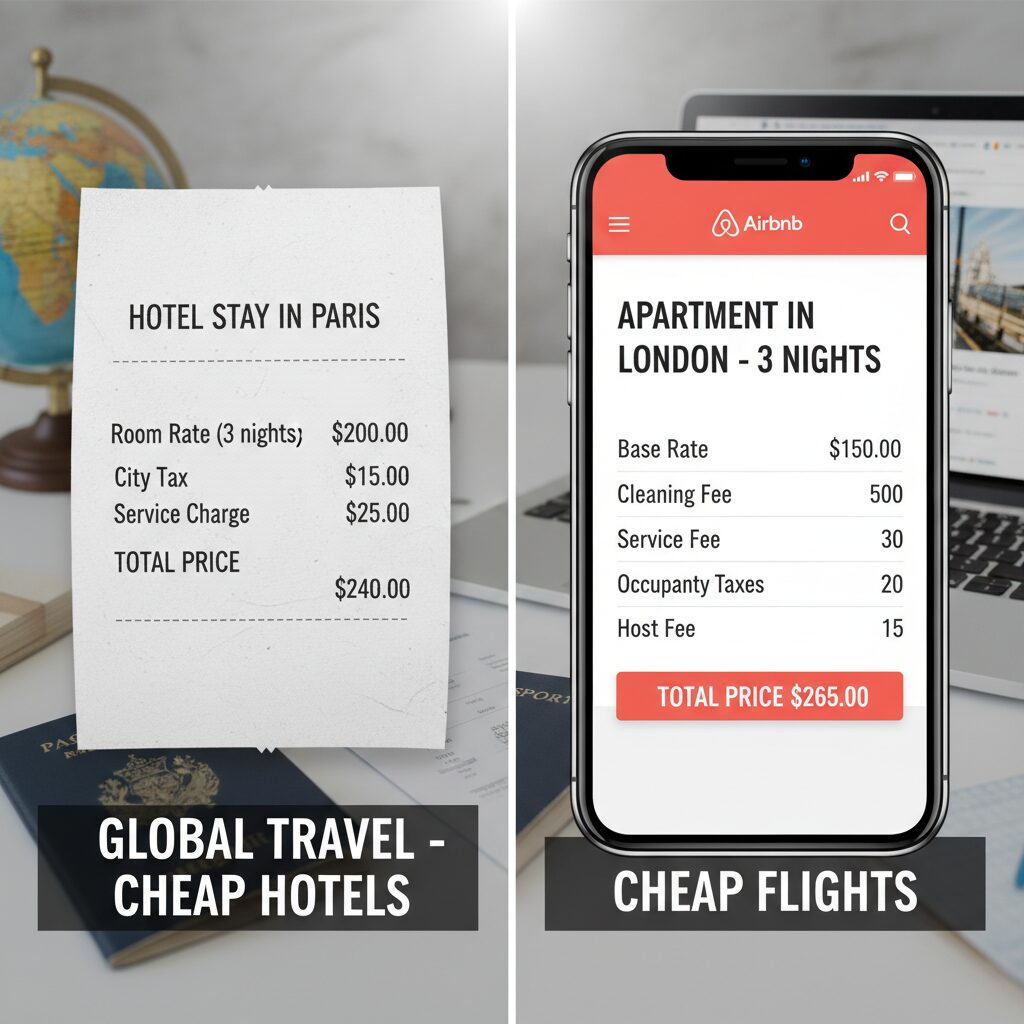
Fast forward to today, and the landscape looks radically different. You’ve probably seen the viral receipts: a $150 nightly rate that balloons to $400 once you add the cleaning fee, the service fee, and the “because we can” fee. It makes you wonder—is the golden age of cheap vacation rentals over?
The short answer is: not entirely, but the rules have changed.
We analyzed market data from over 100 cities, consulted 2024-2025 industry reports, and crunched the numbers on hidden fees to determine exactly when an Airbnb is cheaper than a hotel—and when it’s a rip-off.
The Short Answer: It Depends on Your “Tipping Point”
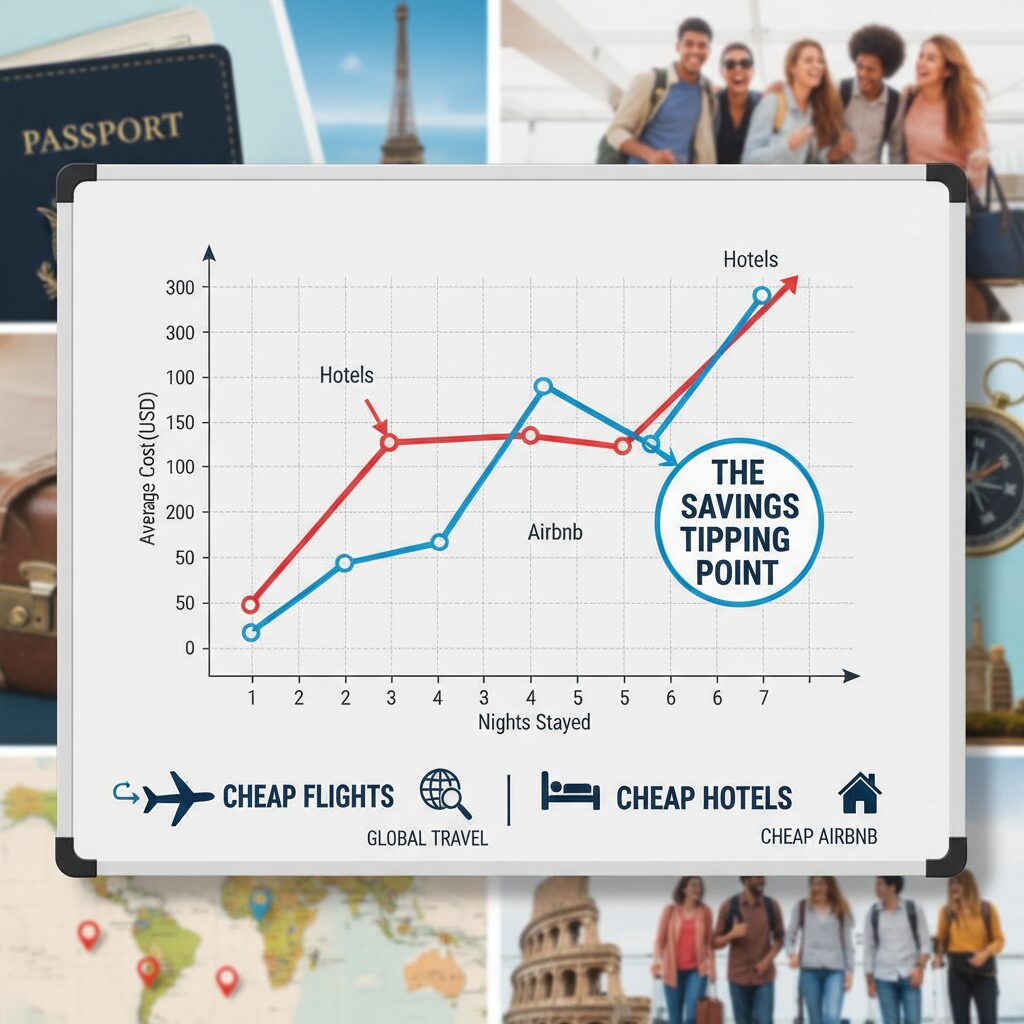
If you’re looking for a simple “yes or no,” you’re going to lose money. The reality of 2025 travel pricing relies on what I call the “Tipping Point.”
According to a 2024 study by Upgraded Points, Airbnb is technically the cheaper option in 71 out of 100 major U.S. cities, with an average nightly savings of $52. However, that average hides a massive caveat regarding how long you stay and who you travel with.
Cities where Airbnb is cheaper
Avg. Nightly Savings
“Solo Tax” on Airbnb
1. The 3-Day Rule
Here is the most critical rule for your wallet: If you are staying less than 3 nights, book a hotel.
Why? Fixed costs. An Airbnb cleaning fee (median $75 in the US) is charged whether you stay one night or ten. If you stay one night, that $75 fee effectively adds $75 to your nightly rate. If you stay five nights, it only adds $15 per night.
2. The Solo Penalty
If you are traveling alone or as a couple, hotels are fighting back aggressively on price. According to NerdWallet’s 2024 analysis, for solo travelers, hotels are approximately 29% cheaper than Airbnbs when you factor in the total checkout price. You simply don’t need a three-bedroom house for one person, yet even small Airbnbs often carry minimum cleaning costs that hotels absorb into their overhead.
3. The Group Savings Math
This is where Airbnb still dominates. For a group of six, booking a large vacation rental is roughly 33% cheaper than booking three separate hotel rooms (NerdWallet). If you can split the “hidden fees” across four or more people, the per-head cost plummets below almost any hotel chain.
2024-2025 Data Study: Price Comparison by City
Location is the second biggest factor. In my experience traveling across the US this year, I’ve noticed a massive divergence between “regulated” markets and “free” markets.
Data from Upgraded Points reveals a stark contrast:
Where Airbnb Wins
In the Midwest and less tourist-dense cities, Airbnb prices remain incredibly competitive.
- Milwaukee, WI: You can save massively here. Hotel prices averaged significantly higher than rentals.
- Chicago, IL: Despite being a major metro, the hotel tax burden makes Airbnbs a strong contender for savings (saving nearly $434 on a 3-night trip in some cases).
Where Hotels Win
Conversely, in cities where local governments have cracked down on short-term rentals (“AirBnbust”), supply has dwindled, and prices have skyrocketed.
- New York City: Following Local Law 18, which severely restricted listings, hotel rates have hit record highs, but legal Airbnbs are now rare and expensive. Skift reported hotel rates over $300/night, yet finding a legal Airbnb is nearly impossible for short stays.
- Las Vegas & Austin: In these markets, the sheer volume of hotel inventory drives prices down. You can often find a luxury hotel room in Vegas for less than a mediocre condo off the strip.
The “Hidden Costs” That Skew the Numbers
We can’t talk about price without talking about the “Check-Out Shock.” This is the moment you see a $150/night listing turn into a $800 total for a weekend.
The Cleaning Fee Crisis
According to NerdWallet, the median cleaning fee for a U.S. Airbnb is approximately $75 per stay. I’ve seen them go as high as $250 for luxury properties. In contrast, hotels build housekeeping into the room rate.
“If somebody is just looking to book something based on price, they might go for an economy hotel room. That’s $70 bucks versus what Airbnb is talking about, which is $114 for a one bedroom.” — Jan Freitag, National Director of Hospitality Analytics at CoStar
The “Chore List” Tax
This is a mental cost, but it has value. If you have to spend the last hour of your vacation stripping beds, starting laundry, and taking out the trash—all while paying a cleaning fee—you are essentially working for the host. If your time is worth $50/hour, that’s a hidden cost of the rental.
Food Savings: The Airbnb Secret Weapon
Here is the one factor most comparison studies ignore: Food.
If you stay in a hotel, you are likely eating out three times a day.
Breakfast: $15 + Lunch: $20 + Dinner: $35 = $70/day per person.
In an Airbnb with a kitchen, a simple grocery run can drop that to $20/day. For a family of four, that is a savings of $200 per day. This often offsets the cleaning fee on the very first day.
Interactive Cost Calculator: Should You Book?
Use this simple tool to check the real math before you book.
Airbnb vs. Hotel Cost Estimator
Stay Duration: The Secret to Airbnb Savings
Hotels generally charge the same rate whether you stay one night or twenty. Airbnb hosts, however, are desperate to fill their calendars. This leads to two major discount tiers:
- Weekly Discounts (10-15%): Most hosts set an automatic discount for stays of 7+ days.
- Monthly Stays (30-50%): This is where Airbnb crushes hotels. A NerdWallet analysis confirms that stays of 30 days or more can see daily rates drop by nearly half.
If you are a digital nomad or looking for temporary housing, hotels simply cannot compete on price unless you are looking at Extended Stay America or similar budget chains.
Specific Use Cases: Which Should You Book?
🏆 The Winner's Circle
Book a HOTEL if:
- You are traveling Solo or as a Couple.
- You are staying for less than 3 nights.
- You value amenities like a gym, pool, and daily housekeeping.
- You are visiting a city with strict regulations (NYC, Las Vegas).
Book an AIRBNB if:
- You are traveling in a group of 4 or more.
- You are staying for more than 5 nights.
- You plan to cook meals to save money.
- You need specific amenities like a washer/dryer or pet-friendly yard.
FAQ: Common Cost Questions
Why is Airbnb so expensive now in 2025?
Airbnb prices have risen due to professional management fees, increased cleaning costs, and local taxes that now match hotel occupancy taxes. Additionally, many cities have restricted supply, reducing competition.
Do hotels have hidden fees like Airbnb?
Yes, many hotels charge "Resort Fees" or "Destination Fees" ranging from $25 to $50 per night. However, unlike Airbnb's fixed cleaning fees, these are usually per night, not per stay.
Is it cheaper to stay in a hotel or Airbnb for a month?
Airbnb is typically 30-50% cheaper for monthly stays. Hosts prefer long-term tenants to reduce turnover work and often offer significant monthly discounts that hotels generally do not match.
Conclusion: The Days of "Always Cheaper" Are Gone
The era where Airbnb was the guaranteed budget option is over. Brian Chesky, CEO of Airbnb, admitted this himself, stating the company is focusing on "making sure that Airbnb is affordable again" after hearing customer complaints.
In 2025, being a smart traveler means ignoring the bold nightly rate and looking straight at the Total Price.
My final advice? Use the 3-day rule. If it's a quick weekend trip for two, treat yourself to a hotel. You'll likely pay less and avoid the chore list. But if you're taking the whole family to the beach for a week, Airbnb's kitchen and extra bedrooms will still save your budget.
Check the total price filter before you commit—your wallet will thank you.