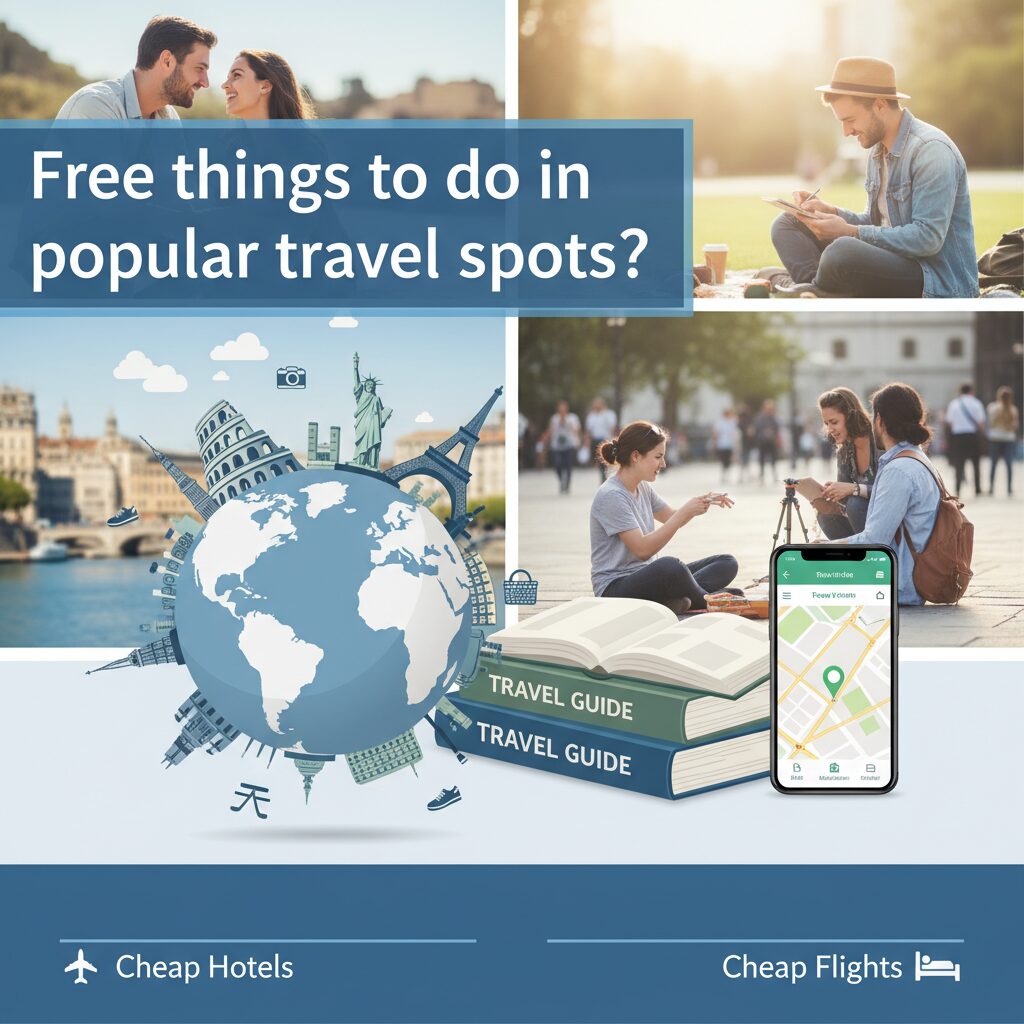
Free things to do in popular travel spots?
The Ultimate 2025 Guide to Free Things to Do in the World’s Most Expensive Cities
Inflation has hit travel hard, but the world’s best culture is still priceless—literally. We’ve all been there: staring at a $40 entry fee for a museum we only have an hour to explore, wondering if it’s worth the swipe. But here is the secret that seasoned travelers know: seeing Paris, London, and NYC without opening your wallet isn’t just possible; it’s often the superior way to experience the city.
In my decade of navigating global capitals, I’ve realized that “free” doesn’t mean “cheap.” It means strategic access. It means knowing exactly which Tuesday the museum opens its doors, or which rooftop offers the same view as the skyscraper next door for $0 instead of $50. This guide moves beyond the generic “go to a park” advice. We are diving into strategic free travel—timing, loopholes, and hidden access for 2025.
The “Experience Economy” Shift: Why Free is Trending in 2025
You might think that seeking out free activities is purely a necessity driven by the cost of living crisis, but the data suggests something more profound is happening. Travelers are shifting their priorities from accumulating souvenirs to accumulating moments.
According to Mastercard’s 2024 Travel Trends Report, spending on experiences now accounts for 12% of tourism sales, the highest point in at least five years. We are desperate to *feel* something when we travel, not just buy things.
However, the desire for connection is clashing with economic reality. A 2025 report from Skyscanner indicates that for 62% of Canadians (a strong proxy for Western travelers), the cost of flights remains a primary concern. This creates a unique pressure cooker: we want to travel *more* (80% of global travelers plan to take the same or more trips in 2025 according to the same Skyscanner data), but we have less disposable income once we land.
“Travelers, especially Millennial and Gen Z, are motivated to book thoughtful, meaningful trips this year… choosing small businesses and authentic connections.”
— Audrey Hendley, President of American Express Travel (Amex Global Travel Trends Report, March 2025)
This is where the “Free Travel Strategy” becomes essential. By zeroing out your entertainment budget, you liberate funds for what matters—perhaps that vintage coat you found in a local market (a trend coined “Vintage Voyaging” by Booking.com) or simply extending your trip by another day.
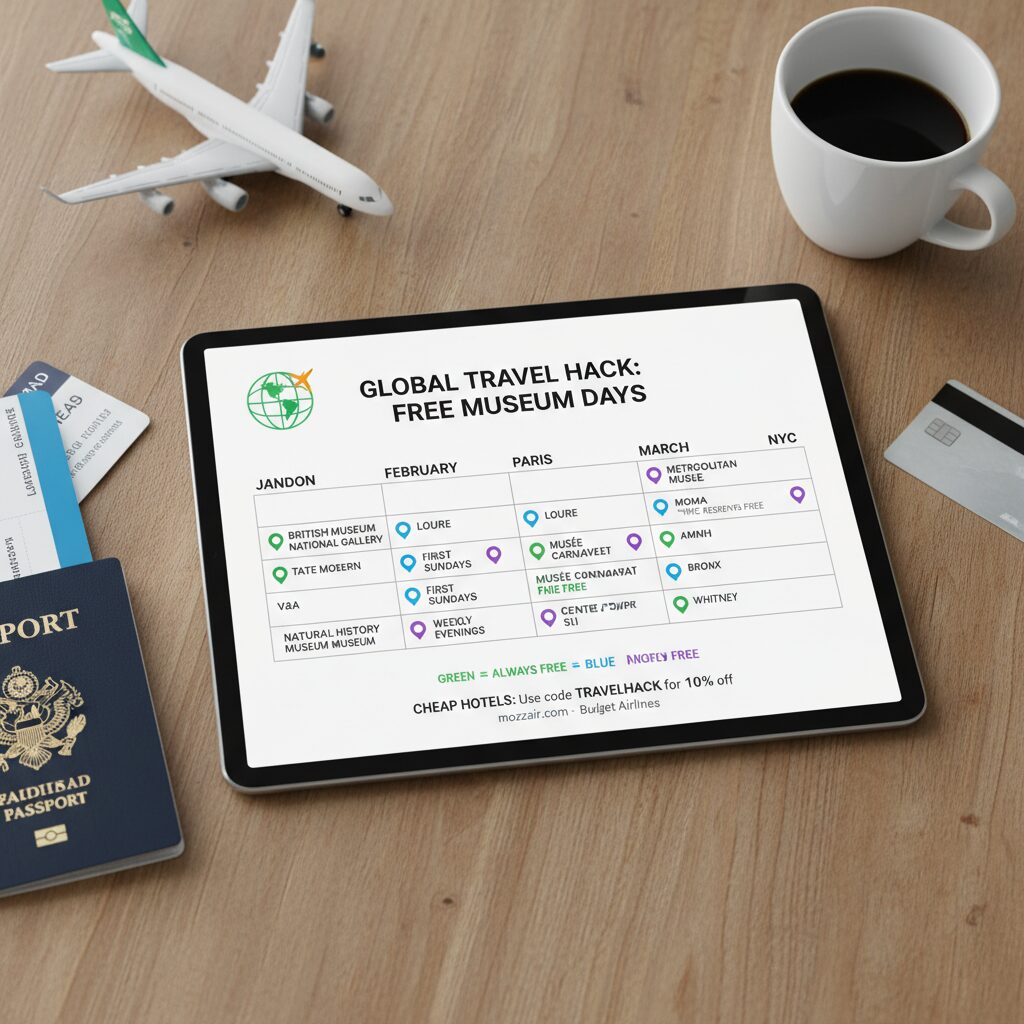
Master List: Free Days at World-Class Museums (2025 Calendar)
Not all free admission policies are created equal. In my experience, understanding the difference between the “London Model” and the “Paris Model” can save you hundreds of dollars.
London: The “Always Free” Capital
London is arguably the best city in the world for budget culture. Unlike most destinations, the UK government subsidizes major national museums. This has a massive impact on visitor behavior. According to data released by the Association of Leading Visitor Attractions (ALVA) in March 2025, the British Museum (Free) received a staggering 6.4 million visitors in 2024. Compare that to the Tower of London (Paid, approx. £30), which saw 2.9 million.
Top Picks (Always Free):
- The British Museum: World history (Rosetta Stone).
- Tate Modern: Contemporary art in a massive turbine hall.
- The V&A: Design, fashion, and sculpture.
- Natural History Museum: Dinosaurs and architecture.
Paris: The “First Sunday” Strategy
Paris operates differently. Most museums charge hefty fees (€15-€22), but they offer a loophole. According to the Paris Tourist Office (Jan 2025), major heavy hitters like the Musée d’Orsay, Centre Pompidou, and the Musée d’Art Moderne are free on the first Sunday of every month.
Pro Tip: The Louvre is also free on the first Friday of the month after 6 PM (except July and August), but you must book a time slot in advance. Do not just show up, or you will be disappointed.
NYC: “Pay What You Wish” & Logistics
New York is tricky. The “Pay What You Wish” model is disappearing for non-residents, but opportunities remain if you know the schedule.
- Brooklyn Museum: First Saturday of the month (5–11 pm).
- The Morgan Library: Fridays 5–7 pm (Reservations required).
- Staten Island Ferry: Always free. This is the ultimate “Destination Dupe” for the Statue of Liberty cruise. You get the same view of Lady Liberty without the $30 ticket or the security line.
The Rise of “Noctourism” and Free Night Views
One of the most fascinating trends emerging for 2025 is “Noctourism.” Booking.com’s 2025 Travel Predictions reveal that 62% of travelers are considering visiting “darker sky destinations” for experiences like star bathing.
While you might associate this with remote camping, you can apply this to urban environments to save money. Observation decks in major cities have become exorbitantly expensive (The Shard in London or The Edge in NYC can cost upwards of $40). The hack? Find the free rooftops.
| City | Paid Trap ($35+) | Free Alternative (Zero Cost) | Why the Free Option Wins |
|---|---|---|---|
| London | The Shard | Horizon 22 / Sky Garden | Higher vantage point (Horizon 22) and free indoor gardens (Sky Garden). Booking required. |
| Paris | Eiffel Tower Top | Galeries Lafayette Rooftop | You get a view of the Eiffel Tower, which you can’t see when you’re standing on it. |
| Tokyo | Tokyo Skytree | Tokyo Metro Govt Building | Stunning views of Shinjuku and Mt. Fuji on clear days. Totally free entry. |
“Destination Dupes”: Free Alternatives to Paid Traps
Expedia Group’s “Unpack ’25” report highlights a massive surge in “Destination Dupes”—places that offer a similar vibe to popular spots but without the crowds or cost. 63% of consumers are likely to visit a less well-known destination.
But we can apply this “Dupe” logic to activities within a city, too.
- The Trap: Paid Guided Walking Tours.
- The Dupe: Self-Guided Audio Tours or “Free” Walking Tours.
Honest note: “Free” walking tours (like Sandemans) are technically tip-based. You should tip your guide (usually €10-€15), but this is still significantly cheaper than a $50 pre-booked corporate tour, and the guides work harder because they work for tips.
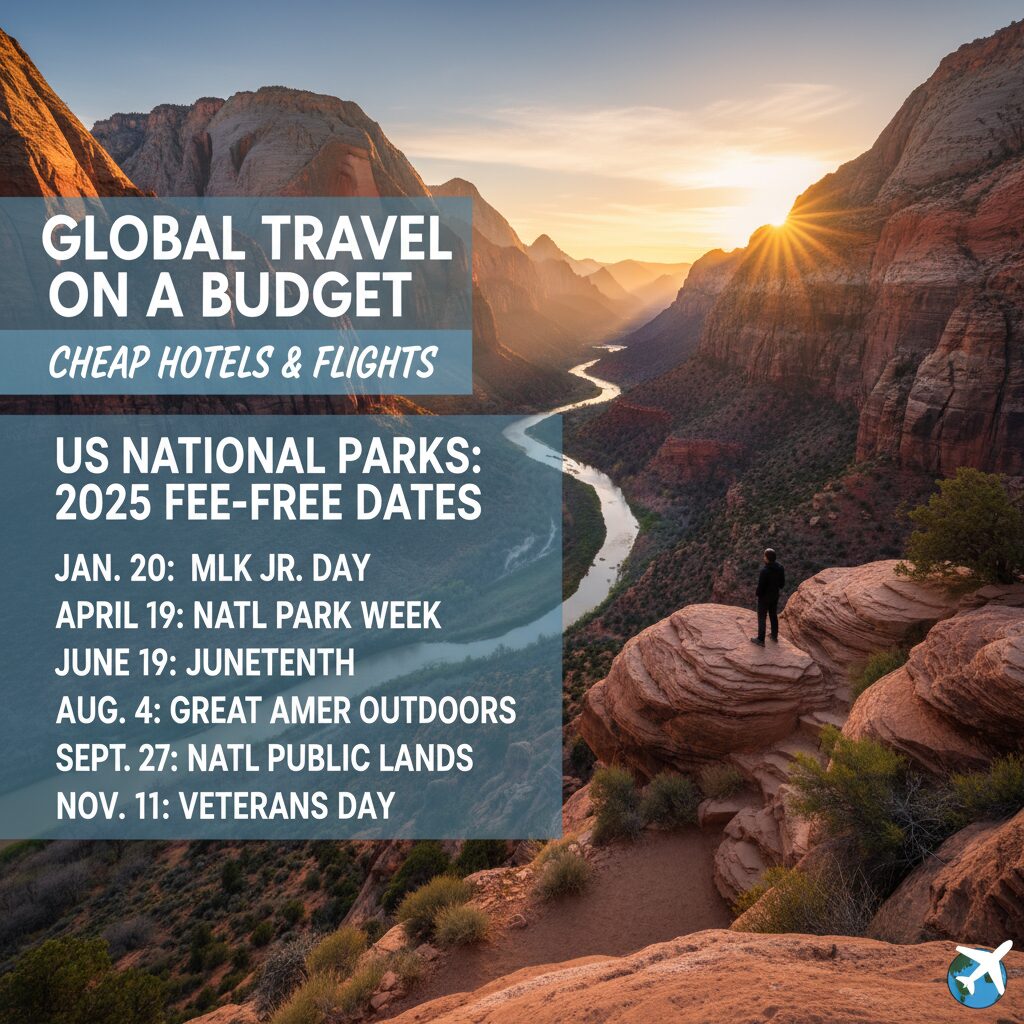
2025 Nature & National Parks Fee-Free Dates
If your travels take you to the US, the National Park Service offers specific days where entrance fees are waived. This is huge for parks like Yosemite or the Grand Canyon, where vehicle passes can cost $35.
According to the National Park Service official announcement (Dec 2024), here are the dates you need to mark for 2025:
- January 20: Birthday of Martin Luther King, Jr.
- April 19: First day of National Park Week.
- June 19: Juneteenth National Independence Day.
- August 4: Anniversary of the Great American Outdoors Act.
- September 27: National Public Lands Day.
- November 11: Veterans Day.
💰 The Budget Saver Calculator
Curious how much you can actually save? Input your group size and trip length to see the potential value of using these free hacks vs. standard tourist prices.
How to Find Free Walking Tours (That Are Actually Good)
I mentioned “Free Tours” earlier, but how do you spot the good ones? The key is niche.
General “City Highlights” tours are often overcrowded. In 2025, look for thematic tours. Amex’s 2025 report notes that 73% of travelers want to support small businesses. Look for independent guides offering tours on “Street Art,” “Ghost Stories,” or “Film Locations” (capitalizing on the “Set-Jetting” trend noted by Expedia).
Warning on Hidden Costs: Always verify “hidden” fees. For example, the Getty Center in Los Angeles is famous for being free. However, parking costs $20-$25. To make it truly free, you must take the Metro bus line 761, which stops right at the gate. Always check the “Getting There” page on the official website before you go.
FAQ: Navigating the Free Travel World
Q: Are museums in London really completely free?
A: Yes, for the permanent collections. The British Museum, Tate Modern, V&A, and Science Museum do not charge for entry. However, specific temporary exhibitions (e.g., a special Picasso exhibit) will require a paid ticket.
Q: What is the “set-jetting” trend and is it free?
A: “Set-jetting” is traveling to locations seen in movies or TV shows. Expedia reports a 16% increase in this influence for 2025. Visiting these locations (like the Emily in Paris square or the Harry Potter platform in Kings Cross) is almost always free—you just need the address.
Q: Do I need to book free tickets in advance?
A: Increasingly, yes. Post-pandemic crowd control is still in effect. Venues like the Sky Garden in London or the Louvre on free Friday nights require you to book a slot online weeks in advance. Treat a free ticket with the same urgency as a paid one.
Conclusion: The Value of Priceless
Travel in 2025 isn’t just about where you go; it’s about how you engage with the place. When you remove the transaction from the experience—when you walk into a cathedral or a gallery without tapping a credit card—you remove the pressure to “get your money’s worth.” You are free to stay for five minutes or five hours.
Whether you are stargazing in a dark sky park, browsing vintage markets in Paris, or taking in the skyline of Tokyo from a government building, the best things in life—and travel—really are free. You just have to know where to look.
Safe travels and happy saving!