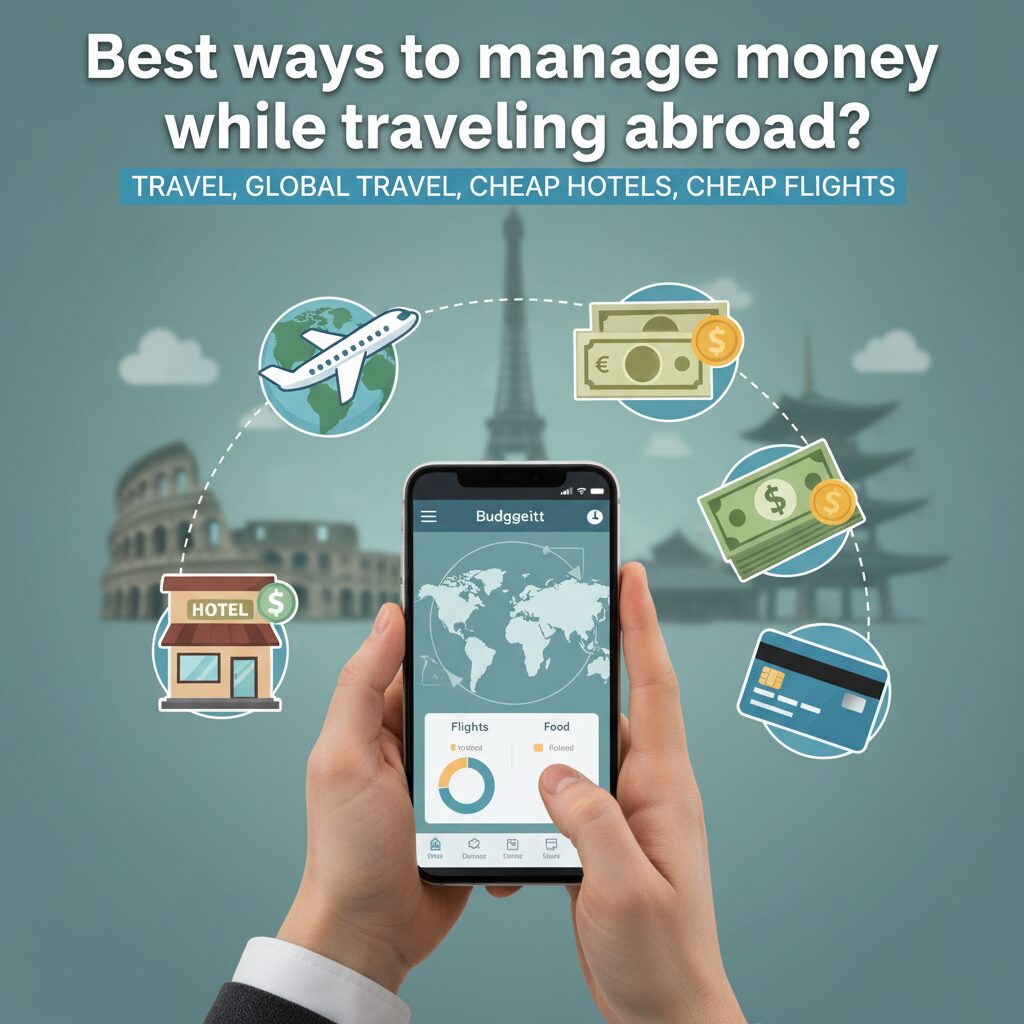
How to plan a global trip on a tight budget?
How to Plan a Global Trip on a Tight Budget: The 2025-2026 Master Guide
The “gap year” isn’t just for university students burning through their parents’ savings anymore. In 2025, with remote work normalizing and the rise of “collective travel,” exploring the world often costs less than monthly rent in New York, London, or Sydney—if, and only if, you know the new rules of the game.
You might be wondering: “How is that possible with inflation?” I’ve seen the panic in travelers’ eyes when they look at flight prices to Europe or accommodation costs in the US. The anxiety is real. But here is what most outdated travel guides won’t tell you: while the sticker price of travel has gone up, the arbitrage opportunities have never been better.
In this definitive guide, we are breaking down the exact costs, the critical new EU entry systems (EES vs. ETIAS) that are tripping up thousands of travelers, and the “slow travel” math that can save you 40% on your bottom line. Let’s get your backpack ready.

Phase 1: The Money Math (Real World Budgets)
Let’s rip the band-aid off immediately. How much does it actually cost? If you look at pre-2023 blogs, you’ll see numbers like $15,000 for a year. In the current economic climate, relying on those figures is a recipe for running out of money in Month 7.
The “Baseline” Number: $20,000 vs. $35,000
According to a 2025 analysis by A Little Adrift (Shannon O’Donnell), a trip around the world for one person for one year has a new baseline cost of $20,000. This aligns with the “Goldilocks” budget of $50 per day.
However, that $20,000 assumes you are spending the majority of your time in high-value regions like Southeast Asia or South America. If you plan to spend three months in Europe or North America, you need to look closer to $30,000–$35,000.
The average cost of a vacation is projected to rise by 11% in 2025 compared to 2024 due to lingering inflation pressures in the hospitality sector.
Inflation Reality Check: The “Geo-Arbitrage” Strategy
Inflation hasn’t hit everywhere equally. This is where your planning makes or breaks the budget. While prices in Western Europe and the USA have soared, other currencies have weakened against the dollar and euro.
According to Mastercard Economics Institute’s 2025 Travel Trends, Tokyo has become the most visited city globally, largely buoyed by a historically weak Yen. Japan, once considered the most expensive country in Asia, is now arguably a budget destination if you avoid high-end ryokans.
Conversely, data from Numbeo via Visual Capitalist indicates that countries like Pakistan, Libya, and Colombia have cost of living scores roughly one-eighth of New York City. Your money simply travels further when you follow the favorable exchange rates.
The “Slow Travel” Arbitrage
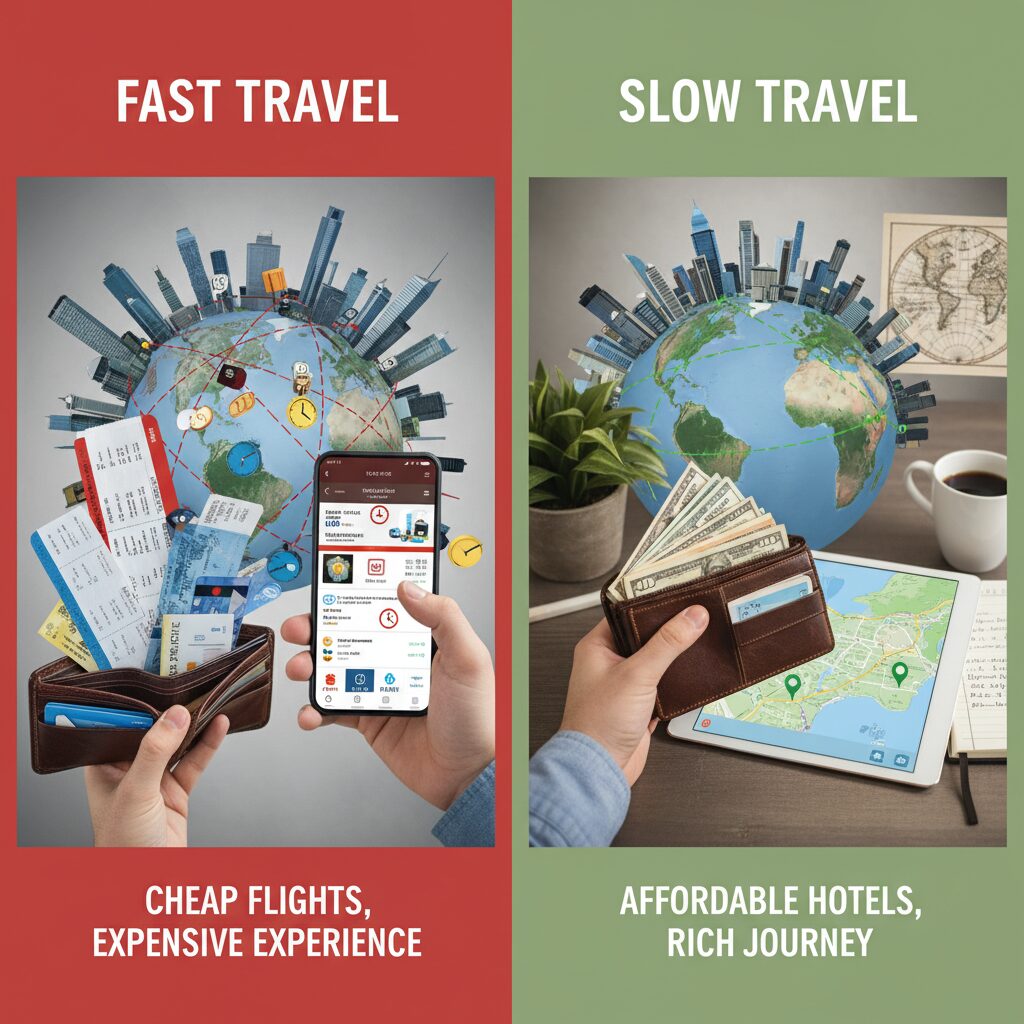
Here is the math that changes everything. Moving fast is expensive. Every time you move, you pay for a bus, train, or plane. You pay a “tourist premium” on food because you don’t know where the locals eat yet.
The 30-Day Rule: By staying in one location for 28+ days, you often unlock “monthly discounts” on platforms like Airbnb, which can range from 30% to 50% off. Additionally, you stop eating out for every meal.
- Fast Travel (Moving every 3 days): $1,500/month accommodation + $900 transport + $900 food = $3,300/mo.
- Slow Travel (Moving monthly): $900/month accommodation (discounted) + $100 transport + $400 food (cooking) = $1,400/mo.
Phase 2: Booking Strategy & “Travel Hacking”
In my experience coaching travelers, the biggest financial leak isn’t the daily latte; it’s the flight bookings. We are seeing a shift in 2025 regarding when to book.
The “Sunday Rule” and Booking Windows
Old advice said “book on Tuesdays at midnight.” That is largely a myth now. However, reliable data still points to Sunday.
✈️ The 2025 Flight Hack
“Booking flights on a Sunday can save travelers up to 17% compared to booking on other days. furthermore, August remains the cheapest month to travel, while February is surprisingly pricey.”
Pro Tip: There is a “Goldilocks Window” for international flights. Don’t book 330 days out (too expensive), and don’t book 2 weeks out. Aim for 3 to 4 months prior to departure for the sweet spot.
RTW Tickets vs. Point-to-Point
Should you buy a “Round The World” (RTW) ticket from an alliance like Oneworld or Star Alliance? In 2025, my advice is generally NO.
Why? Flexibility is currency. Post-pandemic travel is volatile. If you miss one leg of an RTW ticket, the entire itinerary is often cancelled. With the rise of budget long-haul carriers (like Zipair to Japan or Norse Atlantic to Europe), booking “leg-by-leg” (point-to-point) allows you to follow deals and change plans without massive penalties.
“Flexibility on which days you fly is one of the keys to getting the best airfare prices… Tuesday and Wednesday have lower demand and are often the best days to travel.”
— The Points Guy Team (2024/2025)
Phase 3: The New Bureaucracy (Visas & Fees)
This section is critical. If you skip this, you might be denied boarding. The rules for entering Europe are changing drastically in late 2025 and 2026.
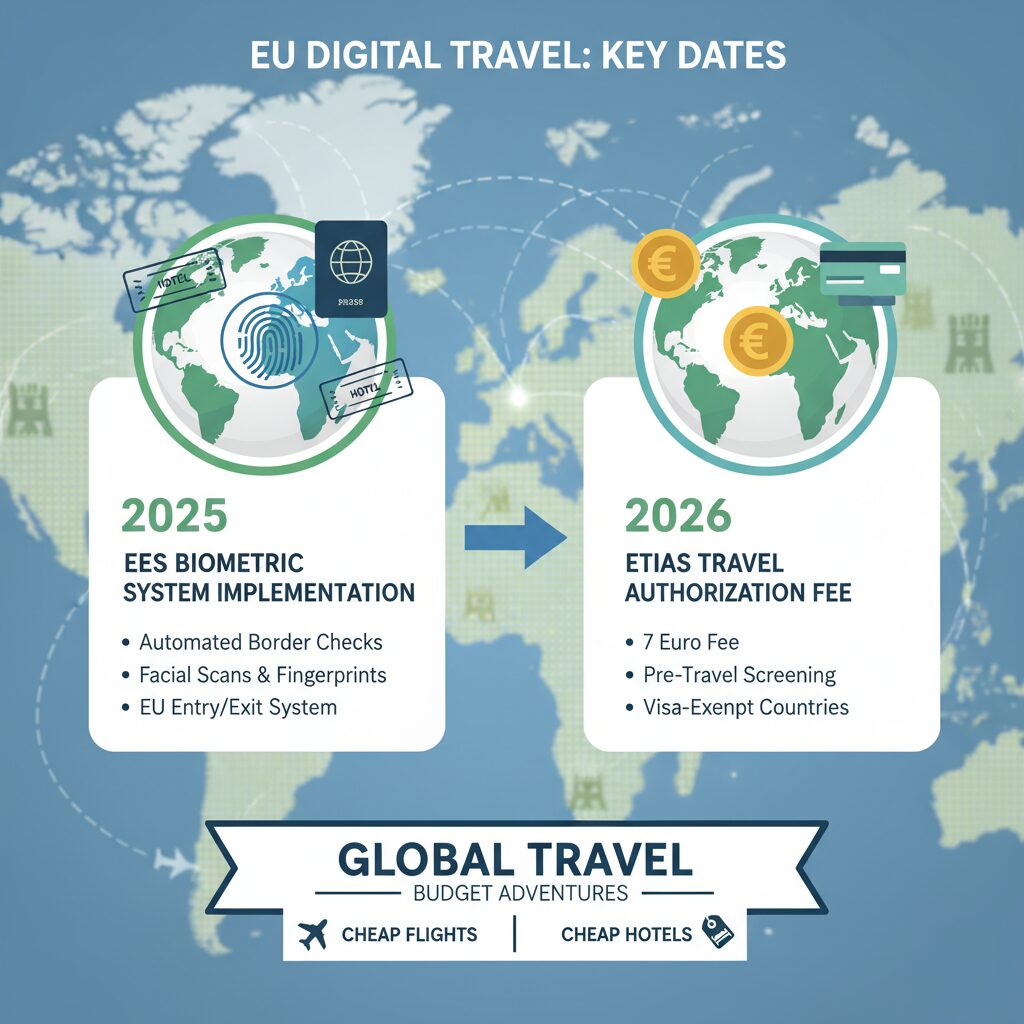
Many travelers are confusing these two systems. Here is the distinction you must know:
- EES (Entry/Exit System): Starts Late 2025. This is a biometric check. You will need to provide fingerprints and facial scans at the border. It replaces passport stamps.
- ETIAS (Travel Authorization): Delayed to 2026. This is the €7 pre-authorization fee (similar to the US ESTA). You do NOT need this yet.
According to the U.S. Department of State, as of October 2025, U.S. citizens (and other visa-exempt nationals) must go through the EU’s new Entry and Exit System (EES). This means border crossings will take longer. Budget extra time for layovers in European hubs like Frankfurt or Paris.
Furthermore, regarding the future cost, the European Commission has noted that the ETIAS fee will eventually be EUR 7, valid for three years. While cheap, it’s another layer of admin to manage.
Digital Nomad Visas: The Legal Loophole
If you plan to work remotely, don’t rely on tourist visas. Countries like Spain, Portugal, and even Japan (as of 2024) have introduced Digital Nomad Visas. These often require proof of income (usually $2,500 – $3,500/month) but allow stays of 6 to 12 months, solving the Schengen 90/180 day limit problem.
Phase 4: Accommodation & Living Cheap
As Kristin Addis from Be My Travel Muse wisely says: “Travel Like You Live.” If you wouldn’t eat at a restaurant three times a day at home, don’t do it in Paris.
Beyond Hostels
Hostels are great for socializing, but “Pod Hotels” and monasteries are often cheaper and quieter. However, the ultimate budget hack for 2025 is TrustedHousesitters. By paying an annual fee, you can stay in homes for free in exchange for watching pets. I’ve seen travelers save $10,000 a year using this method alone.
The “TravelSpend” Case Study
In a recent review of budgeting apps, a backpacking couple, Jonas & Vale, utilized the TravelSpend app during a trip to Japan. By using the multi-currency feature offline, they tracked “leakage”—small purchases at convenience stores (Konbinis)—that were adding up to $15/day unnoticeably. By identifying this, they cut their daily spend by 20% without sacrificing major experiences.
Pro Tool: Download ATM Fee Saver. It tells you which ATMs near you have the lowest withdrawal fees. In countries like Thailand, where fees are $7 per withdrawal, this saves a fortune.
Phase 5: Top Budget Destinations for 2025-2026
Where should you actually go? Based on the Skyscanner Travel Trends 2025 Report, we are seeing a shift away from “Classic Europe” toward “The New East.”
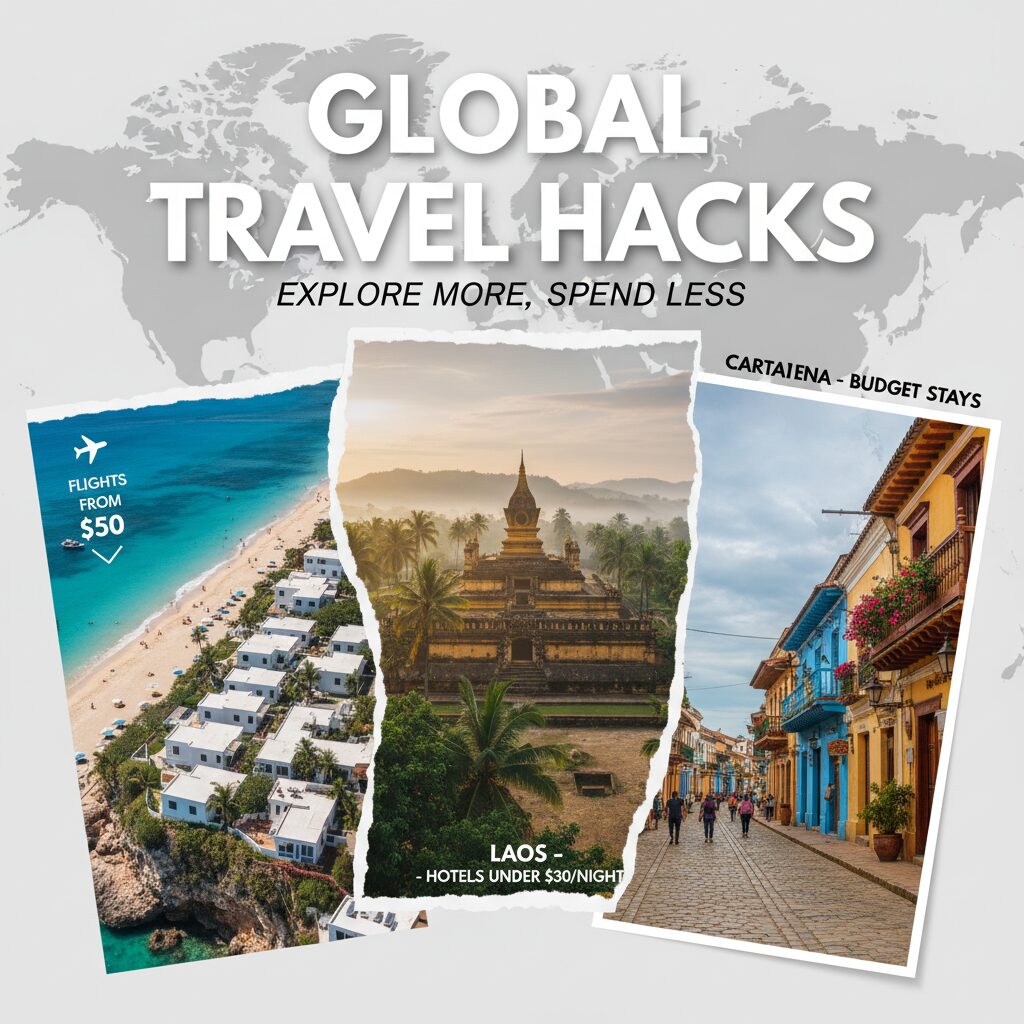
- Albania: Often called the “Maldives of Europe,” but at 1/4th the price of Greece or Italy.
- Laos: With the new high-speed train connecting Vientiane to Luang Prabang and China, accessibility has improved, but prices remain incredibly low ($25/day is doable).
- Colombia: Despite inflation, the exchange rate remains favorable for USD/EUR earners.
Budget Calculator: Set Your Savings Goal
Use this simple tool to estimate how much you need to save before you fly.
Frequently Asked Questions (FAQ)
For a budget-conscious backpacker sticking primarily to Asia and South America, budget between $12,000 and $15,000. If your itinerary includes Europe, North America, or Oceania, increase that budget to $20,000+. This includes flights, insurance, and daily expenses.
No. The ETIAS visa waiver fee has been delayed until 2026. However, starting late 2025, you will be subject to the EES (Entry/Exit System), which requires biometric data collection (fingerprints/photos) upon arrival. Expect longer queues at border control.
According to Expedia’s 2025 Air Hacks Report, August is often the cheapest month for international travel, while February and March tend to be the most expensive due to spring break demand and winter escapes.
Absolutely. It is a non-negotiable expense. One medical emergency in the US or a helicopter evacuation in Nepal can cost $50,000+. Budget roughly $1,000 for a year-long comprehensive policy from providers like SafetyWing or World Nomads.
Conclusion: The “Just Go” Philosophy
Planning a round-the-world trip on a budget in 2025 is different than it was five years ago. The prices are higher, and the bureaucracy at European borders is stricter. However, the tools we have—from flight prediction algorithms to remote work visas—make it more accessible than ever before.
I know the math can feel overwhelming. Seeing a number like $20,000 is daunting. But remember: you don’t spend it all at once. You spend it day by day. And frankly, the education you get from navigating the streets of Tokyo, the trains of India, and the markets of Marrakech is worth infinitely more than the cost of entry.
Start saving, book that flight on a Sunday, and embrace the slow travel mindset. The world is waiting.