How to cut travel costs significantly?
How to Cut Travel Costs Significantly: Data-Backed Strategies for 2025
Forget generic “pack light” advice. Here is the financial blueprint for modern travel using the latest industry intelligence.
Let’s be honest for a second: the era of the $200 round-trip flight to Europe is largely behind us. Inflation has hit the travel sector hard, with NerdWallet reporting that holiday hotel prices averaged $353 per night in late 2024, a 4% increase over the previous year.
But here is what I’ve found after analyzing the latest reports from Expedia, Skyscanner, and American Express: while prices are up, the “inefficiencies” in the system are bigger than ever. You don’t need to skip your morning coffee to save for a trip. Real savings come from structural changes—like knowing the exact mathematical window to book your flight or choosing a destination that the industry calls a “dupe.”
In this guide, I’m not just going to tell you to “budget better.” I am going to show you how to leverage specific 2025 data points to slash your costs by 20% to 30%. From the “Sunday Rule” to the rise of “Noctourism,” this is your definitive blueprint for affordable travel in the new economy.

The “Golden Windows” of Booking (According to Data)
In my years of tracking flight prices, the most persistent myth I hear is “Book on a Tuesday at midnight.” Let’s put that to bed right now. The algorithms have evolved, and so should your strategy.
The “Sunday Rule”: Why You Must Book on Weekends
If you are booking your flights during your lunch break on a Friday, you are literally throwing money away. According to the Expedia Air Travel Hacks Report (Sept 2024), travelers who book flights on a Sunday instead of a Friday save up to 13% on average.
Why does this happen? Business travelers tend to book on weekdays (expense accounts don’t care about price), driving up the dynamic pricing models. By waiting until Sunday, you are fishing in a calmer pond.
The 28-Day Domestic vs. 60-Day International Sweet Spot
Spontaneity is romantic, but it’s expensive. However, you don’t need to book a year in advance either. There is a “Goldilocks” window.
Data from Expedia’s 2024 report shows that for domestic flights, the sweet spot is 28 days before departure. Travelers who hit this window saved up to 24% compared to last-minute bookers. For international trips, that window stretches to about 60 days. Book too early (6+ months out), and you pay a premium for “peace of mind.” Book too late, and you pay the “desperation tax.”
The “3 PM Rule”: Avoiding the Cost of Chaos
Saving money isn’t just about the ticket price; it’s about avoiding the cascading costs of a cancelled flight—extra hotels, meals, and missed connections. This is where the “3 PM Rule” comes in.
I always book the first flight of the morning. Yes, waking up at 4 a.m. hurts, but sleeping in an airport terminal because your afternoon flight got scrubbed hurts your wallet much more. As Melanie Fish, Head of PR for Expedia Brands, noted in September 2024: “No way should people rather get a cavity filled than go on a trip, so thank goodness a lot of the things causing travel-related stress are getting better… fewer flights are being canceled.” Give yourself the best odds by flying early.
The Rise of “Destination Dupes”
If you take nothing else from this article, let it be this: in 2025, brand-name destinations are out. “Dupes” are in. A “dupe” is a destination that offers a similar vibe to a famous hotspot but at a fraction of the cost.
What are “Dupes”?
Think of it like buying the generic brand of a pharmaceutical drug. Same active ingredients, different label, half the price. Skyscanner’s Travel Trends 2025 report identifies this as a massive shift, noting that travelers are actively hunting for these alternatives.
Top Dupe Destinations for 2025
Based on Skyscanner’s data, here are the smartest swaps you can make right now:
| Expensive Original | The 2025 “Dupe” | Why It Works / Data |
|---|---|---|
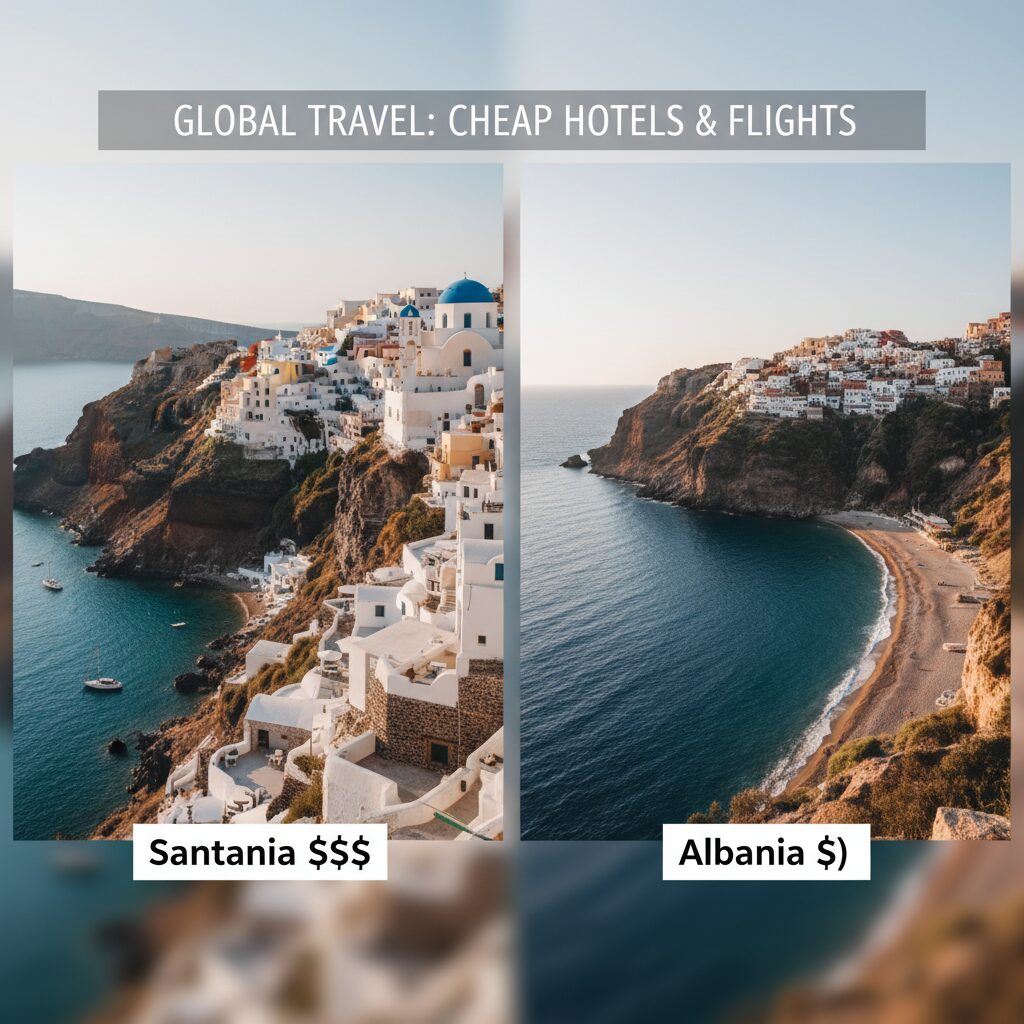
| Santorini, Greece | Albania (Riviera) | Similar beaches and food, but significantly cheaper accommodation. |
| Seoul, South Korea | Taipei, Taiwan | Incredible street food culture and night markets for 30-40% less. |
| French Riviera | Nice, France | While still in France, Skyscanner reports airfare to Nice dropped 27%, making it a cheaper entry point than Paris or Cannes. |
| Caribbean High-End | Castries, St. Lucia | Identified as a dupe where airfare prices dropped 25%. |
Even beach trends are shifting. While everyone rushes to the Maldives, Skyscanner noted a 528% search increase for Grand Turk Island in Turks & Caicos. Following the crowd is expensive; following the data is cheap.
Mastering Flight Arbitrage & Tech
The days of manually checking five different airline websites are over. To cut costs significantly, you need to use technology to exploit pricing inefficiencies.
Google Flights “Explore” and “Anywhere”
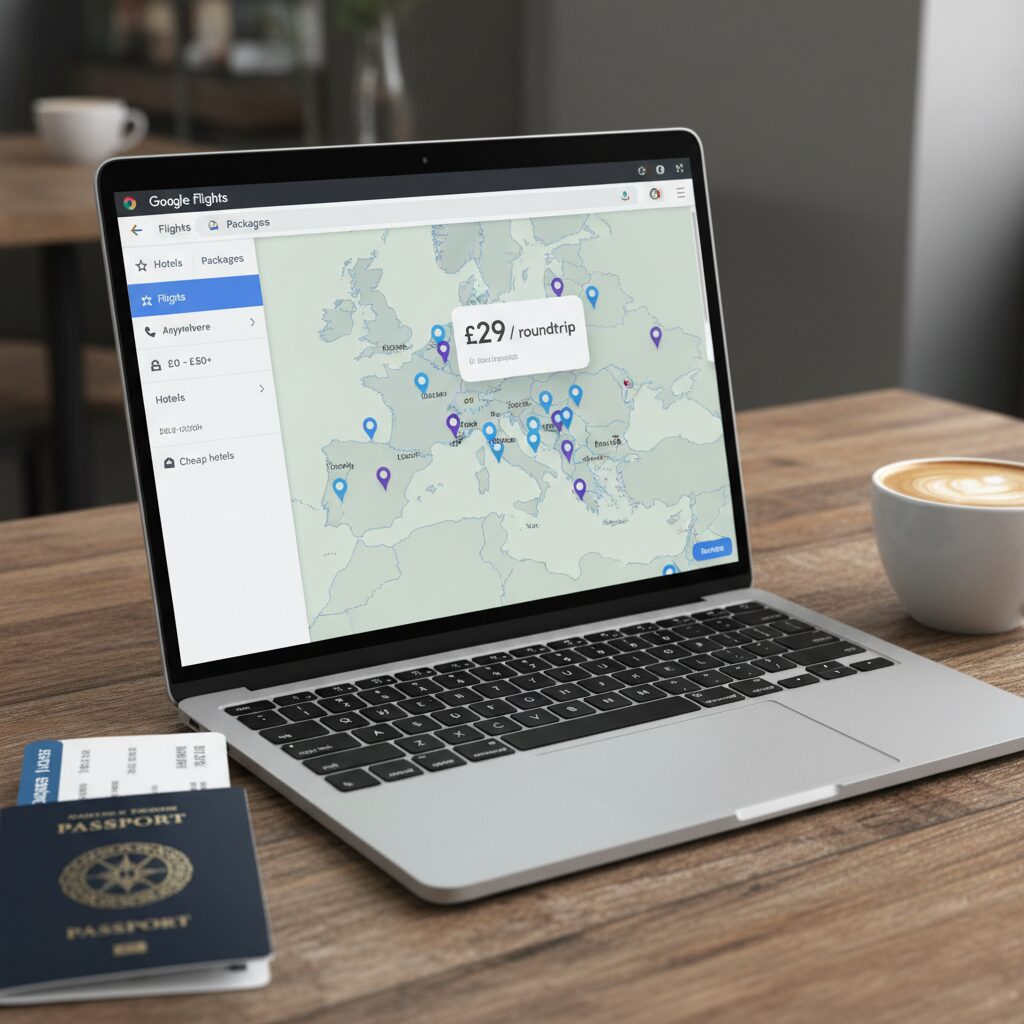
I find that most people use flight search engines wrong. They input a specific destination and dates. The cheaper way is to let the price dictate the destination.
Brian Kelly, the founder of The Points Guy, validated this approach in a January 2025 interview, stating: “Google Flights is my first stop when searching for airfare… I especially love the Explore map to hunt for cheap fares and find new destinations.” By leaving the destination blank or selecting “Europe” instead of “London,” you can often find hubs that are hundreds of dollars cheaper to fly into. Once you’re in Europe, a budget hop (Ryanair/EasyJet) or a train to your final destination costs peanuts.
Hidden City Ticketing: The Risks and Rewards
This is controversial, but we have to talk about it. “Hidden city ticketing” (or Skiplagging) is booking a flight from City A to City C with a layover in City B, and simply getting off at City B (your actual destination), because the connecting flight was cheaper than the direct one.
Financial Logistics: Fees & Currencies
You can save $200 on a flight and lose it all in bank fees if you aren’t careful. Financial leakage is the silent budget killer.
The “Zero-FX” Card Strategy
If your bank charges a 3% “foreign transaction fee,” you are essentially paying a 3% tax on your entire vacation. In 2025, there is no excuse for this.
I recommend carrying a dedicated travel card like Wise, Revolut, or the Charles Schwab Investor Checking card (for US residents). These cards offer mid-market exchange rates and zero transaction fees. Over a $2,000 trip, that’s $60 saved instantly—enough for a great dinner.
Dynamic Currency Conversion (DCC): The “Pay in Local” Rule
When you use your card abroad, the terminal will often ask: “Pay in USD or EUR?”
ALWAYS choose the local currency (EUR). If you choose your home currency, the merchant’s bank performs the conversion at a terrible rate, often marking it up by 5-7%. This is a legal scam called Dynamic Currency Conversion. Don’t fall for it.
eSIMs vs. Roaming
Carrier roaming packages (like AT&T’s $10/day pass) add up to $140 for a two-week trip. The 2025 standard is the eSIM. Apps like Airalo or Holafly allow you to download a local data plan for $10-$20 total. It takes five minutes to set up and saves over $100 per trip.
Accommodation Hacks Beyond Hostels
Not everyone wants to sleep in a bunk bed with 12 strangers. Luckily, current trends show travelers finding creative ways to stay in style without the hotel price tag.
The “Vintage Voyaging” Trend
Interestingly, saving money on accommodation often frees up budget for shopping. Booking.com’s 2025 Travel Predictions reveal that 51% of travelers are interested in buying their vacation wardrobe during their trip at thrift stores rather than before. This “Vintage Voyaging” mindset extends to where we stay—looking for older, character-rich rentals slightly outside city centers rather than shiny, overpriced downtown hotels.
Spending Kids’ Inheritance (SKI)
There is a humorous but real trend emerging called SKI (Spending Kids’ Inheritance). Booking.com found that 46% of travelers would rather spend money on a trip of a lifetime now than leave it behind. This demographic shift means more competition for luxury, pushing budget travelers to be more creative with house-sitting platforms or home swaps.
Food & Experience Economics
How do you eat well and see the sights without going broke? You have to rethink when you eat and what you see.
The “Lunch Special” Strategy
In many parts of the world, especially Europe and Latin America, the lunch menu (often called Menu del Día) is significantly cheaper than the dinner menu for the exact same food. My strategy? Eat your main, heavy meal at 1:00 PM. Have a light snack or street food for dinner. You’ll slash your food budget by 40% effortlessly.
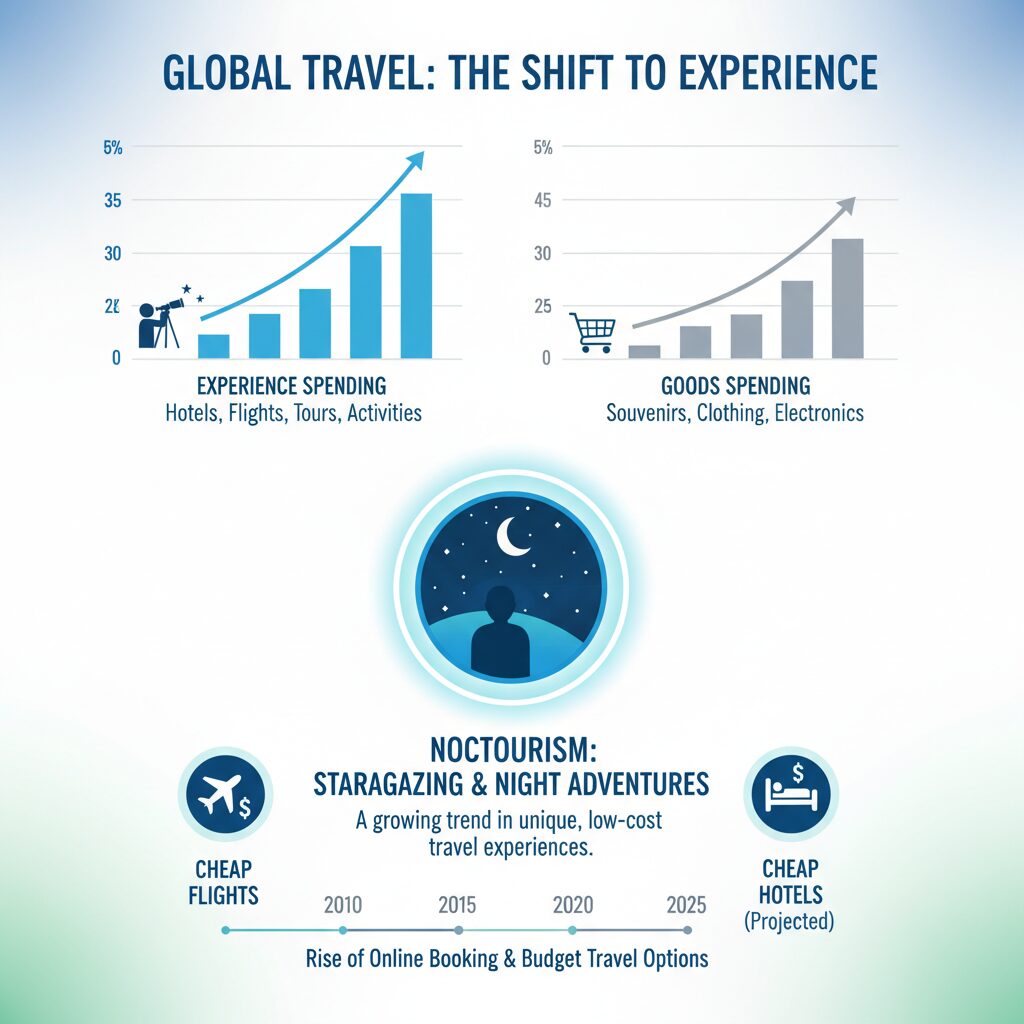
“Noctourism”: The Ultimate Free Activity
Activities are expensive, but the sky is free. A massive trend for 2025 is “Noctourism.”
Instead of paying $50 for a crowded city tour, travelers are opting for Dark Sky reserves. It costs nothing, it’s distinct, and it aligns with the 12% of tourism sales now dedicated to “experiences and nightlife,” according to the Mastercard Economics Institute.
FAQ: Your Budget Travel Questions Answered
What is the cheapest day of the week to book a flight?
According to the latest 2024 data from Expedia, Sunday is the cheapest day to book, saving you around 13% compared to Fridays. Tuesdays are no longer the magic bullet they used to be.
How can I travel for free in 2025?
While “free” is rare, you can get close through travel hacking (using credit card points for flights) and house sitting (using platforms like TrustedHousesitters to stay for free in exchange for watching pets). Additionally, the Amex Global Travel Trends Report notes that 76% of Millennials and Gen Z are planning solo trips, which allows for total budget control and cheaper decision-making.
Are budget airlines worth the hidden fees?
They are worth it if you play by their rules. If you can travel with just a personal item (backpack), you win. If you need to check bags and select seats, the fees often make the ticket more expensive than a legacy carrier. Always compare the “final price,” not the sticker price.
Conclusion: The New Savings Stack
Cutting travel costs in 2025 isn’t about deprivation. It’s about intelligence. It’s about ignoring the old advice (“Book on Tuesday!”) and embracing the new data.
Here is your Savings Stack summary:
- Timing: Book on Sundays, 28 days out for domestic trips.
- Location: Swap the hotspots for “Dupes” (Albania over Greece, Nice over Paris).
- Logistics: Fly before 3 PM to avoid cancellation costs and use a zero-FX card.
- Mindset: Embrace “Noctourism” and lunch specials to lower daily spend.
As Audrey Hendley, President of American Express Travel, put it: “Travelers are focused on creating the right itineraries and building memories… 77% care more about the right travel experience than about the cost.”
By cutting costs on the logistics, you free up your resources for what actually matters: the experience. Now, go book that trip—on a Sunday.

Related Posts

Is solo travel cheaper to plan?
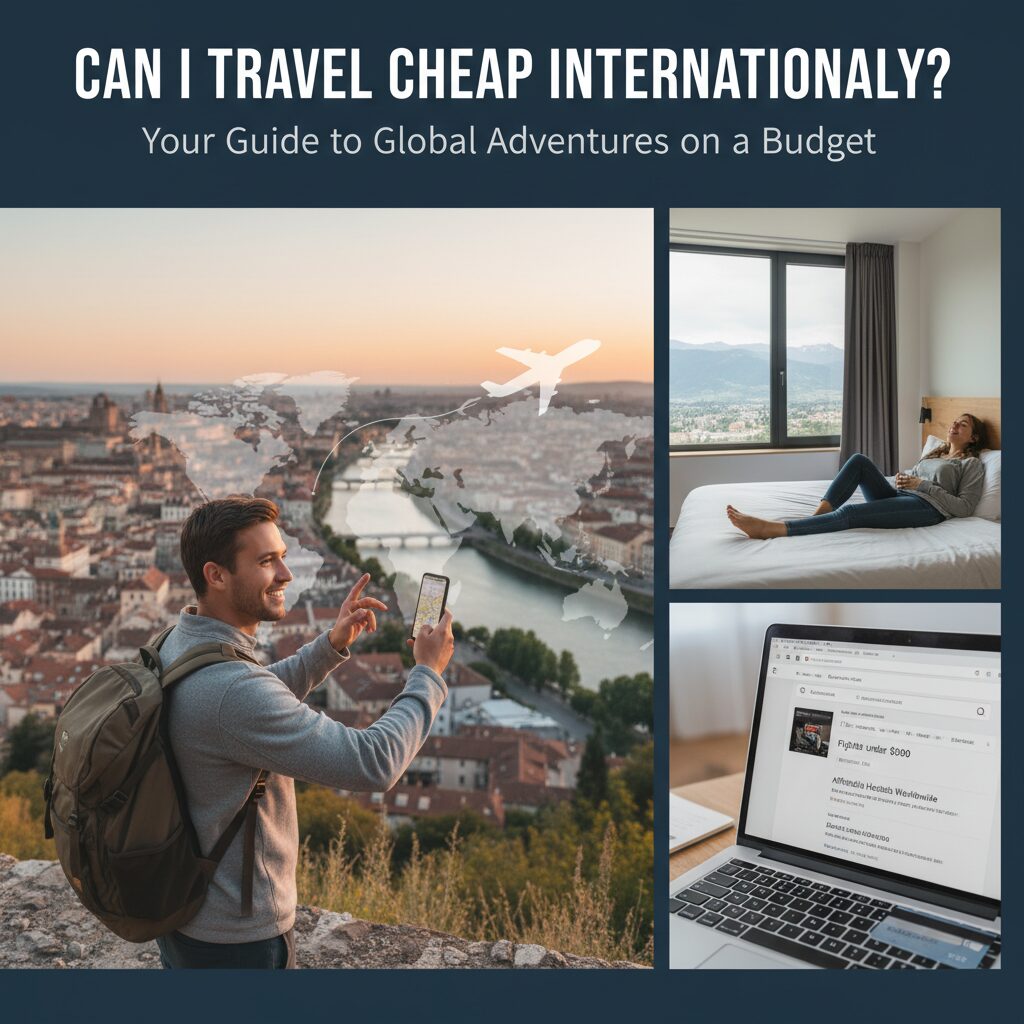
Can I travel cheap internationally?