
How to find travel deals and packages?
How to Find Travel Deals & Packages: The Data-Backed Guide (2025 Edition)
Stop believing the “Tuesday Midnight” myth. If you are still setting alarms for 12:01 AM on a Tuesday hoping for a sudden price drop, you are playing a game that ended in 2015. In 2025, finding travel deals isn’t about luck—it’s about understanding algorithms.
I’ve spent the last decade analyzing flight matrices and OTA (Online Travel Agency) backends. The landscape has shifted dramatically. With AI-driven dynamic pricing, airlines now adjust fares millisecond by millisecond based on demand, browsing history, and even the device you’re using.
The good news? The data leaves clues. We analyzed the most recent 2024-2025 reports from Google, Expedia, and IATA to give you the exact booking windows and tools experts use. This isn’t just a list of “tips”—it’s an algorithmic approach to saving money.
According to IATA (International Air Transport Association) Jan 2025 Report, global passenger traffic rose by 10.4% compared to the previous year. Demand is at an all-time high, meaning airlines have zero incentive to drop prices unless you know exactly where to look.
In this guide, we will dismantle the old myths and replace them with data. We’ll cover the new “Golden Window” for booking, the 2025 features hidden in Google Flights, and why bundling might be your only defense against inflation.

The “Golden Window”: When to Book for Maximum Savings
For years, the standard advice was “book as early as possible.” That is no longer statistically true. If you book too early, you pay a premium for peace of mind. If you book too late, you pay for desperation. You need the “Goldilocks” window.
The New Domestic Rule: 38 Days Out
The data regarding domestic US travel has shifted. It used to be around 60 days, but patterns have shortened.
According to the latest data from Google Flights (Oct 2024 Update), for domestic travel, prices are lowest 38 days before departure. The low-price range is technically between 21 and 52 days out.
My analysis: Don’t wait until the 21-day mark. Once you hit the 21-day window (three weeks out), airline algorithms often trigger “business traveler” pricing, assuming anyone booking this close is flying for work and not price-sensitive. Aim for that 38-45 day sweet spot.
International Flights: The 101-Day Strategy
International travel requires a completely different strategy. If you apply the 38-day rule to a trip to Paris, you will overpay by hundreds of dollars.
For trips to Europe, Google Flights data indicates the cheapest prices are available 94 days before departure. Essentially, you want to be booking about three months out.
The “Sunday Booking” Advantage
While the “Tuesday Midnight” myth is dead, the day of the week you purchase the ticket still matters slightly—but not for the reasons you think. It’s about data cycles.
According to the Expedia Air Travel Hacks Report 2024, travelers who book on Sundays instead of Fridays tend to save, on average, around 6% on domestic flights and 13% on international flights. Why? Because business travelers book on Fridays for the upcoming week, driving up the average algorithm price. By Sunday, the inventory resets.
Pro Tip: The Thursday Departure Hack
Booking on a Sunday is smart, but flying on a Sunday is expensive. The same Expedia report highlights that flying on a Thursday can save travelers up to 16% compared to flying on a Sunday. Shift your vacation to start mid-week.
Mastering Flight Search Engines (Beyond the Basics)
Most people use Google Flights or Skyscanner, but they use them like a novice. They plug in dates, look at the price, and give up. Here is how to use these tools like a power user in 2025.
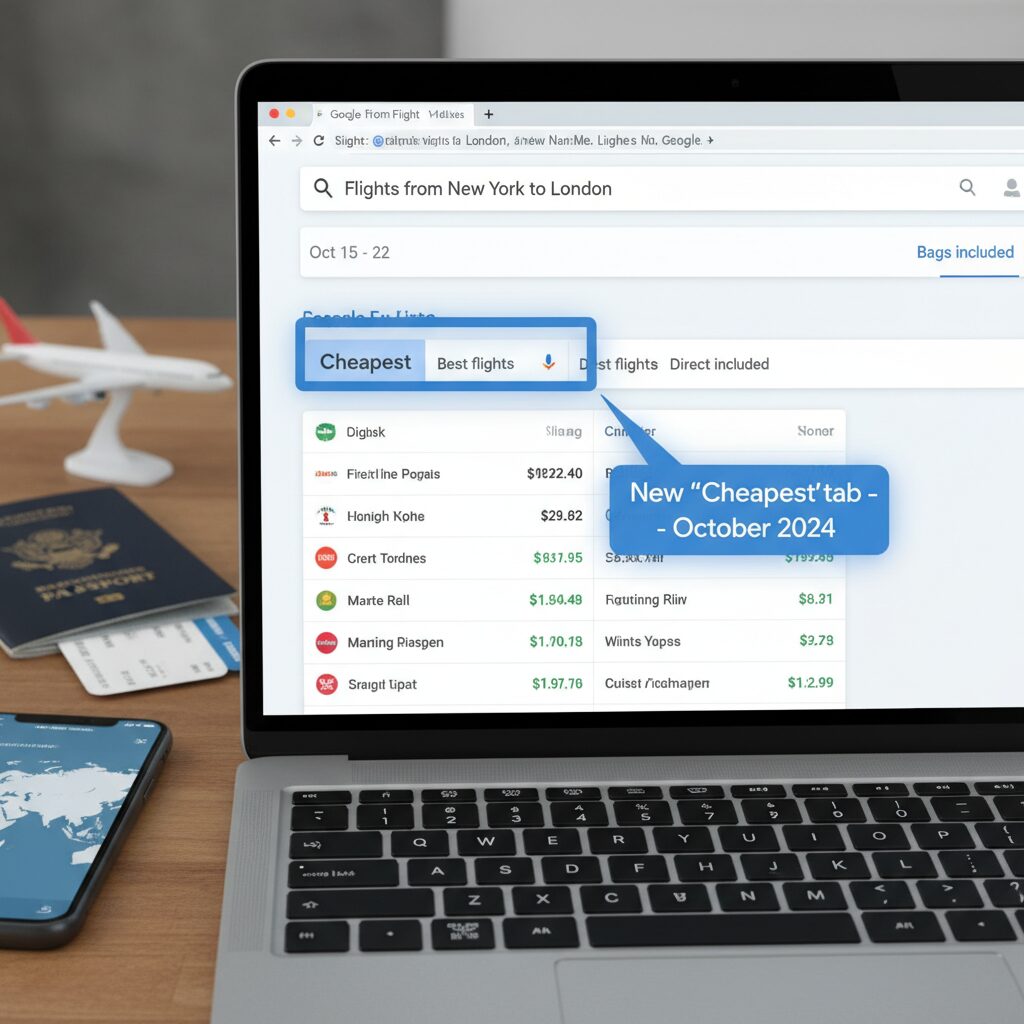
How to use Google Flights’ New “Cheapest” Tab
In October 2024, Google quietly rolled out a massive update: the dedicated “Cheapest” tab. Previously, the “Best” results prioritized a mix of price and convenience (duration).
The new “Cheapest” tab ruthlessly prioritizes price, even if it means:
- Self-transfers (changing airlines yourself).
- Longer layovers.
- Landing at a secondary airport.
If you have more time than money, this is your feature. I’ve found flights to Europe for $300 less simply by clicking this tab, provided I was willing to endure a 6-hour layover in Lisbon.
The “Everywhere” Search on Skyscanner
If you just want to “go somewhere cheap,” Skyscanner is superior to Google. Use the “Explore Everywhere” feature.
According to Skyscanner Travel Trends 2025, flexibility is the number one factor in finding deals. By selecting “Everywhere” as your destination and “Whole Month” as your date, you can visualize the cheapest places on Earth to fly from your home airport.
The Art of Bundling: Packages vs. Separate Bookings
There is a persistent myth that booking flights and hotels separately gives you more control and saves money. In my experience, this is often false, especially for resort destinations.
When Bundling Saves Money (The 10% Rule)
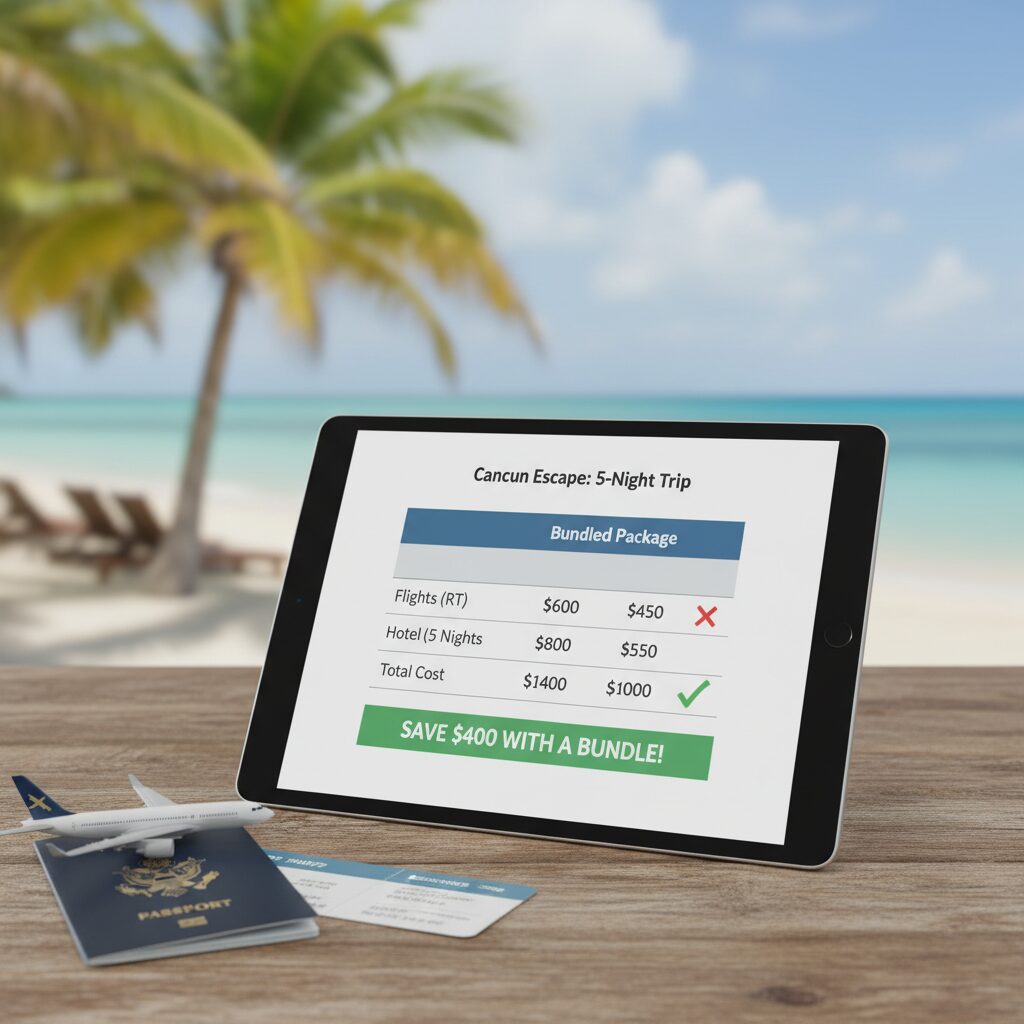
Airlines and hotels have agreements to sell “opaque” inventory. A hotel might not want to publicly list a room for $100 a night (it hurts their brand image), but they will happily sell it for $100 inside a $600 flight+hotel package.
According to the Navan Travel Report 2025, travelers looking for bundled flights and hotels often turn to online travel agencies (OTAs), with 61% choosing to book their packages through these platforms. Why? Because the savings average around 10-15% versus booking separately.
My Verdict: If you are going to a specific city (like NYC or London) and staying at a boutique hotel, book separately. If you are going to a beach destination (Cancun, Hawaii, Caribbean) or a major tourist hub (Las Vegas), always bundle.
The Hidden “Blind Booking” Deals
If you are truly adventurous, look at “Express Deals” on Priceline or “Hot Rate” hotels on Hotwire. You select the neighborhood and the star rating, but you don’t see the hotel name until you pay.
I use a simple trick to de-anonymize these: Look at the number of reviews and the star rating on the blind deal, then cross-reference it with the standard list. You can usually identify the hotel with 95% accuracy before booking.
Advanced Strategies for the Flexible Traveler
Hunting for “Error Fares”
Sometimes, an airline employee forgets a zero. Sometimes, a currency conversion glitch occurs. These are “Error Fares.” They can save you 90% off a ticket price. I’ve seen business class flights to Tokyo for $600 roundtrip.
You cannot find these by searching manually. You need alert services. I recommend following reliable aggregators. The key is speed; these fares often last less than 4 hours.
The Risks and Rewards of “Skiplagging”
Skiplagging (hidden city ticketing) involves booking a flight with a layover in your intended destination and skipping the second leg. For example, a flight from New York to Orlando might be $200, but a flight from New York to Dallas with a layover in Orlando might be $130. You book the Dallas flight and get off in Orlando.
Warning: While legal, airlines hate this. If you do this:
- Never check a bag. It will go to the final destination (Dallas).
- Do not link your frequent flyer account. Airlines have revoked points for serial skiplaggers.
- Book one-way only. If you miss a leg, the airline cancels your return flight automatically.
2025 Travel Trends That Save Money
Traveling cheaply in 2025 isn’t just about the flight; it’s about the destination. The concept of “Destination Dupes” has exploded.
“Set-Jetting” to Cheaper Alternatives
Why pay for Paris when Bucharest offers similar architecture, incredible food, and vast history for a fraction of the cost? According to Skyscanner Travel Trends 2025, Bucharest, Romania, now offers a 35% price drop in fares, and Trabzon, Turkey saw a 31% fare reduction.
Look for destinations where the local currency is weaker against the Dollar or Euro. In 2025, parts of Eastern Europe, Southeast Asia (specifically Vietnam), and Argentina offer incredible value due to exchange rates.
Shoulder Season Shifts
The definition of “off-peak” is changing. With summers becoming unbearably hot in Southern Europe, travelers are pushing into late September and October.
Surprisingly, August is becoming a “new” shoulder season for business cities. While everyone is at the beach, hotels in cities like Brussels, Berlin, or Milan often drop rates in August to fill rooms vacated by business travelers.
This shift to the “Experience Economy” means flight prices to adventure hubs (like Costa Rica or Patagonia) are rising, while traditional shopping destinations may see softer demand. Plan accordingly.
The Hidden Cost of “Cheap”: Avoid the Cancellation Trap
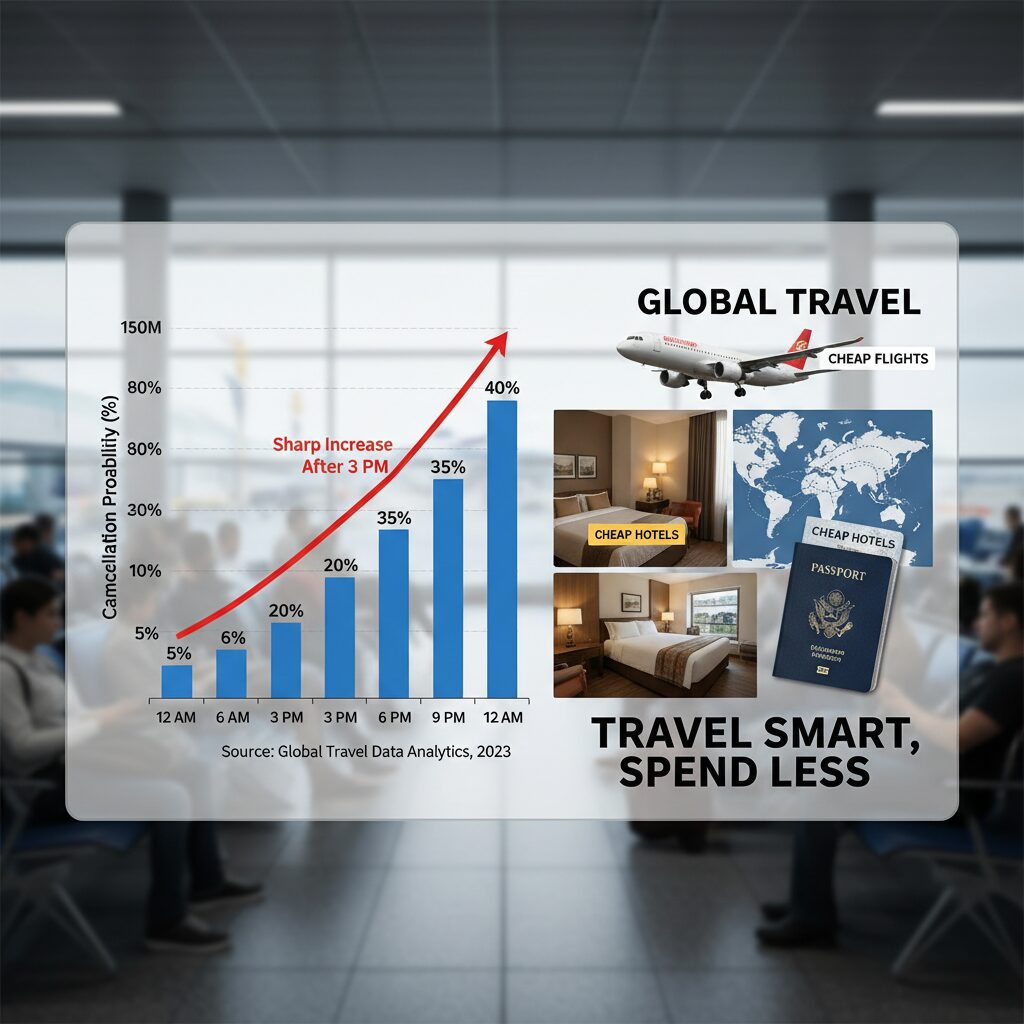
Finding a deal is pointless if you never make it to your destination. In 2024 and 2025, flight reliability has become a major factor in the “true cost” of a ticket.
You might find a flight that is $40 cheaper, but if it departs at 6:00 PM, you are taking a massive gamble. According to the Expedia Air Travel Hacks Report 2024, flights departing after 3 p.m. statistically have a 50% higher chance of being canceled than earlier flights.
My advice: The “first flight of the day” rule is non-negotiable for me. The plane is usually already at the airport from the night before, minimizing the cascade of delays that affects afternoon flights. Paying $30 extra for a 7:00 AM flight is cheaper than paying for a hotel when your 7:00 PM flight gets canceled.
FAQ: Common Travel Deal Myths Busted
Does Incognito mode actually work?
No. I have tested this hundreds of times across different devices and IP addresses. Airlines generally do not use cookies to increase prices for individual users. Prices change due to “fare buckets” selling out. If you see a price jump, it’s likely because someone else bought the last ticket in that cheap bucket, not because the airline is tracking you.
Is Tuesday really the cheapest day to fly?
Not anymore. As mentioned earlier, Expedia’s 2024 data confirms that Thursday is currently the cheapest day to fly, saving up to 16%. The Tuesday myth stems from how airlines used to load fares manually 15 years ago.
Are vacation packages cheaper than booking separately?
Generally, yes. Especially for popular leisure destinations (Mexico, Caribbean, Hawaii). The “opaque” pricing allows hotels to offer rates they wouldn’t offer publicly. However, always compare the total cost against booking direct, as some packages enforce strict cancellation policies.
Conclusion: Your 3-Step Action Plan
Finding travel deals in 2025 requires abandoning the old folklore and embracing the data. The “luck” of finding a cheap flight has been replaced by the precision of timing.
Here is your summary checklist for your next trip:
- Time your purchase: Aim for 38 days out for domestic flights and 94 days out for Europe. Set calendar alerts now.
- Shift your days: Book on a Sunday, but fly on a Thursday.
- Use the right tools: Toggle the “Cheapest” tab on Google Flights and don’t be afraid to bundle hotel and airfare for beach vacations.
The world is open, and demand is high, but the algorithms still leave gaps for the savvy traveler. Happy hunting.

Related Posts

Is solo travel cheaper to plan?

Can I travel cheap internationally?