How to budget for cheap travel?
How to Budget for Cheap Travel: The 2025 Master Guide to Seeing More for Less
Stop skipping lattes to save pennies. Start using “Detour Destinations” to save thousands.
I remember sitting at my kitchen table five years ago, staring at a spreadsheet that seemed to mock me. I wanted to see the world, but the math wasn’t adding up. The traditional advice—cut out coffee, stop buying avocado toast—felt trivial against the cost of a trans-Atlantic flight. It wasn’t until I stopped trying to penny-pinch my daily life and started strategically engineering the trip itself that everything changed.
Travel in 2025 is a different beast. Inflation is real, but so are the opportunities to hack the system if you know where to look. According to NerdWallet’s 2024 Holiday Travel Report, holiday travelers planned to spend nearly $2,330 on average, a 20% increase over the previous year. Costs are rising, yet the appetite for exploration hasn’t waned.
In this guide, I’m not just going to tell you to save money. I’m going to show you the “Unpack” strategy, data-backed by industry giants like Expedia and Skyscanner, to lower your costs by up to 40% without sleeping in a bus station.

Phase 1: The “Travel-First” Financial Audit
Before you even look at a flight map, you need to scrub your finances. Most people treat travel savings as what’s “leftover” at the end of the month. That is a mistake. In my experience, if you don’t prioritize the travel fund, it gets eaten by everyday friction.
The 50/30/20 Rule… Remixed
You’ve likely heard of the 50/30/20 rule (50% needs, 30% wants, 20% savings). For a travel-focused year, I recommend a radical remix. We need to weaponize that 30% “wants” category.
Instead of vague “wants,” allocate half of that bucket specifically to a High-Yield Savings Account (HYSA) labeled “The Go Fund.” With interest rates still decent in 2025, your money should be making money. American Express found in their 2024 Global Travel Trends Report that 84% of travelers plan to spend the same or more on travel, prioritizing experiences over luxury goods. This remix aligns your budget with that psychology.
“Ghost Subscription” Hunting
This is the easiest money you will ever find. Most of us are bleeding cash into digital services we don’t use. I call these “Ghost Subscriptions.”
Audit your bank statement for the last 90 days. That streaming service you watched once? That premium app trial you forgot to cancel? Kill them. A $15/month subscription is $180 a year—that’s two nights in a decent hostel in Southeast Asia or a high-speed train ticket in Europe.
Phase 2: Strategic Booking (The 2025 “Unpack” Strategy)
Here is where the game has changed. The old advice was “book on a Tuesday.” That myth is dead. The new strategy is about where you go, not just when you book.
Embracing “Detour Destinations”
The single biggest trend for 2025 is the rise of the “Detour Destination.” This concept involves flying into or staying in a secondary city rather than a capital.
— Ariane Gorin, CEO of Expedia Group (Expedia Unpack ’25 Report)
According to Expedia’s Unpack ’25 report, 63% of consumers are likely to visit a detour destination. Why? The savings are massive.
Case Study: The French Connection
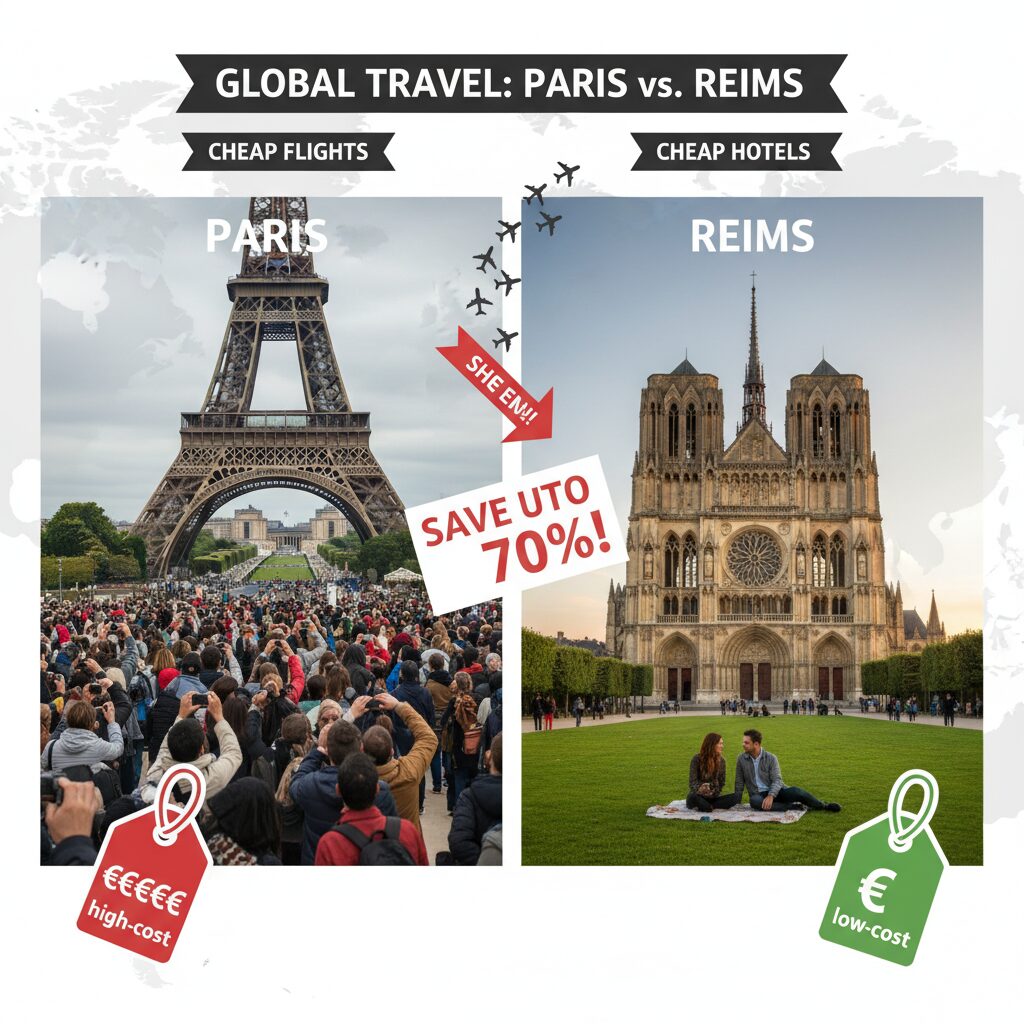
Let’s look at the math. Everyone wants to go to Paris. But the “Olympics premium” and general capital city tax keep prices high.
- The Traditional Route: Staying in central Paris. High accommodation costs, expensive dining.
- The Detour Route: Staying in Reims. It is a short, fast train ride away. You get the Champagne region vibes, fewer crowds, and accommodation costs that are often 30% cheaper.
The “Tuesday Rule” is Dead: Use Dynamic Alerts
Ignore the influencers telling you to clear your cookies and book at 2 AM on a Tuesday. Mohit Joshi, a travel expert at Skyscanner, notes that while cost remains crucial, technology is the real savior. Use “Cheapest Month” search features on Skyscanner or Google Flights.
Set alerts for your route 4-6 months in advance. Prices are dynamic. I once watched a flight to Tokyo drop by $300 for a 12-hour window simply because the algorithm adjusted for demand. If you aren’t tracking, you’re overpaying.
“Vintage Voyaging” and Packing Light
This sounds like a style tip, but it’s a budget hack. Baggage fees on budget airlines (Ryanair, Spirit, AirAsia) can sometimes cost more than the ticket itself. Booking.com’s Travel Predictions 2025 reveals that 51% of travelers are interested in buying their vacation wardrobe during their trip via thrifting rather than packing it all.
Pack a carry-on. Buy a vintage sweater in Berlin or a linen shirt in Hoi An. You save on baggage fees and get a souvenir that actually has utility.
Phase 3: Daily Budget Management on the Road
You’ve arrived. You saved on the flight. Now, how do you stop your wallet from bleeding out on the ground? This is where daily discipline meets smart economics.
The “Local Currency” Commandment
I cannot stress this enough: Always pay in the local currency.
When you insert your card at a terminal in Spain, and it asks, “Pay in USD or EUR?” choosing USD triggers Dynamic Currency Conversion (DCC). The merchant’s bank sets the exchange rate, which is almost always terrible. By choosing EUR (local), your bank handles the conversion at the mid-market rate (provided you have a good travel card).
The 2:1 Grocery Rule
Dining out three times a day is the fastest way to bankrupt a trip. I use the 2:1 rule: Two meals from a grocery store/market, one meal at a restaurant.
Grab yogurt and fruit for breakfast. Make a sandwich for lunch. Then, splash out on a nice dinner. You experience the culinary culture without paying for service three times a day. Hotels.com data indicates a 40% YoY increase in hotel restaurant reviews, suggesting people are eating where they sleep. Avoid this. Hotel food is almost always overpriced “convenience dining.”

Geography is Your Best Budget Tool
Your money simply goes further in some places than others. If you are struggling to budget for Western Europe, look East.
If your heart is set on Europe, consider Riga, Latvia. The Post Office UK City Costs Barometer projects it as the cheapest city break, with a total cost of around £253 for a weekend of accommodation and meals. Compare that to London or Geneva, and the difference pays for your next flight.
The Solo Supplement Trap
With 76% of Millennials and Gen Z planning a solo trip in 2024, the “single supplement” (paying for a double room alone) is a real budget killer. Look for “pod hotels” or hostels that offer private single rooms. They are becoming more common in places like Japan and Scandinavia to cater to this exact demographic.
Advanced Tactics: The Inflation vs. Deflation Game
Most articles won’t tell you this, but inflation is not uniform globally. While the US and UK have struggled, other currencies have fluctuated in ways that benefit the traveler.
The Currency Play: Cape Town vs. Mombasa
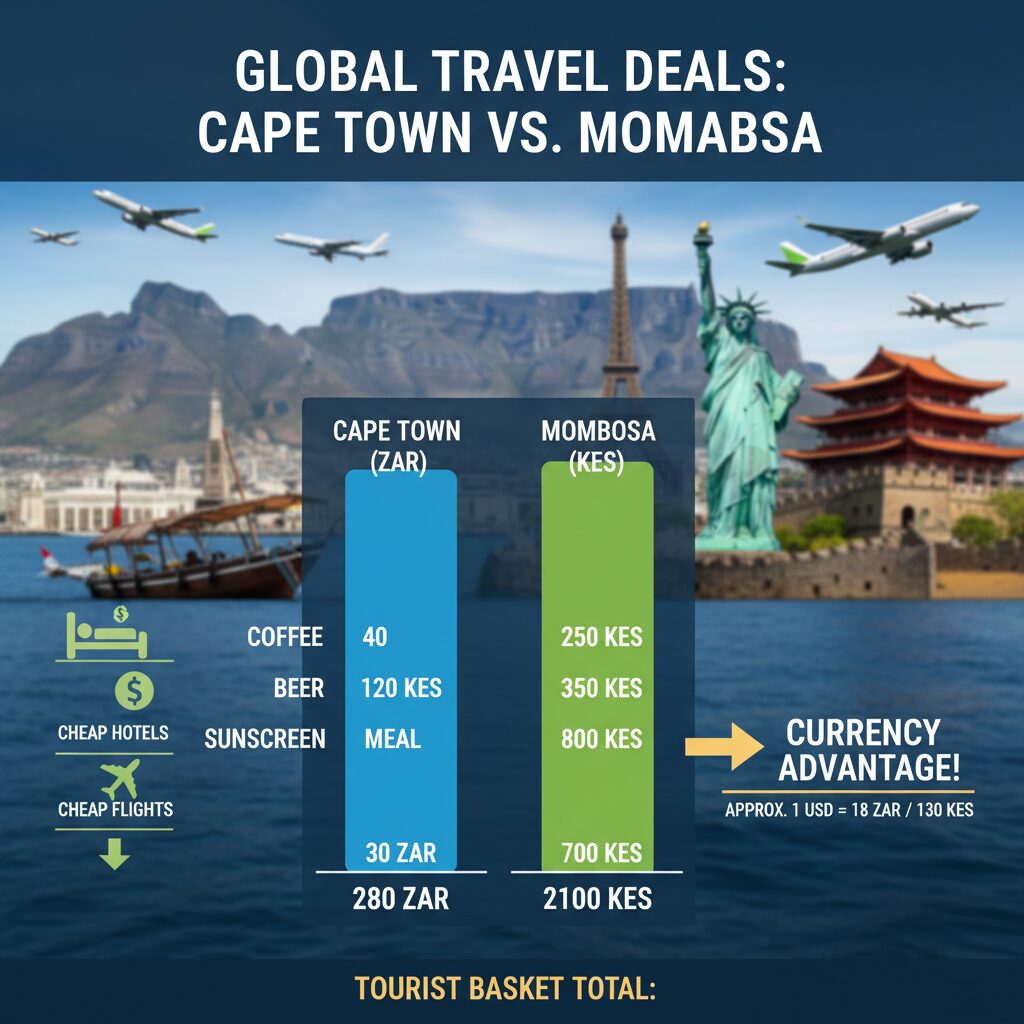
Let’s look at a real-world example from the Post Office UK Barometer. Prices in Cape Town rose about 5%. However, in Mombasa, Kenya, prices effectively fell by 7% due to currency fluctuations against the pound/dollar. Monitoring the strength of your home currency against your destination’s currency is an advanced move that saves hundreds.
The “City Card” Calculus
Are city tourism cards (like the London Pass or Paris Pass) worth it? Usually, only if you are a “power sightseer.”
I advise my clients to calculate the cost per attraction. If the card costs $100 for 3 days, you need to do $34 worth of attractions daily to break even. If you prefer wandering parks and soaking up vibes (which is free), skip the card.
Financial Tools You Need
You cannot budget effectively with outdated banking tools.
- No Foreign Transaction (FX) Fee Cards: If your bank charges you 3% every time you swipe abroad, you are throwing away money. Cards like the Chase Sapphire Preferred or specialized accounts like Wise and Revolut are non-negotiable essentials.
- eSIMs: Stop paying $10/day for roaming. Apps like Airalo allow you to buy local data for a fraction of the cost.
FAQ: Common Budgeting Questions
How much should I save for a 2-week trip to Europe?
This depends heavily on the region. For Western Europe (France, UK), budget $150–$200/day per person. For Eastern Europe (Romania, Poland) or the Balkans (Albania—a major trending destination for 2024 according to Mastercard Economics Institute), you can live comfortably on $60–$80/day.
Do I need cash or card for cheap travel?
You need a mix. While Nordic countries are almost entirely cashless, cheaper destinations like Vietnam, rural Germany, and parts of Japan still rely on cash. Always keep $100 USD equivalent in emergency cash hidden in a separate bag.
What is the cheapest day of the week to fly in 2025?
There is no single “magic day.” However, flying mid-week (Tuesday/Wednesday) is generally cheaper than weekends due to lower business travel demand. Use the “flexible dates” grid on search engines to visualize this.
Conclusion
Budgeting for travel isn’t about deprivation; it’s about allocation. It’s about deciding that a sunset in Albania is worth more than a subscription service you don’t watch. It’s about choosing the detour destination over the tourist trap.
The data from 2024 and 2025 is clear: the world is getting more expensive, but travelers are getting smarter. By using detour destinations, leveraging currency fluctuations, and auditing your daily spending habits, you can see the world without wrecking your future. The spreadsheet that once mocked me is now my ticket to freedom. Make it yours, too.

Related Posts
What’s a realistic cheap travel budget?

How to save money while traveling?