What’s a realistic cheap travel budget?
What’s a Realistic Cheap Travel Budget in 2025? (Data-Backed Breakdown)
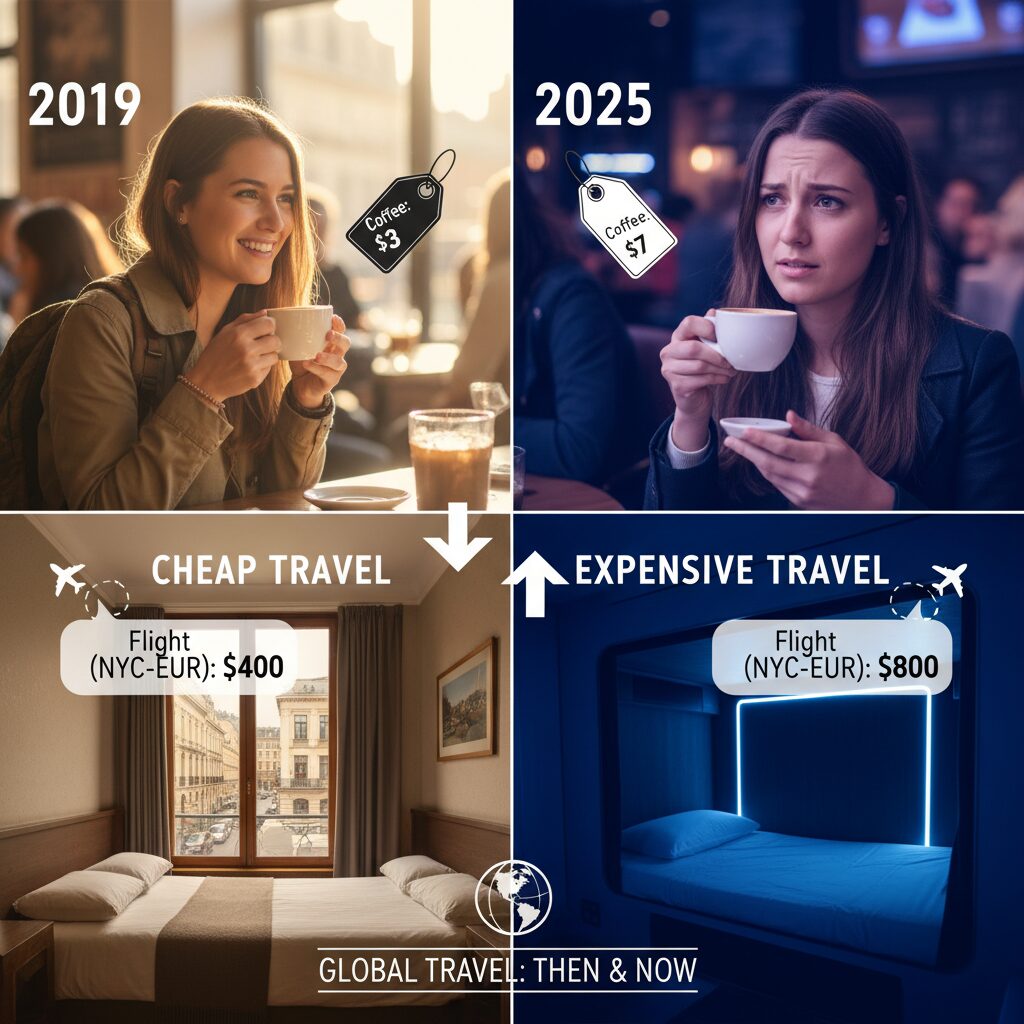
The old “$50 a day” rule is dead. I remember when a crisp $50 bill could get you a private bungalow on a Thai beach, three square meals, and a few beers with change to spare. But if you’re planning a trip in 2025 relying on pre-pandemic blog posts, you’re setting yourself up for a financial shock.
Between global inflation, new tourist entry levies (like Bali’s tax and the upcoming ETIAS for Europe), and shifting currency strengths, the landscape has changed. But here is the good news: travel is still accessible if you follow the data, not the rumors.
In this guide, we are ditching the guesswork. I’ve analyzed the latest 2024-2025 reports from the Post Office, Expedia, and Amex GBT to build a realistic budget that actually works. We aren’t just looking at surviving on instant noodles; we’re looking at sustainable, enjoyable travel.
🧳 The 2025 “Cheat Sheet” Summary
If you only read one thing, make it this table. These numbers account for accommodation, food, local transport, and one paid activity per day.
| Region | Shoestring Budget | Flashpacker Budget | Smart Comfort |
|---|---|---|---|
| Southeast Asia | $35 – $45 USD | $50 – $70 USD | $80 – $120 USD |
| Eastern Europe | $55 – $70 USD | $80 – $110 USD | $130 – $160 USD |
| Latin America | $40 – $55 USD | $65 – $85 USD | $100 – $140 USD |
| Western Europe | $80 – $100 USD | $140 – $180 USD | $220+ USD |
The Global Baseline: Three Tiers of “Cheap”
One of the biggest mistakes I see new travelers make is assuming there is only one way to travel “cheap.” In reality, budget travel in 2025 falls into three distinct tiers. Your personal comfort level will dictate your daily burn rate more than the destination itself.
1. The Shoestring Tier ($35-50/day)
This is the classic backpacker route. You are staying in hostel dorms (8-12 beds), eating primarily street food or cooking in the hostel kitchen, and using local buses rather than tourist shuttles. It requires discipline, but it offers the most authentic local connection.
2. The Flashpacker Tier ($60-90/day)
In my opinion, this is the “sweet spot” for most people. You have graduated from dorms to private rooms (or high-end boutique hostels), you eat at sit-down local restaurants, and you occasionally take a Grab or Uber when you’re tired. You aren’t counting every cent, but you aren’t wasteful.
3. The “Smart Comfort” Tier ($100-150/day)
This is for the career-breaker or the couple who wants value, not hardship. You stay in 3-star hotels or nice Airbnbs, take guided tours rather than DIY-ing everything, and drink nice wine. According to Mastercard Economics Institute’s Travel Trends 2024, spending on experiences now accounts for 12% of tourism sales—the highest point in five years. This tier prioritizes those experiences over saving $5 on a room.

Regional Cost Breakdown (The 2025 Matrix)
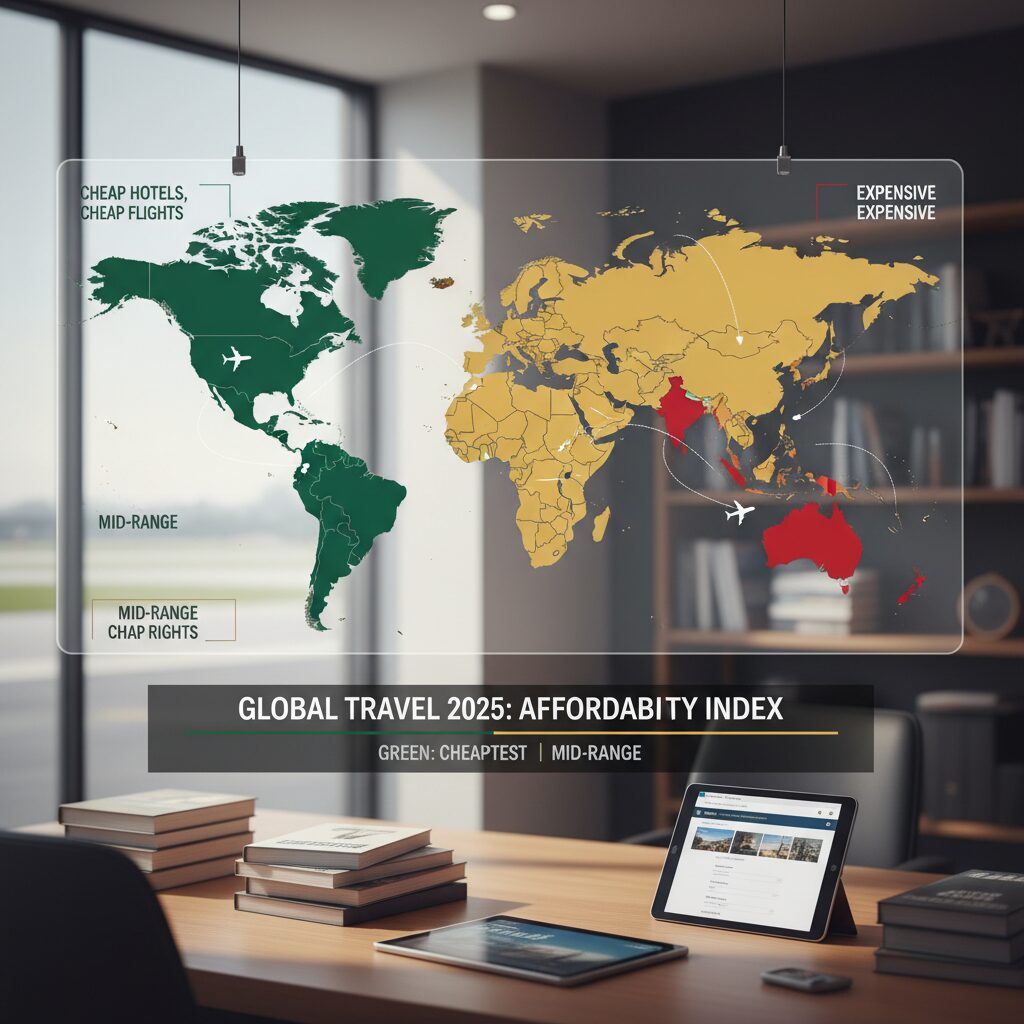
Where you go determines how far your dollar stretches. Currency arbitrage—earning in a strong currency (USD/GBP/EUR) and spending in a weaker one—is your most powerful tool in 2025.
Southeast Asia: The Undisputed Value King
Despite rising popularity, Southeast Asia remains the champion of affordability. However, the crown has shifted. While Thailand was once the go-to, Vietnam has taken the lead in pure value.
2025 Data Point: According to the Post Office Holiday Money Report (March 2024), Vietnam ranks as the #1 best value destination globally, with a total “basket of goods” cost of just £51.18 (approx. $65 USD).
I recently planned a route through Laos and Vietnam, and the difference is palpable. In Hoi An, Vietnam, you can find excellent private rooms for $18 a night. In Phuket, Thailand, that same standard is now pushing $35-$40 during high season.
Eastern Europe: The “Euro-Vibes” Alternative
If you are craving European culture but can’t stomach Paris prices, look East. The “stans” and the Balkans are having a moment.
According to Mastercard Economics Institute (May 2024), Albania ranks third in trending summer destinations for 2024, driven specifically by travelers seeking European aesthetics for a fraction of the cost. You get the Mediterranean coast, Roman ruins, and café culture, but your beer costs $2 instead of $9.
Latin America: The Inflation Mix
Latin America is tricky right now due to hyper-localized inflation. Mexico, particularly the Yucatan, has become significantly more expensive due to a strengthening Peso and massive tourism influx. Meanwhile, Colombia and Argentina offer incredible value for USD holders, though the economic situations there are volatile. Always check the “Blue Dollar” rates if visiting Argentina.
The “Hidden” Costs Most Budgets Miss
Here is the thing: most blog posts tell you the cost of a hostel and a taco. They forget the administrative friction of moving your body across borders. In 2025, these “hidden” costs can eat up 20% of your budget if you aren’t careful.
1. The Rise of Tourist Taxes
Governments are increasingly adding entry fees to combat over-tourism. Bali now charges a levy upon arrival. Europe is rolling out the ETIAS authorization (a small fee, but an extra step). Venice charges day-trippers. These $10-$30 fees add up if you are country-hopping quickly.
2. The Insurance Reality
Post-2020, traveling without insurance is financial suicide. Medical costs abroad have risen alongside inflation.
2025 Data Point: According to Squaremouth (May 2024), the average comprehensive travel insurance policy now costs roughly $595, or 5-10% of total trip costs.
When building your budget, you must add a “safety tax” of roughly $3-$5 per day for coverage. It’s not fun to pay, but it’s cheaper than a $50,000 medical evacuation.
3. ATM and Transaction Fees
If you aren’t using a card like Charles Schwab (US) or Starling/Monzo (UK) that rebates ATM fees, you are throwing away money. In countries like Thailand, the ATM fee is nearly $7 USD per withdrawal. Withdraw money once a week, and you’re losing $30 a month—that’s a full day’s budget!
Case Study: The “Basket of Goods” Index
To truly understand purchasing power, economists use a “basket of goods” comparison. This strips away the noise and looks at what basic items actually cost on the ground.
According to the Post Office Worldwide Holiday Costs Barometer 2024, the disparity is shocking. They found that Hoi An, Vietnam overtook Marmaris, Turkey as the best value destination due to currency fluctuations. Let’s look at the “Beer Index”—a universal metric for travelers:
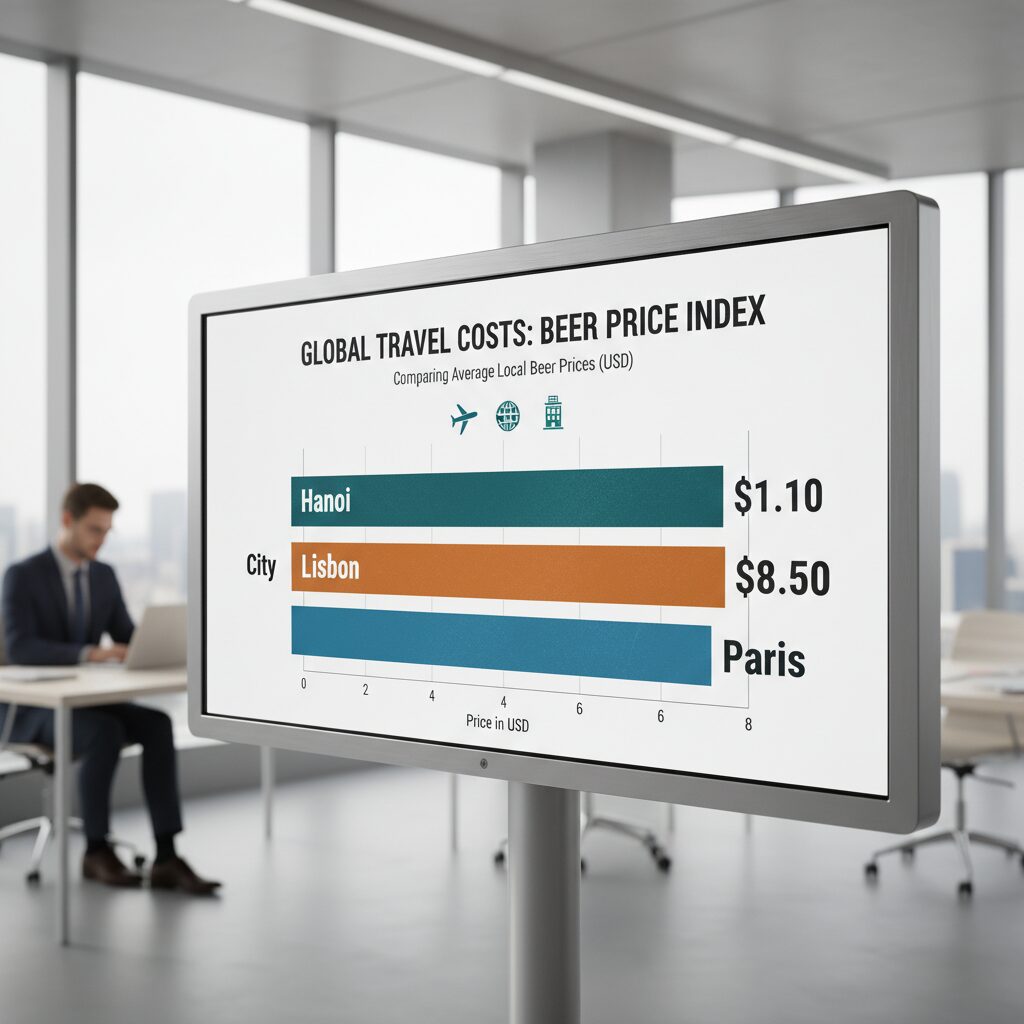
This matters because these small daily purchases are high-frequency. You might pay for a hotel once a day, but you buy water, coffee, snacks, and transport 10 times a day. A 50% price difference here destroys a budget faster than an expensive flight.
Getting There: Flight Pricing Trends in 2025
The single biggest line item is the flight. The days of last-minute deals are largely gone; the new strategy is algorithmic timing.
“In 2025, businesses and travelers will be faced with a new reality – even though price rises are leveling off, fares remain high.”
— Gerardo Tejado, SVP Professional Services, Amex GBT (Nov 2024).
So, how do we beat this? We follow the data.
- The “Sunday” Rule: According to Expedia’s 2025 Air Hacks Report, booking international flights on a Sunday can save travelers up to 17% compared to booking on a Friday.
- The August Anomaly: While we usually think of summer as peak pricing, the Expedia Air Travel Hacks Report (Jan 2025) reveals that August is actually shaping up to be the cheapest month to travel in 2025, as demand softens before the autumn business rush.
My advice: Set price alerts on Google Flights 4-6 months out. When you see a dip, book it. Hesitation costs money in this market.
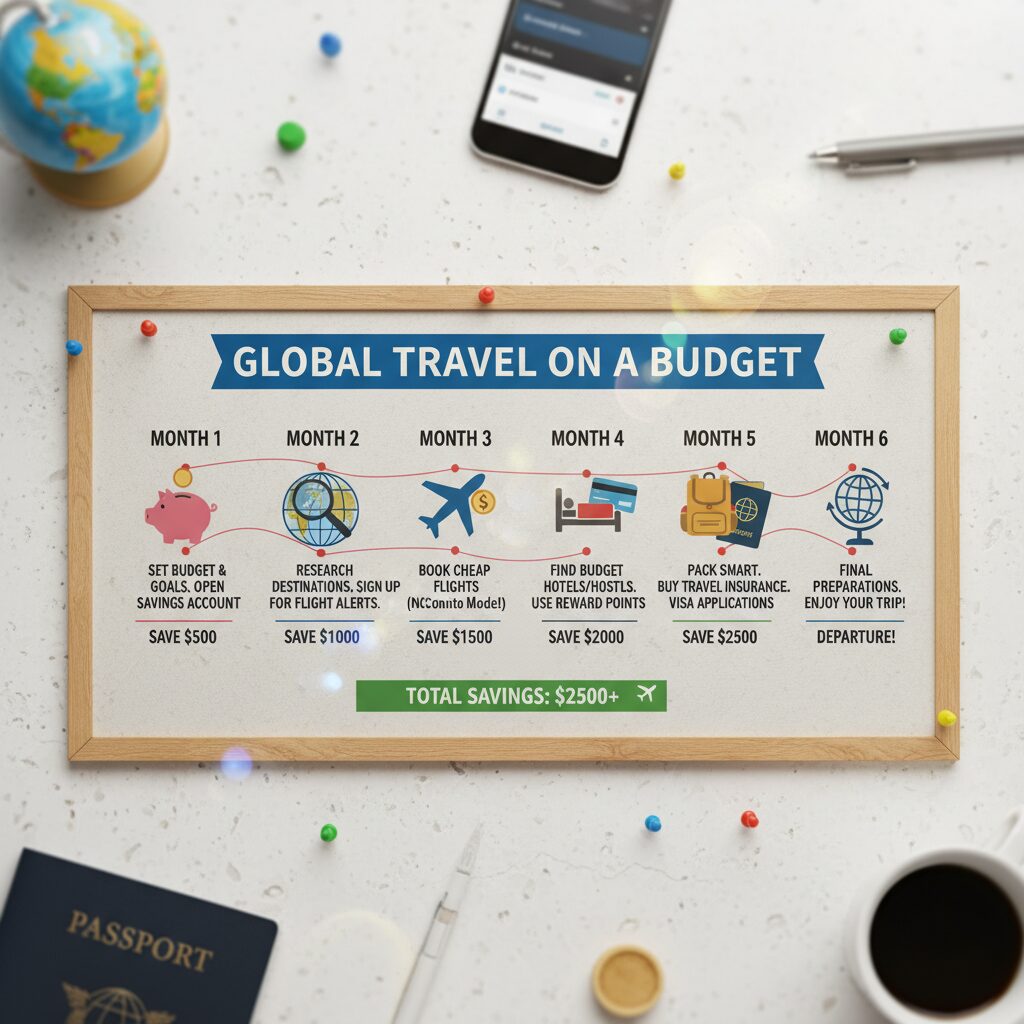
How to Build Your Fund: The 6-Month Savings Plan
Knowing the budget is half the battle; having the cash is the other. If we aim for a 3-month trip to Southeast Asia at the “Flashpacker” tier ($60/day), you need roughly $5,400, plus $1,500 for flights and gear. Total goal: $7,000.
Here is a breakdown to save this in 6 months ($1,166/month):
- The “Big Three” Audit: Rent, Food, Transport. You can’t save $1,000 by cutting Netflix. You need to move to a cheaper room, cook every meal, or sell the car. It’s radical, but it’s temporary.
- High-Yield Savings: Don’t let your travel fund sit in a checking account. Move it to a High-Yield Savings Account (HYSA). With rates hovering around 4-5%, your money should be earning you a free dinner every month.
- Gear Hacking: Do not buy brand new gear. Facebook Marketplace is full of barely-used Osprey backpacks from people who went on one trip and quit. I bought my $300 pack for $80.
Case Study: The “Inflation-Proof” Itinerary
Let’s look at a concrete comparison to prove why destination choice is the ultimate budget hack. We will compare one month in Southeast Asia against one month in Western Europe using aggregated data from Numbeo’s Cost of Living Index 2025.
| Category | Vietnam/Thailand (The Value Route) | France/Italy (The Western Route) |
|---|---|---|
| Daily Budget | $45 USD | $140 USD |
| Accommodation | Private Guesthouse (AC/WiFi) | Hostel Dorm Bed |
| Food | Street food + Restaurants | Supermarket meals + 1 cheap eat |
| Transport | Scooter Rental / Grab | Public Metro / Train |
| Monthly Total | ~$1,350 USD | ~$4,200 USD |
The takeaway is stark: A “luxury” lifestyle in Asia costs 30% of a “survival” lifestyle in Western Europe. If your budget is tight, change your longitude, not just your spending habits.
FAQ: Your Budget Questions Answered
Is $50 a day enough for Thailand in 2025?
Yes, but with caveats. If you stick to street food, local buses, and fan-cooled rooms, $50 is plenty. If you want AC, craft cocktails, and island hopping ferries every other day, you will need closer to $70-$80.
Which countries have the best exchange rate for USD right now?
Currently, Argentina, Colombia, Japan, and Vietnam offer exceptional value for USD holders. Japan, historically expensive, has seen the Yen weaken significantly, making it more affordable than it has been in decades.
How much does a round-the-world trip cost in 2025?
For a year-long trip visiting 15-20 countries, a realistic baseline is $25,000 – $30,000 USD. This covers flights, insurance, and a mix of developing and developed nations. Anyone telling you $15,000 is likely skipping insurance or relying on Couchsurfing exclusively.
Conclusion: Stop Dreaming, Start Calculating
A realistic cheap travel budget in 2025 isn’t about deprivation; it’s about allocation. It’s about realizing that $100 in Paris gets you a bed in a crowded room, while $100 in Hoi An gets you a king-sized suite and a three-course meal.
The data from the Post Office and Expedia is clear: prices have stabilized, but they have stabilized higher than 2019. To win this game, you need to be flexible with your dates (hello, August flights) and strategic with your destination (hello, Vietnam).
The world is still open, and it is still affordable. You just have to follow the numbers.

Related Posts

How to save money while traveling?
How to track travel spending easily?