How to save money while traveling?
How to Save Money While Traveling in 2025: The Ultimate Data-Backed Guide
I remember the first time I realized that “budget travel” didn’t mean eating instant noodles in a dark hostel room. It was realizing that the price tag of a trip often has less to do with the quality of the experience and more to do with when and how you book it.
Inflation has undeniably hit the tourism industry hard. But here’s the thing: smart travelers aren’t staying home. They are changing the playbook. I’ve spent the last decade analyzing travel trends, and the 2025 landscape is different than anything we’ve seen before.
Forget generic advice like “skip the latte.” In this guide, I’m going to break down exactly how to navigate the new travel economy using the latest 2025 industry reports, reveal the specific “detour destinations” that save you thousands, and show you the tools that put money back in your pocket.
The New Rules of Budget Travel (2025 Trends)
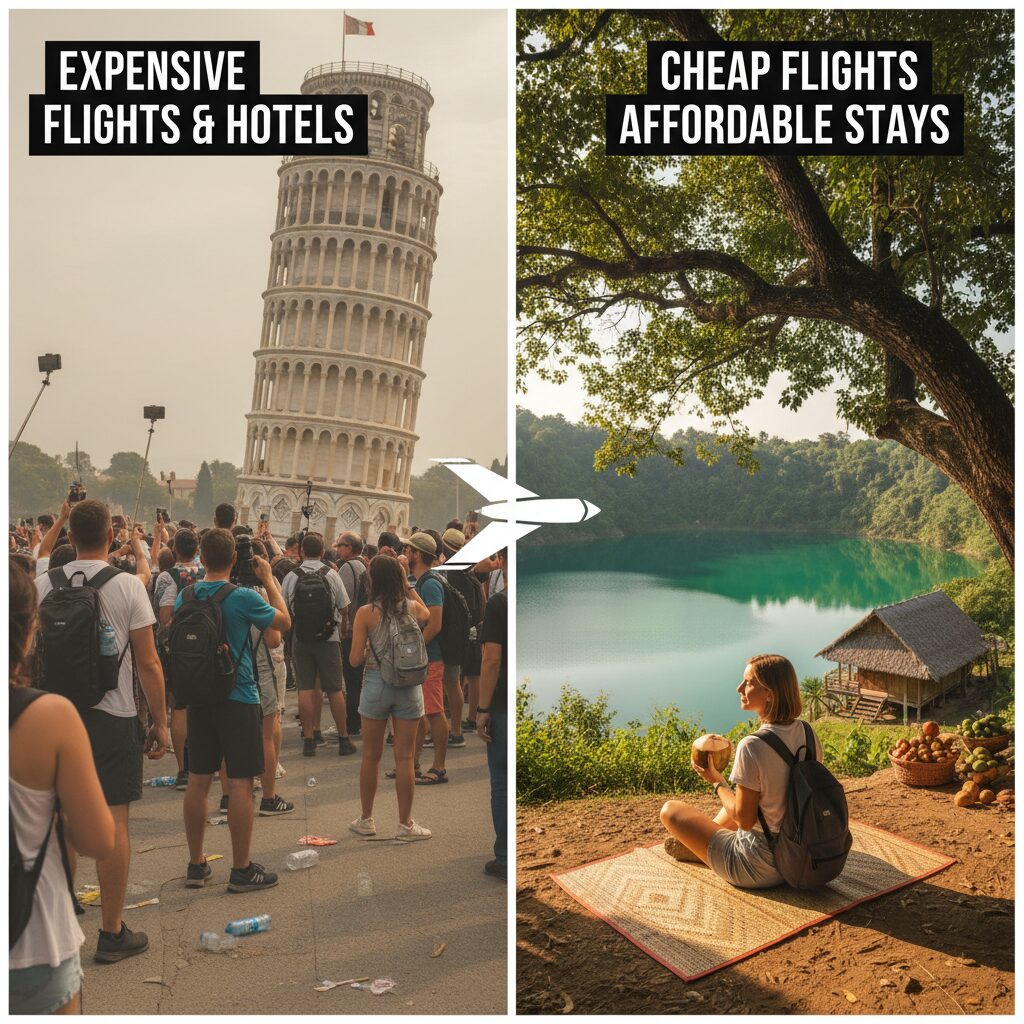
If you’re still trying to book travel the way you did in 2019, you’re overpaying. The biggest shift I’ve seen in 2025 is a move away from “status destinations” toward what the industry is calling “Detour Destinations.”
1. Embrace “Detour Destinations”
According to the Expedia Group Unpack ’25 Travel Trends Report, 63% of consumers are likely to visit a “Detour Destination” this year. These are lesser-known alternatives to major tourist hubs that offer a similar vibe for a fraction of the price.
Let’s look at the math. A 3-day trip to Paris currently averages around $801. However, take a train 45 minutes east to the historic city of Reims, and that cost drops to roughly $450 based on 2025 daily budget data. You get the champagne, the gothic cathedral, and the French culture without the “Capital City Tax.”
My advice: Don’t search for “Cheap hotels in Barcelona.” Search for “Cities like Barcelona” and look at Girona or Tarragona instead.
2. The Rise of “Noctourism”
Here’s a trend that surprised me: saving money by shifting your schedule. A 2024 report from Booking.com indicates that 61% of travelers are considering visiting destinations specifically for darker skies and limited light pollution.
Why does this save money? “Noctourism” activities—like star-bathing, night markets, and cosmic events—are often free or significantly cheaper than daytime guided tours and museum entry fees. Shifting your focus to nature-based night activities reduces your entertainment budget drastically.
3. “Vintage Voyaging”: Buy Your Wardrobe Abroad
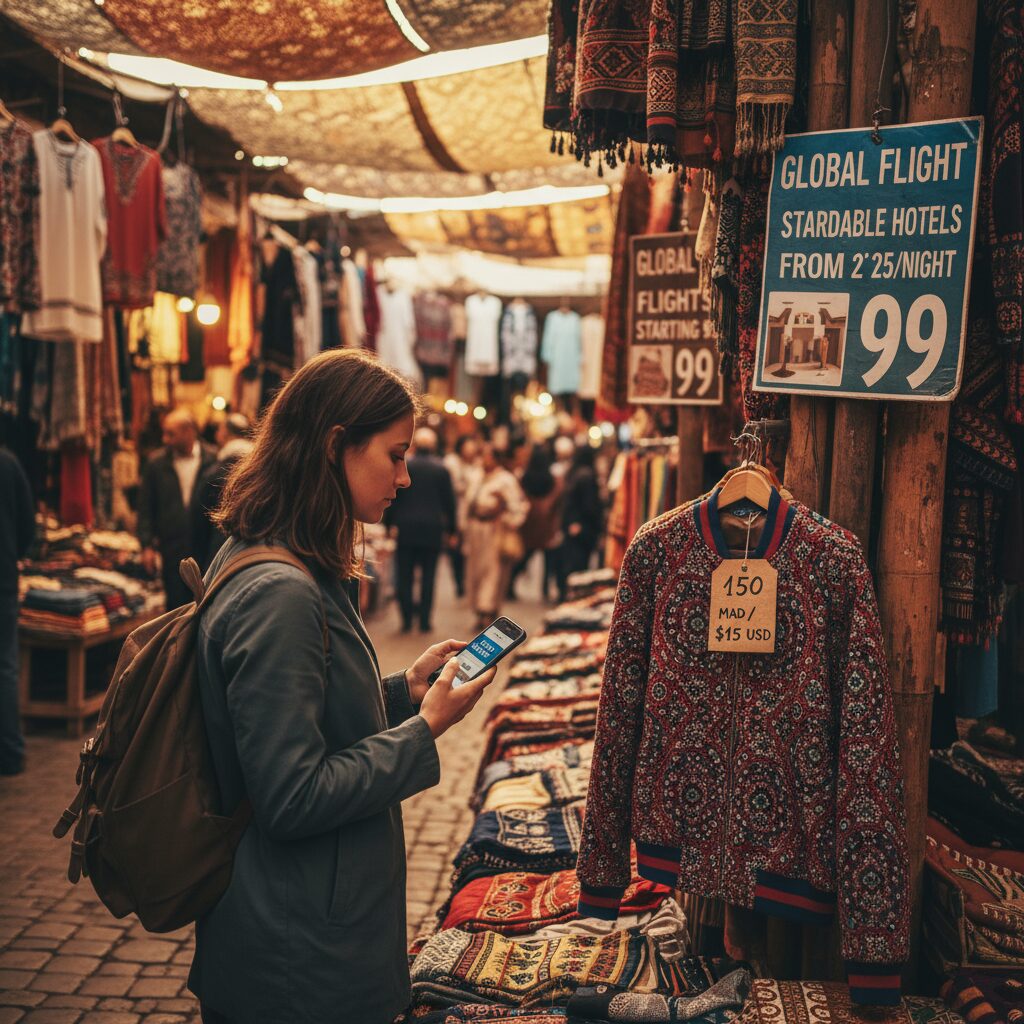
I used to pack for weeks before a trip, often buying new “vacation clothes.” That’s a mistake. The Booking.com 2025 predictions highlight that 51% of travelers are now interested in buying their vacation wardrobe during their trip at thrift stores.
Not only is second-hand shopping in places like Tokyo, Berlin, or Buenos Aires an adventure in itself, but it also saves on baggage fees (pack light, come home heavy) and prevents you from buying fast fashion at home that you’ll only wear once.
Strategic Booking: When and How to Pay
Timing is everything. But in 2025, the “book as early as possible” rule doesn’t always apply.
The “Goldilocks Window”
While hotel rates have actually dipped slightly (-0.8%) in some regions, airfares are up. According to NerdWallet’s November 2025 Travel Price Index, airfares have risen 3.2% year-over-year. To combat this, you need to hit the “Goldilocks Window”—typically 21 to 60 days before departure for international flights.
Booking too early (6+ months out) often means paying a premium because airlines haven’t released their discount buckets yet. Booking too late (under 21 days) exposes you to business-traveler pricing.
“Prices will continue to rise in 2025, but only moderately. Expect a period of normalized growth—around 0.6% for airfares.” — Nicholas Vournakis, CWT (via Business Travel News Europe, Sept 2024).
Leveraging “JOMO Travel”
The “Joy of Missing Out” (JOMO) is a massive money saver. The Expedia Unpack ’25 Report found that 62% of travelers say JOMO travel reduces stress. This translates to booking low-key rental homes in quiet areas rather than all-inclusive resorts or city-center hotels.
In my experience, moving just 20 minutes outside a city center to a quiet Airbnb can drop your accommodation costs by 30-40%. Plus, you get a kitchen, which leads me to the next point.
Daily Spending: Accommodation & Food Hacks
Once you’ve booked the flight, the daily bleed of cash begins. Here is how to plug the holes.
Hostel vs. Hotel vs. Airbnb
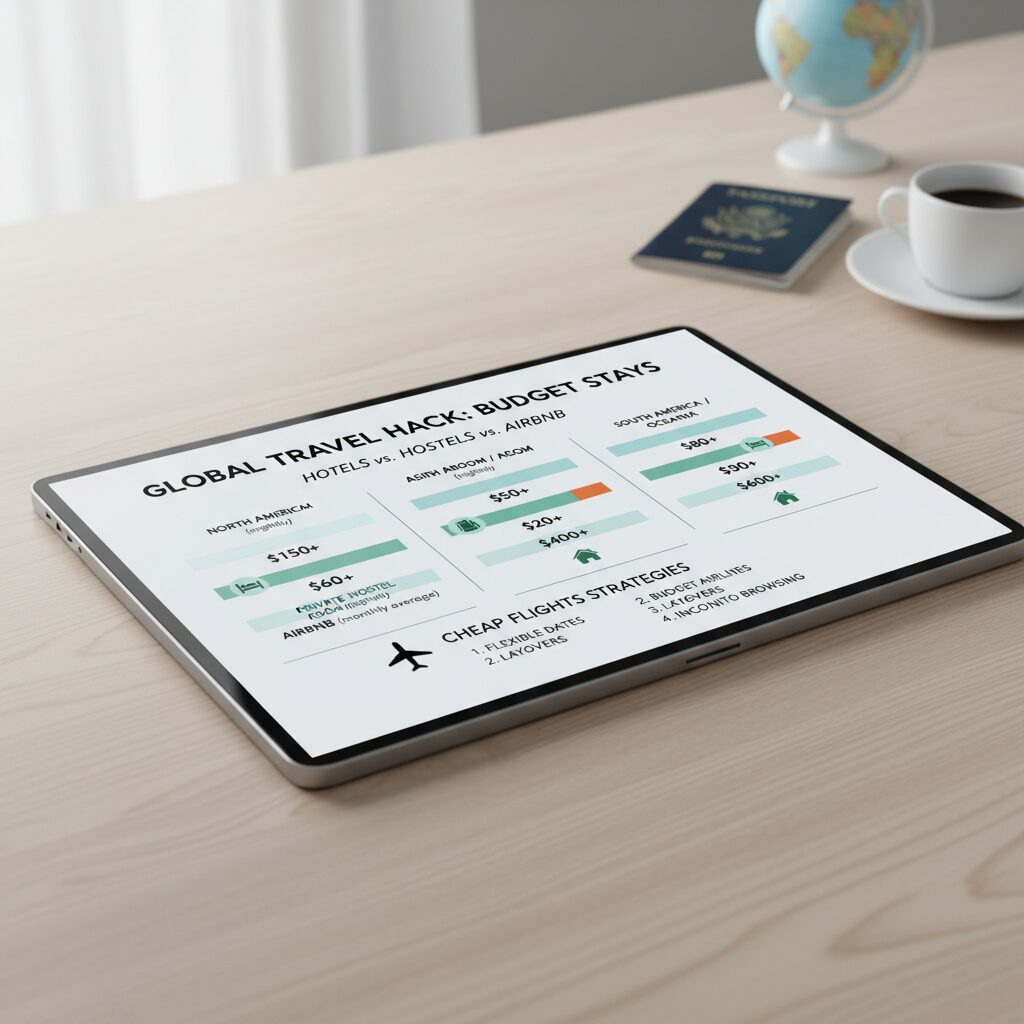
The gap is widening. While hotels in major cities are pushing $200+ per night, the hostel industry has evolved. Modern “poshtels” offer privacy for a fraction of the cost.
However, for digital nomads or slow travelers, the real win is long-term rentals. I’ve seen travelers save upwards of 40% on monthly rent by booking 28+ day stays on platforms like Airbnb or Vrbo, particularly in countries like Colombia or Thailand. This aligns with the “Slow Travel” movement where sustainability meets savings.
The “Lunch as Dinner” Strategy
If you want to eat at a Michelin-star restaurant or a famous local hotspot, do it at 1:00 PM, not 8:00 PM. Lunch menus worldwide are often 30-50% cheaper than dinner menus for the exact same food. In Europe specifically, the “Menu del Día” is your best friend—a three-course meal with wine for €12-€15 that would cost €30+ at dinner.
Top Cheapest Countries to Visit in 2025
Your money simply goes further in some places. Based on 2025 economic data, here is where your dollar dominates.
1. Southeast Asia: The King of Value
According to data from HelloSafe and Time Out (March 2025), Laos ranks as the cheapest country to visit in 2025, with an average daily budget of just $22 USD. Vietnam and Thailand follow closely, offering incredible food and lodging for under $40/day.
“I think of budget travel as frugal travel. It’s not about being cheap; it’s about value. In 2025, stick to regions like Southeast Asia where $50 a day still reigns supreme.” — Matt Kepnes (Nomadic Matt), via Interview with Nadine Sykora, March 2025.
2. The Affordable Europe
Everyone wants to go to Switzerland, but a 2024 Visual Capitalist report shows it requires a daily budget of $359 USD. That is unsustainable for most.
Instead, look at the Balkans. Albania and Bulgaria offer the Mediterranean coastline and mountain peaks for roughly $45-$60 per day. You get the European aesthetic without the Swiss price tag.
of Gen Z and Millennials care more about the right experience than the cost.
Source: American Express 2024 Travel Trends Report
Hidden Costs That Kill Your Budget
I’ve seen perfectly planned budgets destroyed by three things: Bank fees, baggage, and data roaming.
Foreign Transaction Fees
If you are swiping a debit card that charges a 3% foreign transaction fee, you are voluntarily giving the bank $30 for every $1,000 you spend. In 2025, there is no excuse for this. Ensure you have a credit card or a debit account (like Charles Schwab or Revolut) that reimburses ATM fees and charges 0% on foreign transactions.
The Carry-On Only Lifestyle
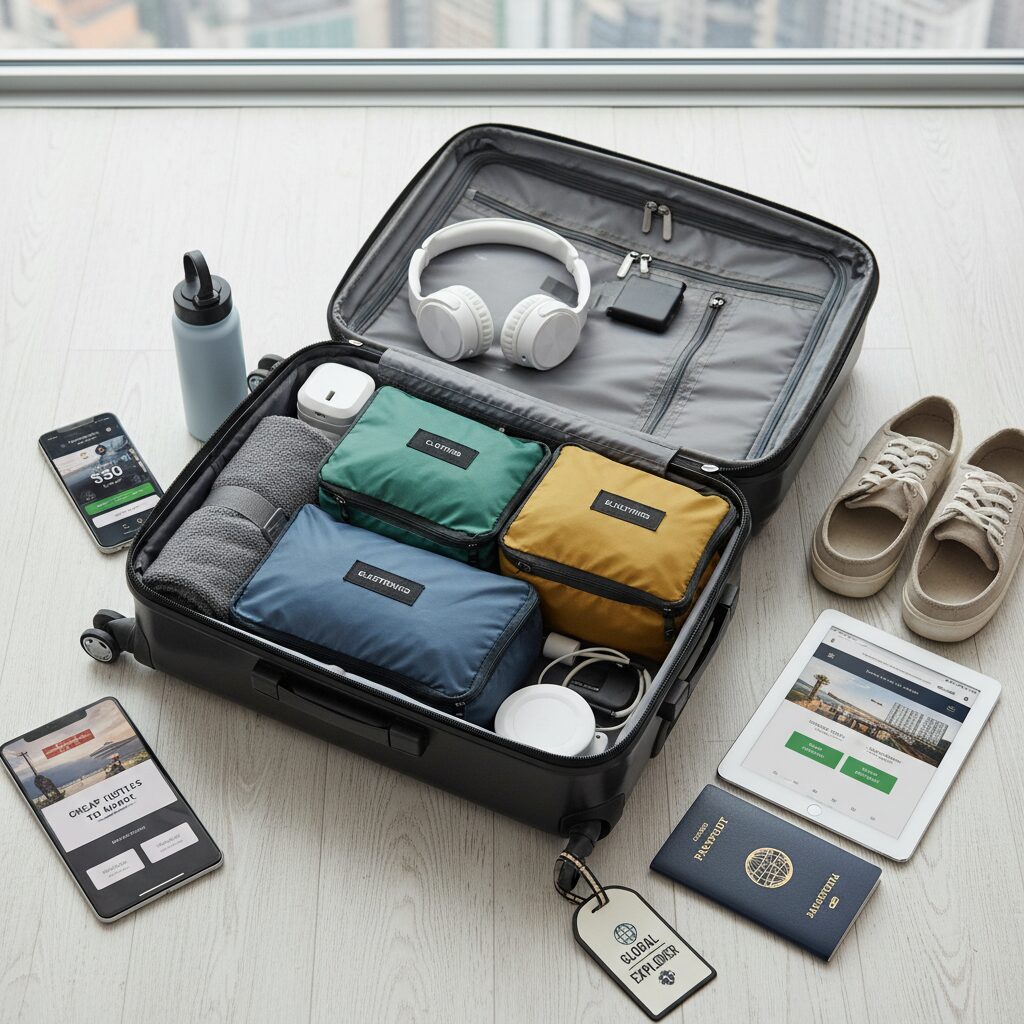
With basic economy fares becoming the standard, checking a bag can cost $120 roundtrip. Mastering the art of the 7kg carry-on isn’t just about convenience; it’s a financial necessity. If you are taking four flights on a multi-leg trip, checking a bag could cost you the equivalent of a week’s accommodation in Laos.
Budget Your Trip: The 2025 Calculator
Wondering how much you actually need? I’ve built this simple calculator based on the average daily costs we’ve discussed for 2025.
2025 Travel Budget Estimator
FAQ: Common Budget Travel Questions
Is it possible to travel with no money?
Technically, yes, but it requires labor. Work exchange programs like WWOOF or Worldpackers allow you to trade labor (usually 20-25 hours a week) for free accommodation and food. However, you still need funds for flights, insurance, and visas. It is rarely truly “free.”
What is the 30% rule in travel budgeting?
The 30% rule suggests you should budget 30% more than you think you need. If your spreadsheet says the trip will cost $2,000, have $2,600 available. Inflation affects exchange rates and local prices rapidly; having that buffer prevents an emergency from ending your trip.
Do private browsers really save money on flights?
The debate continues, but in 2025, the consensus is: sometimes, but not because of “cookies.” Airlines use complex dynamic pricing. While Incognito mode prevents your history from influencing results, using a VPN to change your location (e.g., booking a flight within Peru from a Peruvian IP address) is a far more effective way to see local pricing.
Conclusion: Spend Smart, Not Less
Saving money while traveling in 2025 isn’t about denying yourself experiences. It’s about data. It’s about knowing that 63% of savvy travelers are choosing “Detour Destinations” and realizing that a train to Reims offers just as much magic as a flight to Paris, for half the cost.
Whether you are hunting for vintage clothes in Berlin to save on luggage fees or using “Noctourism” to enjoy nature for free, the tools are in your hands.
The world is getting more expensive, but your ability to navigate it is getting sharper. Use the calculator above, check the flight charts, and go explore.