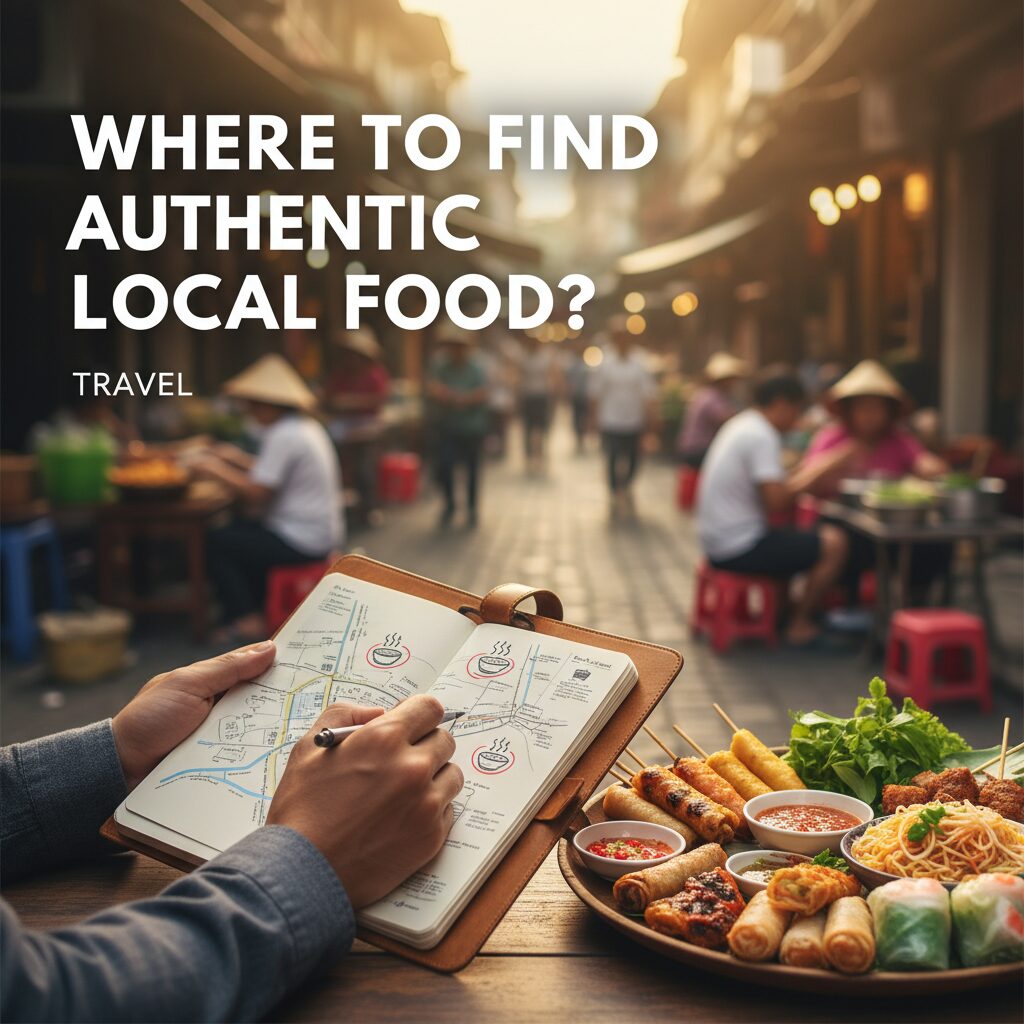
Where to find authentic local food?
How to Find Authentic Local Food Anywhere: The Ultimate Anti-Tourist Trap Guide (2025 Edition)
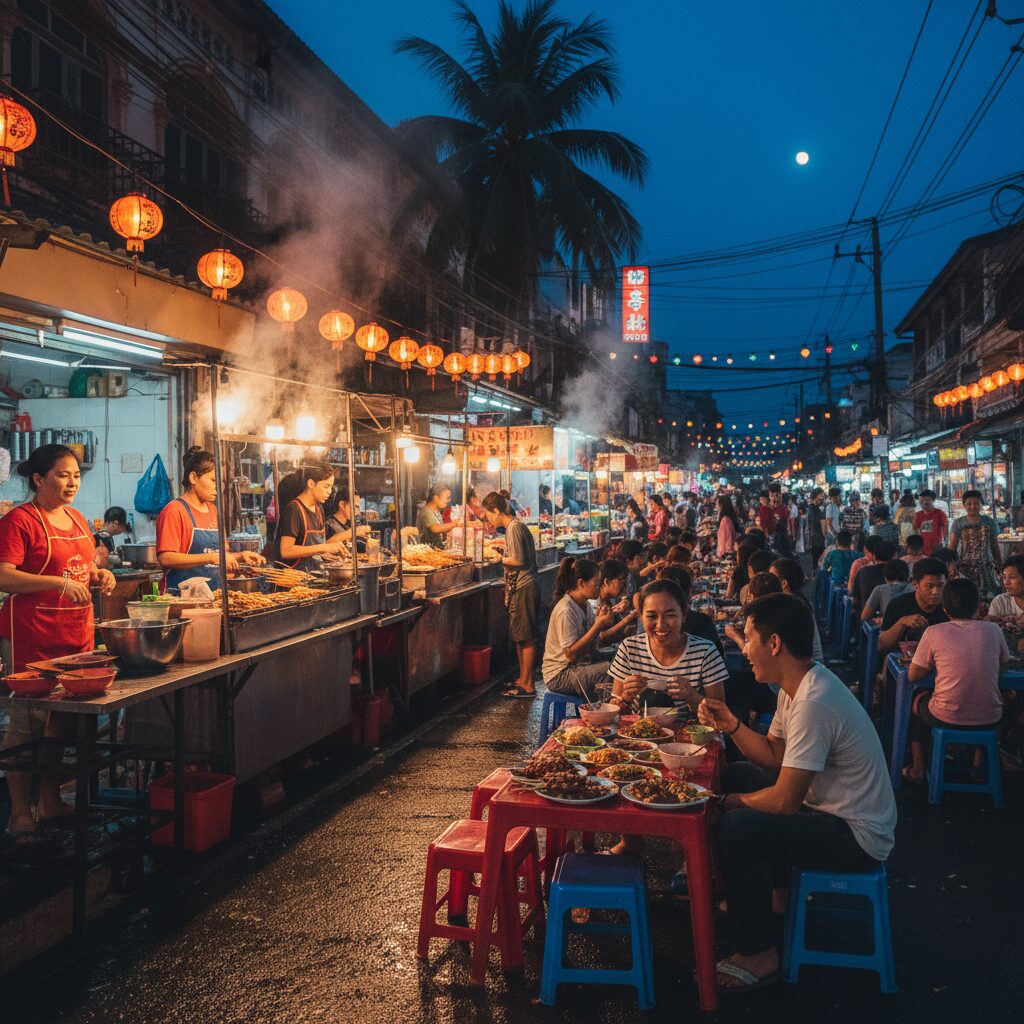
The best meal of your life won’t be found on a laminated menu translated into four languages. It definitely won’t be found in a restaurant where a waiter is standing outside, physically trying to usher you in. In my experience traveling through over 30 countries, the life-changing meals are usually found down an alleyway you were initially afraid to enter, served by a grandmother who doesn’t speak a word of English.
We all want that moment—the plastic stool, the unidentifiable but delicious smells, the feeling of having discovered a secret. Yet, so many of us end up in the “TripAdvisor Loop,” eating mediocre versions of local dishes surrounded by other people wearing fanny packs.
Finding truly authentic local food isn’t just about luck; it’s a skill set. It requires digital reconnaissance, forensic observation, and the willingness to break social scripts. This isn’t a list of places to eat. This is a methodology on how to find them.
The Psychology of “Authentic” Dining
Before we dive into the tools, let’s look at what we are actually chasing. “Authenticity” is a buzzword, but the economic drive behind it is massive. According to the TripAdvisor Travel Trends report, the demand for “authentic” experiences has risen 20% year-over-year. We aren’t just hungry for calories; we are hungry for connection.
However, the economics of tourism work against you. High rents in city centers force restaurants to cater to the lowest common denominator—tourists who will likely never return. They serve “safe” food at high margins. To find the real stuff, you have to escape the high-rent zones.
The Data Reality
95%
of American travelers prioritize unique food experiences, according to the 2024 State of the Industry Report by the World Food Travel Association (WFTA).
Why does this matter? Because 95% of travelers are looking for the same thing you are, but most are looking in the wrong places. If you follow the crowd, you eat what the crowd eats. To eat like a local, you have to ignore the “Top 10” lists.
“Authenticity is not about Michelin stars; it is about the ingredients that have grown in that soil for centuries.”
— Matija Babic, Founder of TasteAtlas
Digital Reconnaissance: The Tools Pro Foodies Use
I used to rely on Yelp and TripAdvisor. The problem? These platforms are aggregated opinions of other tourists. A person from Ohio visiting Rome might rate a carbonara 5 stars because the service was friendly, not because the guanciale was perfectly rendered. Here is how to use technology to bypass the noise.
Moving Beyond Yelp: The TasteAtlas Method
For genuine culinary heritage, I’ve shifted my focus to TasteAtlas. Unlike review sites that prioritize specific restaurants, TasteAtlas maps out dishes and ingredients native to a region. It teaches you what to eat, not just where.
Another platform changing the game is Eatwith. A press release from their official site notes they have facilitated over 150,000 dining experiences in 130+ countries. This app connects you with home cooks who host dinners. It’s the Airbnb of dining, and it completely removes the “restaurant” filter from the equation.
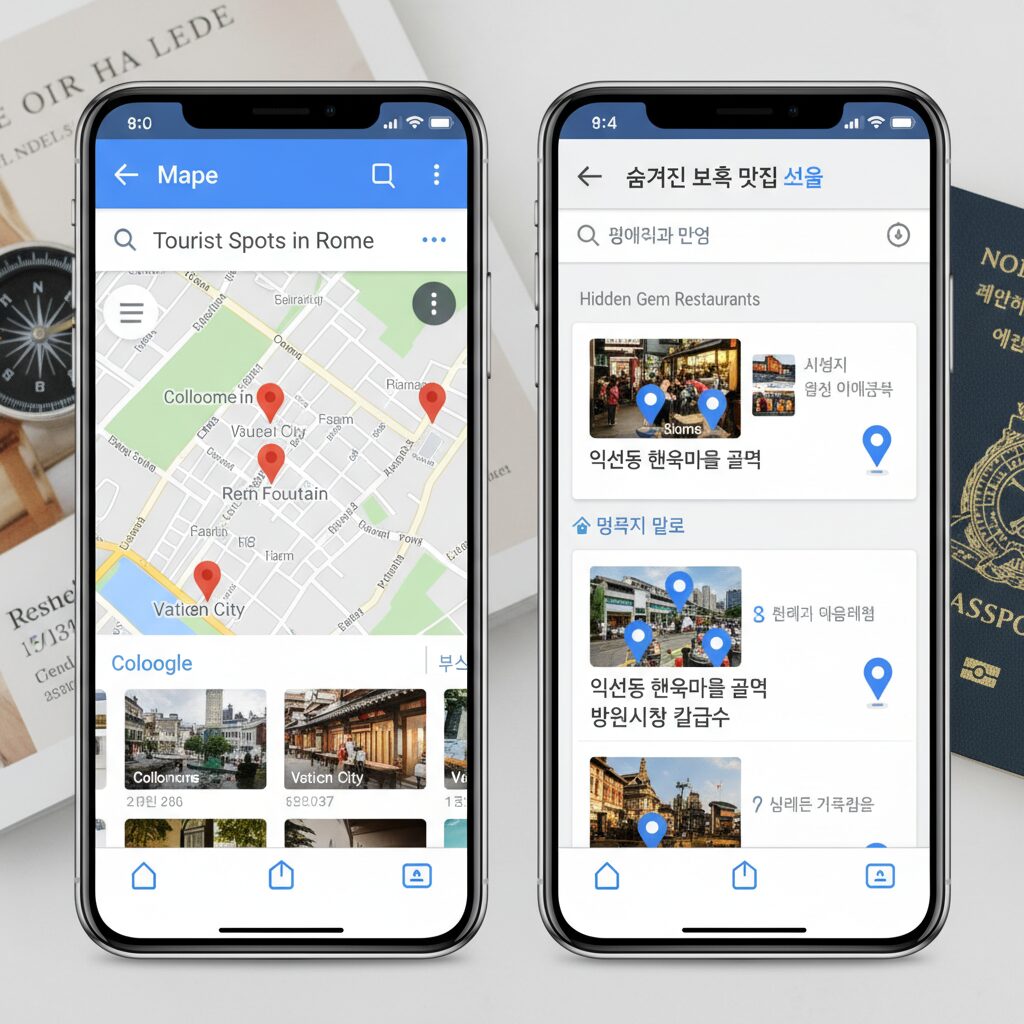
The Google Maps “Local Language” Hack
This is my favorite trick, and it works 100% of the time. If you search for “Best Pad Thai” in Bangkok using English, Google Maps shows you places popular with English speakers.
Try this instead:
- Go to Google Translate.
- Type “Best Noodles” (or the specific dish) and translate it into the local language (e.g., Thai, Japanese, Italian).
- Copy that local text and paste it into Google Maps.
- Look for the pins that have high ratings but zero reviews in English.
You have just found the spots the locals are guarding.
Visual & Physical Indicators of Authenticity
Once you are on the ground, you need to use your eyes. There are forensic clues that reveal if a restaurant is a trap or a treasure within seconds of looking at it.
The Menu Test
Mark Wiens, the food travel vlogger with over 10 million subscribers, has a golden rule: “If the menu is only in English and there are photos of hamburgers next to the Pad Thai, run.”
The Authentic Menu Checklist:
- Length: A massive menu is a red flag. A kitchen cannot keep 50 different ingredients fresh. The best local spots often do one or two things perfectly.
- Language: If the primary language is English (in a non-English country), it’s for you, not locals.
- Wear and Tear: A laminated, pristine menu suggests a chain. A handwritten chalkboard or a paper slip often suggests the menu changes based on what was fresh at the market that morning.
The “Grandma” Factor and Open Kitchens
I call this the “Grandma Factor.” If you can see the kitchen, and you see an elderly person cooking who looks like they have been making that soup for 40 years, sit down immediately. It doesn’t matter what the hygiene rating on the door says (within reason); that food has soul.
Crowd Analysis: The “Worker” Index
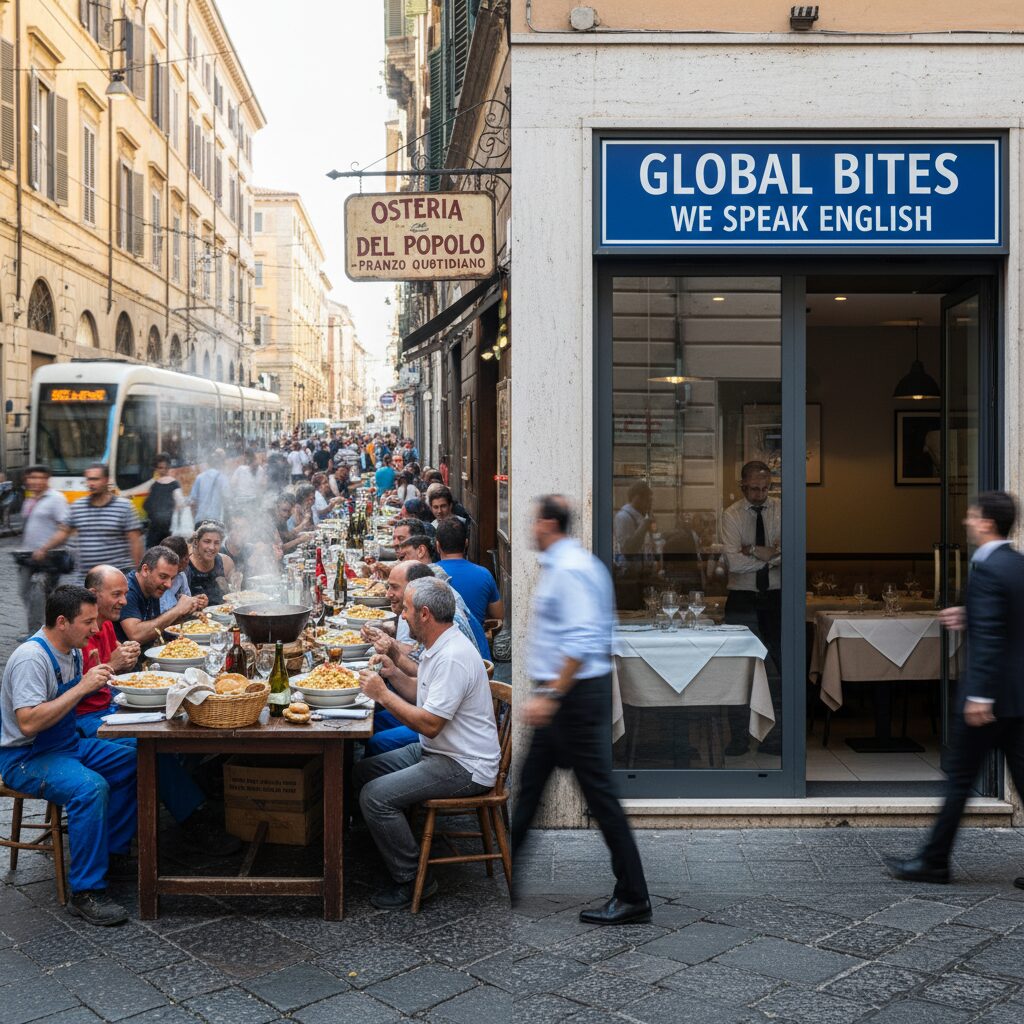
Don’t look for the queue of people with cameras. Look for the queue of construction workers, taxi drivers, or office workers at 12:30 PM. These people want two things: high value and good taste. They cannot afford to eat overpriced tourist food every day.
This aligns with the data. A 2024 report from U.S. Travel Association indicates travelers spend approximately 25% of their budget on food. Locals, however, are spending their daily wage. If they are lining up, the price-to-quality ratio is unbeatable.
The “Human Intelligence” Strategy
Technology is great, but human interaction is better. However, you have to ask the right people. Do not ask the hotel concierge. In my experience, they often have agreements with tourist-friendly restaurants to send guests their way for a kickback.
The Taxi Driver Rule
When you get in a taxi or Uber, don’t ask, “Where is a good restaurant?” That sounds like you want a white tablecloth. Ask, “Where do you eat lunch when you’re working?” or “Where does your wife/husband like to go for a celebration?” You’ll get two very different, very authentic answers.
The Wet Market Strategy
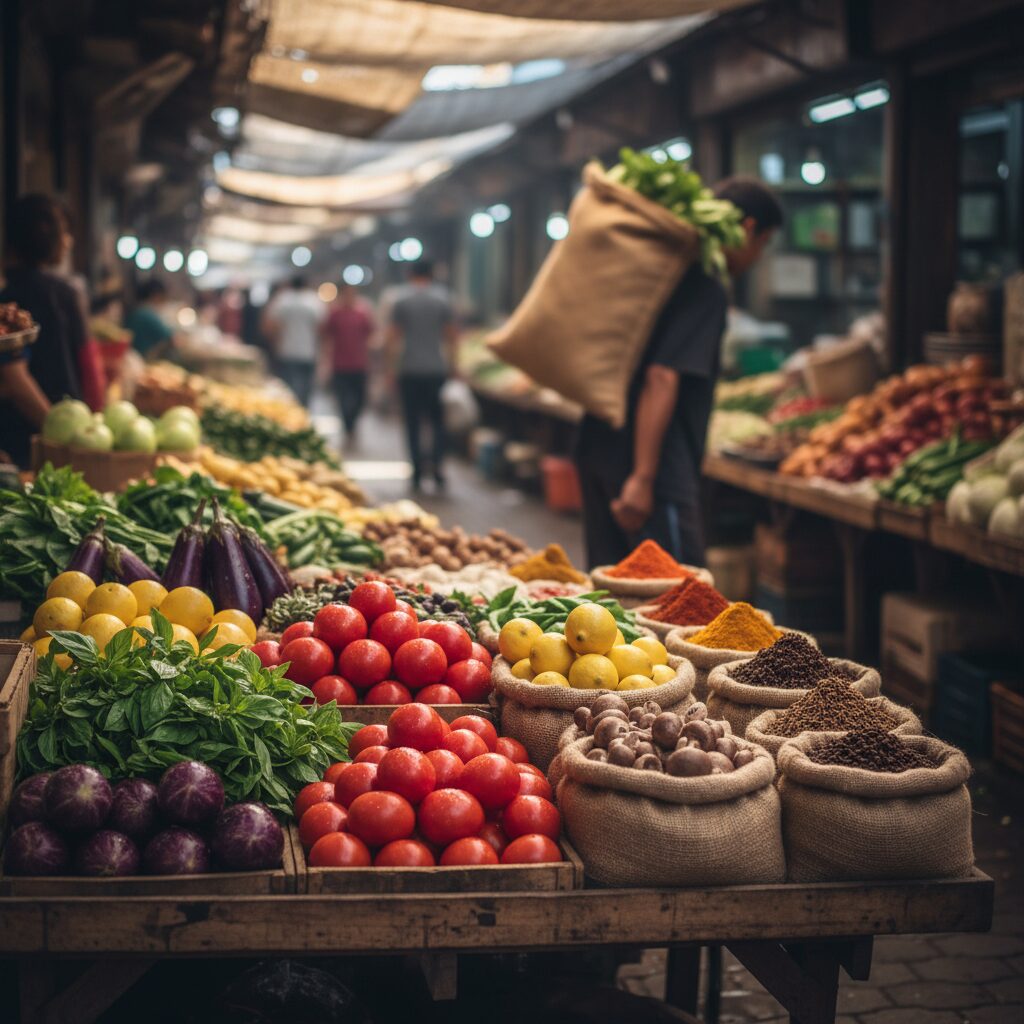
If you really want to understand the cuisine, go to the source. The FAO (Food and Agriculture Organization) values the street food market at $18 billion globally. This economy starts at the wet markets.
Visit the local market at 6:00 AM. Look at the ingredients. Then, follow the people buying bulk produce. If you see a guy buying 20 kilos of clams, follow him. He is likely heading back to a restaurant to prep for the lunch rush.
Case Study: The “Omakase” Effect
In Japan, the best sushi spots often have no menu at all. This is Omakase (leaving it up to the chef). On Tabelog, Japan’s local version of Yelp, tiny, menu-less counters consistently outrank luxury hotel restaurants. The lesson? Trust the specialist over the generalist.
Safety & Etiquette in Local Dining
I know what you’re thinking. “If I eat at that hole-in-the-wall, will I get sick?” It’s a valid concern. According to American Express Travel Trends 2024, 72% of consumers prioritize high-quality food, but hygiene standards vary globally.
The “Hot Food” and “Crowd” Rules
Anthony Bourdain famously said, “Do we really want to travel in hermetically sealed popemobiles… eating only in Hard Rock Cafes? Or do we want to eat without fear?”
To eat without fear, follow these rules:
- The High Turnover Rule: A busy street stall is safer than an empty restaurant. High turnover means the food hasn’t been sitting out.
- The Heat Rule: Only eat food that is cooked in front of you, piping hot. Bacteria hates fire.
- The Peel Rule: If you eat fruit, eat things you can peel yourself (bananas, oranges) rather than pre-cut fruit washed in tap water.
Respecting the Culture
When you find these places, remember you are a guest. Booking.com’s Sustainable Travel Report (2024) highlights that 81% of travelers want to understand the culture. Part of that is patience. In many authentic spots in Europe, service is slower. In Asia, it might be frantic. Observe the locals and match their energy.
The Connection Between Culture and Cuisine
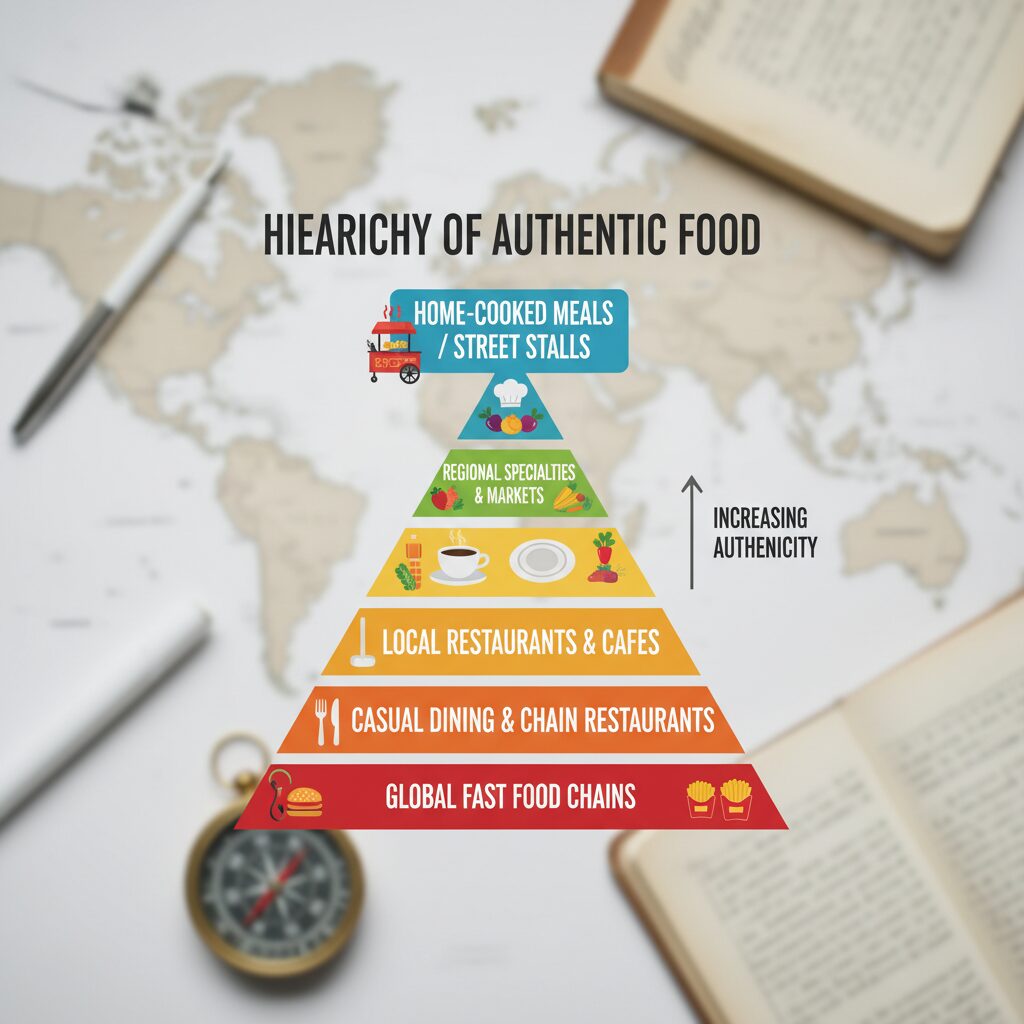
Finding authentic food is about more than just filling your stomach. It is a driver for local development. According to UN Tourism (UNWTO), gastronomy tourism is a primary engine for rural development. When you spend money at a local grandmother’s stall rather than a global chain, that money stays in the community.
Consider the Hawkers in Singapore. In 2020, UNESCO recognized Hawker Culture as Intangible Cultural Heritage of Humanity. This validated street food not as a “cheap alternative,” but as high culture worthy of preservation. That is what you are participating in when you choose to eat locally.
Frequently Asked Questions
How do I find non-touristy restaurants?
Use the “Reverse Language” hack on Google Maps (search in the local language), avoid restaurants with “touts” outside, and walk at least five blocks away from major tourist attractions before looking for food.
Is it safe to eat street food?
Generally, yes, if you follow the “Cooked in Front of You” rule. Look for stalls with long lines of locals (high turnover) and avoid raw items or tap water ice in regions with poor water quality.
What is the best app for authentic local food?
TasteAtlas is superior for learning about regional dishes. HappyCow is excellent for vegan/vegetarian options globally. Google Maps is powerful if you look for reviews in the local language rather than English.
How do I ask locals for recommendations without getting a tourist answer?
Ask specific questions. Instead of “Where is a good restaurant?”, ask “Where can I find the best [Specific Local Dish]?” or “Where do you go for a quick lunch?”
Conclusion
The next time you travel, I challenge you to be brave. Walk past the restaurant with the English menu and the pictures of pizza. Turn down that narrow alleyway where the smell of garlic and chilies is wafting through the air.
Use your digital tools to get close, but use your senses to make the final decision. Look for the queue of workers. Look for the open kitchen. Look for the menu you can’t read.
As Erik Wolf, Executive Director of the World Food Travel Association, says: “Food is the only attraction that you can experience using all five senses. It is the most authentic way to know a place.”
Stop being a tourist. Start being an eater.

Related Posts

How to document travel memories well?

What are top sustainable travel tips?