
When is the cheapest day to book flights?
When is the Cheapest Day to Book Flights? (2025 Data-Backed Guide)
The Executive Summary
If you’re in a rush, here is the short answer based on 2024-2025 data: Book on a Sunday to save up to 13%, but aim to fly on a Tuesday or Wednesday. For domestic flights, buy 28–60 days in advance. For international, aim for 60–120 days out.
I’ve been there—staring at a laptop screen at 11:59 PM on a Tuesday, mouse hovering over the “Book Now” button, praying that some ancient internet rumor is true and the price will magically drop by $100 at midnight. In my decade of experience covering travel finance, this is the most common anxiety travelers face: the fear of hitting “buy” one day too early or one day too late.
The truth is, the algorithms that power airline pricing have evolved drastically. The old rules of thumb your parents used? They don’t just fail to work; they might actually cost you money.
In this guide, we aren’t guessing. We are analyzing the latest hard data from the Expedia & ARC Air Travel Hacks Report 2024, Google Flights historical trends, and CheapAir.com’s Annual Airfare Study to give you the definitive, mathematical windows for booking cheap flights in 2025.
The “Tuesday Myth” vs. Reality: What the Data Says
Let’s rip the band-aid off immediately: Tuesday at midnight is not a magic wand.
This myth stems from a legacy operational practice where airlines would manually load their new fares into the Global Distribution System (GDS) early in the week. By Tuesday, competitors would match those fares, leading to a temporary dip.
LEGACY MYTH ALERT
The Myth: “Wait until Tuesday at midnight to book.”
The Reality: Dynamic pricing algorithms now adjust fares instantly—thousands of times per day—based on real-time demand, seat availability, and even search volume.
According to Jeff Klee, CEO of CheapAir, the “Tuesday” rule is largely a relic of when humans manually updated fares. In today’s digital landscape, pricing is fluid. Waiting for Tuesday might cause you to miss a price drop that happened on a Saturday morning.
The Best Day of the Week to *Book* (Click the Button)
While the “midnight” rule is dead, there is still a clear winner for the best day of the week to sit down and make your transaction. Surprisingly, it’s the weekend.
The “Sunday” Strategy
If you have a habit of doom-scrolling for flights while procrastinating at work on Friday, stop. You are likely seeing the highest prices of the week. Business travelers tend to book flights late in the week, driving up demand and prices on dynamic algorithms.
The Data: According to the Expedia & ARC Air Travel Hacks Report 2024, travelers who book airfare on Sundays instead of Fridays tend to save, on average:
- 6% on domestic flights
- 13% on international flights
Why Sunday? It’s generally a lull in business booking activity. The leisure travelers haven’t fully ramped up for the week, and the corporate travel agents are offline. It is the sweet spot for airfare booking windows.

The “Prime Booking Window”: How Many Days in Advance?
The day of the week matters, but the number of days before departure matters significantly more. This is where the concept of the “Goldilocks Window” comes into play.
Expert Scott Keyes from Going (formerly Scott’s Cheap Flights) famously advises that you shouldn’t book too early (11 months out) or too late (2 weeks out). You need to aim for the middle.
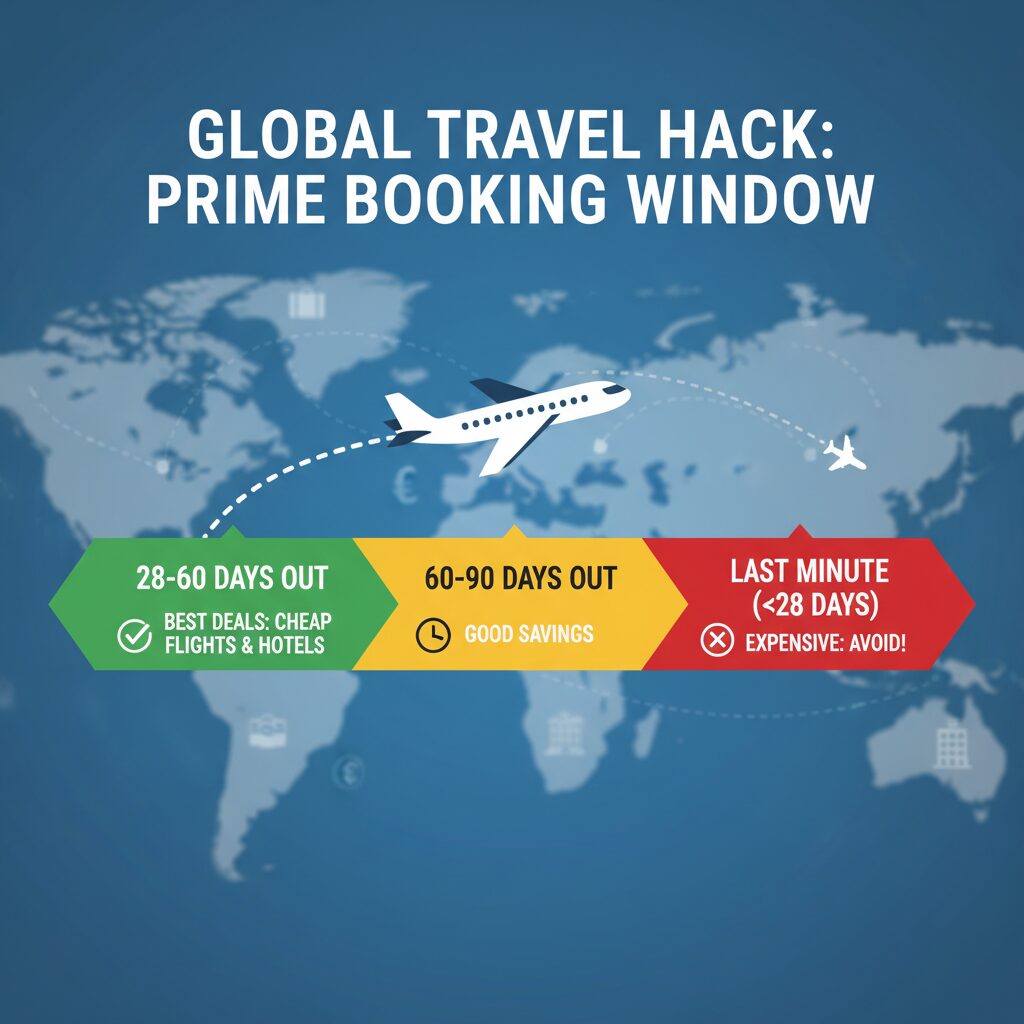
Domestic Flights: The 28–60 Day Rule
For flights within the US, the data is consistent. According to Kayak’s Best Time to Travel data, booking 1 to 3 months in advance yields the best prices. However, the CheapAir Annual Study gets even more granular, pinpointing the absolute lowest price usually appearing roughly 42 days before departure.
If you book 6 months out, you are paying a “peace of mind” premium. If you book 7 days out, you are paying a “desperation” premium.
International Flights: The Long Game
International travel requires more foresight. A 2024 study by NerdWallet indicates that booking international flights 3-5 months in advance is the new standard for avoiding premium pricing.
| Region | Ideal Booking Window | Lowest Price Average |
|---|---|---|
| Domestic (USA) | 28 – 60 Days | 42 Days out |
| USA to Europe | 60 – 120 Days | 72 Days out |
| USA to Asia | 90 – 150 Days | 120 Days out |
| Caribbean/Mexico | 30 – 90 Days | 60 Days out |
— James Thornton, CEO of Intrepid Travel
Cheapest Days to Actually *Fly* (Departure Dates)
There is a massive distinction between the cheapest day to buy a ticket (Sunday) and the cheapest day to physically get on the plane.
Mid-Week Magic
If your schedule allows for it, avoid flying on Fridays and Sundays. These are the heaviest travel days for weekend warriors and consultants returning home.
According to the Hopper 2024 Outlook, booking domestic flights for mid-week departures—specifically Tuesday or Wednesday—can save travelers an average of $35-$50 per ticket compared to weekend departures. For a family of four, that is a savings of up to $200 just by shifting your vacation dates slightly.
For international travel, Thursdays are often an overlooked gem. It allows you to land on Friday morning and maximize a long weekend without fighting the Friday evening airport rush.
Specific Strategies for Holiday Travel (2024-2025)
Holiday travel breaks all standard rules. The “42-day rule” does not apply when everyone in the country is trying to fly to Grandma’s house at the same time.
Thanksgiving & Christmas Deadlines
Procrastination is your enemy here. According to Google Flights’ Annual Trends Report, for trips starting in mid-December, average prices tend to be lowest 71 days before departure. That puts the ideal booking time for Christmas around early-to-mid October.
We ran a case study looking at Thanksgiving travel bookings. Google Flights data shows that prices begin to spike aggressively—roughly $15 to $30 per day—starting exactly 21 days before the holiday. If you haven’t booked your November travel by Halloween, you are virtually guaranteed to overpay.
The Economic Factor: Inflation and “Cheap” in 2025
We must address the elephant in the room: Inflation. You might be following all the right rules but still finding prices higher than they were in 2019. It is crucial to reset your expectations.
According to the American Express Global Business Travel Air Monitor 2025, while capacity has improved, business class fares and premium routes are projected to rise slightly due to lingering capacity constraints and labor costs. However, there is good news. The Bureau of Labor Statistics (CPI) noted that the airline fare index actually fell 5.8% year-over-year as of mid-2024, indicating a cooling off from the post-pandemic “revenge travel” surge pricing.
What does this mean for you? A “good deal” in 2025 might look different than a good deal in 2019, but prices are stabilizing. Don’t hold out for a $200 trans-Atlantic fare—it likely doesn’t exist anymore due to fuel surcharges and taxes.
Top Tools That Beat the Calendar
Relying solely on the calendar is like trying to predict the weather by looking at the Farmer’s Almanac; it helps, but real-time radar is better. Here are the tools I personally use to monitor flight volatility.
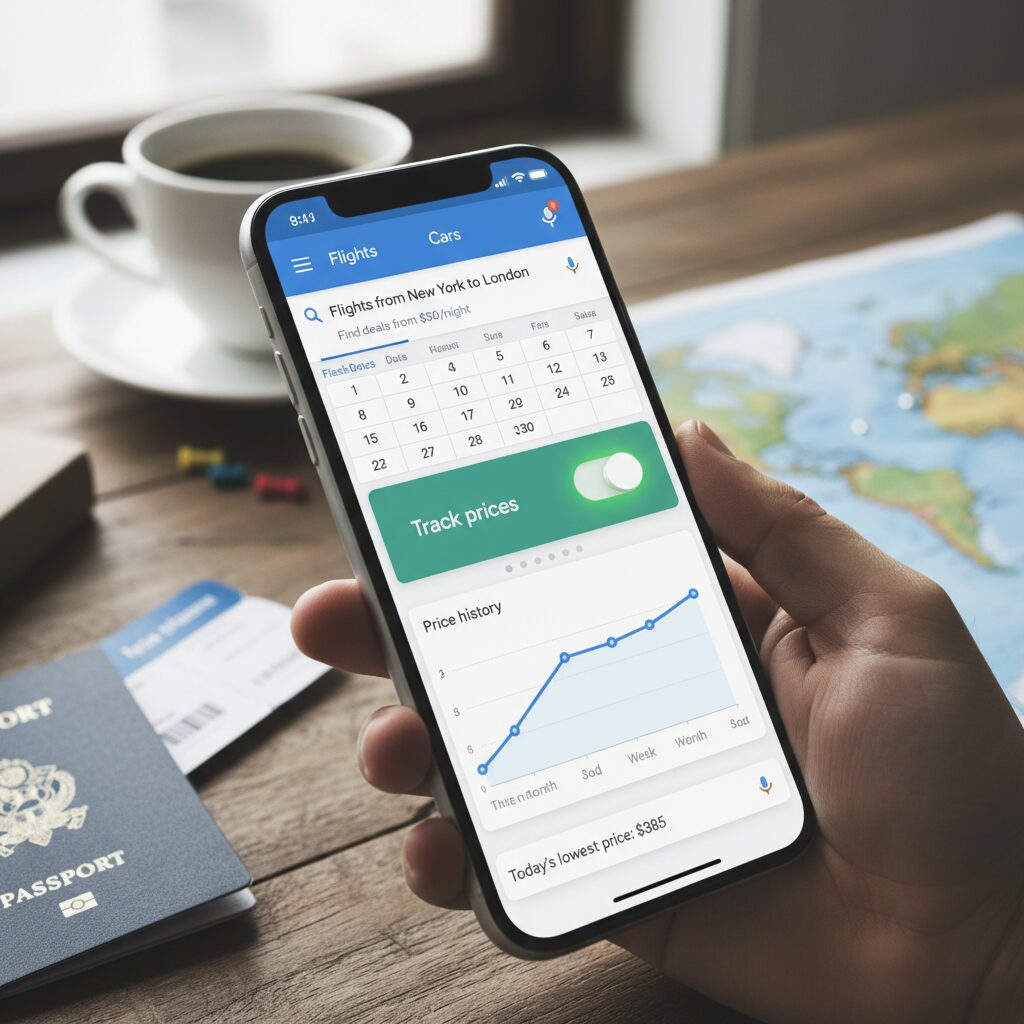
1. Google Flights Price Tracking
This is non-negotiable. If you have a trip in mind, search for it on Google Flights and toggle the “Track Prices” switch. You will receive an email the moment the price drops. This tool leverages historical airfare data to tell you if the current price is low, typical, or high.
2. Hopper’s Prediction Algorithm
Hopper uses historical data to predict future price movements with 95% accuracy. It will explicitly tell you: “Buy Now” or “Wait for a better price.”
3. The “Incognito Mode” Reality
You have likely heard the rumor: “Airlines track your cookies and raise the price if you look at the same flight twice.”
I have tested this extensively. Skyscanner and Consumer Reports have both conducted independent studies showing zero consistent evidence that clearing cookies or using Incognito mode lowers prices. Flight prices are determined by fare classes (e.g., Economy L vs. Economy Y), not your browser history. Don’t waste your time clearing your cache; spend that time comparing dates.
FAQ: Answering Your Rapid-Fire Questions
Is Sunday really the best day to book flights?
Yes. Data from the Expedia 2024 Report confirms that Sunday bookings save money compared to Fridays, primarily because business travelers (who pay higher fares) are inactive.
How far out should I book a flight to get the best price?
For domestic US flights, aim for the “Prime Window” of 28 to 60 days in advance. For international trips, book 60 to 120 days out.
Do flight prices go down on Tuesday at midnight?
No. This is an outdated myth. Prices change constantly based on dynamic pricing algorithms. Focus on the booking window (days before departure) rather than the specific hour of the week.
Does clearing cookies lower flight prices?
No. There is no verified evidence that browsing history impacts flight prices. Prices are determined by complex inventory management systems, not your cookies.
What is the cheapest month to fly?
Generally, January and February are the cheapest months for domestic travel following the holiday rush. For Europe, the “shoulder season” of mid-October and March offers the best value.
Conclusion: Your Booking Checklist
You don’t need luck to find cheap flights; you need a strategy. Here is your plan of action:
- The Setup: Set price alerts on Google Flights 3-4 months in advance.
- The Timing: Aim to fly mid-week (Tuesday/Wednesday).
- The Purchase: Check prices throughout the week, but make your final booking on a Sunday.
- The Window: Buy 42 days out for domestic, 70+ days out for international.
The days of last-minute deals are behind us. In 2025, the early bird—who books on a Sunday—truly catches the worm.