Are hostels still best for budget stays?
Are Hostels Still Best for Budget Stays in 2025? The Economics of “Hybrid” Travel
Let’s be honest: the days of the $5 sticky-floor dorm bed are dead. But if you think that means hostels have lost their edge, you’re looking at the math wrong.
In my decade of backpacking, I’ve watched hostels evolve from desperation options into what the industry now calls “hybrid hospitality.” The $40 “Poshtel” might seem expensive compared to the old days, but when you factor in the Total Cost of Travel (TCT)—food, transport, coworking reliability, and social ROI—it might be the smartest investment in your travel portfolio.
The travel landscape has shifted violently. Hotels are hitting record prices, and the Airbnb “cleaning fee” epidemic has ruined budget travel for short stays. So, are hostels still the king of budget travel? Or has the “flashpacker” era priced out the true backpacker?
We crunched the numbers, analyzed 2025 financial reports, and looked at the real cost of living on the road to give you the definitive answer.
The New Math: Hostel Pricing vs. Hotels & Airbnbs
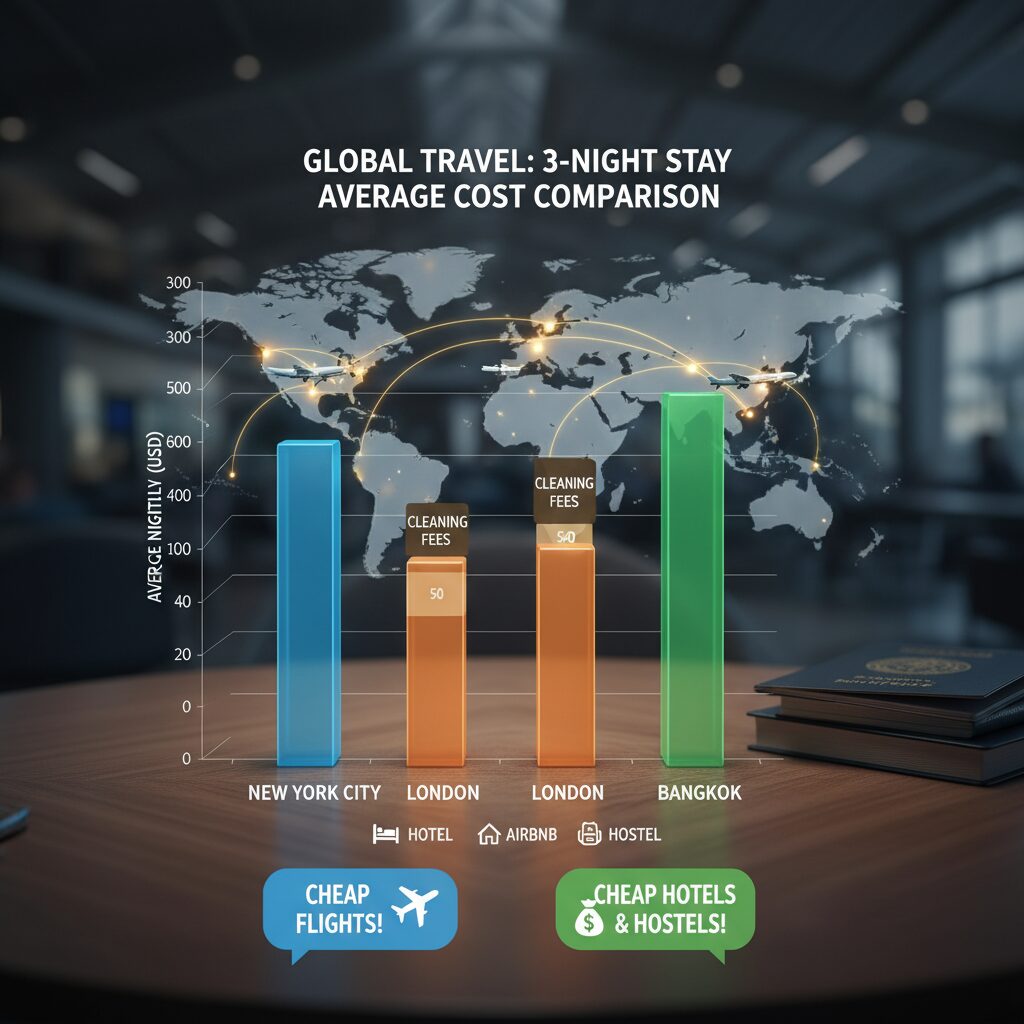
If you just look at the “price per night,” you’re missing the hidden fees that drain your bank account. To understand value in 2025, we have to look at the full receipt.
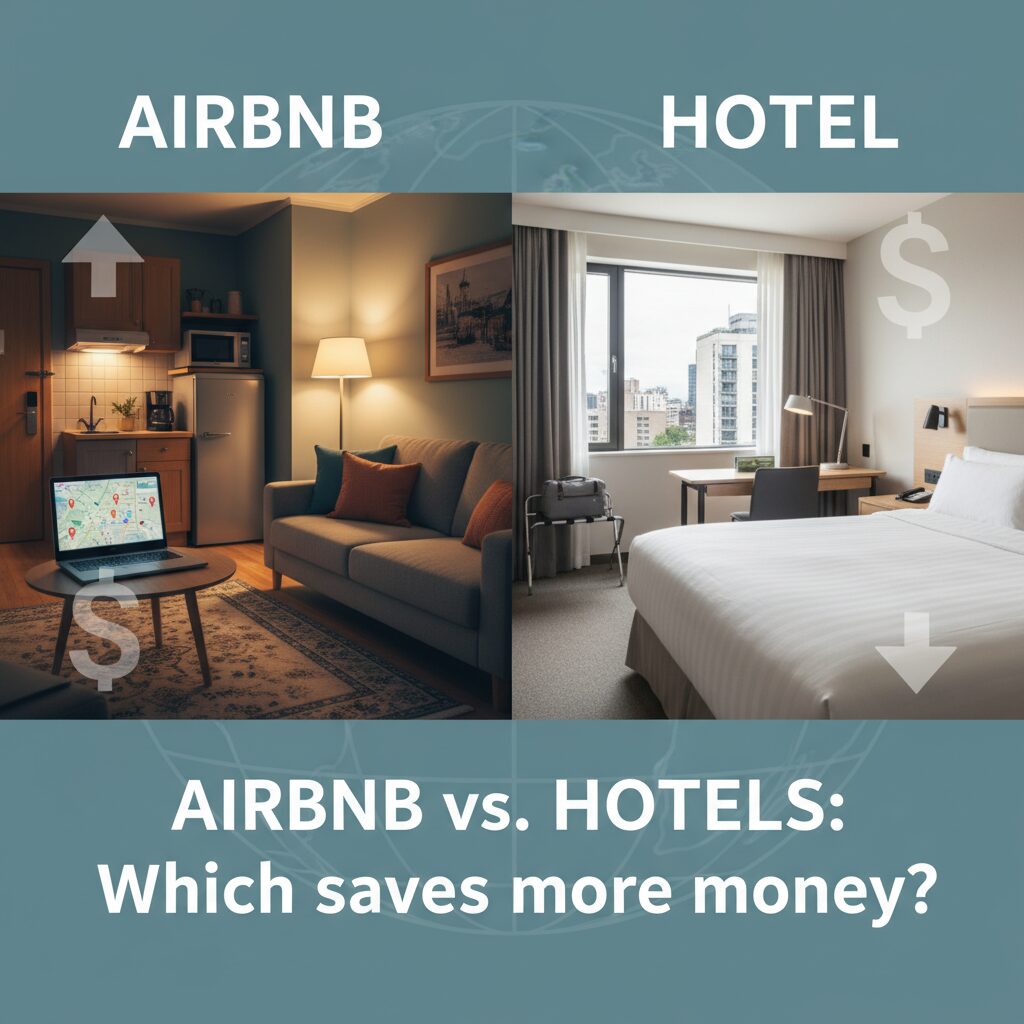
The “Airbnb Bust” and Hidden Fees
Remember when Airbnb was the cheap alternative? That window has closed for solo travelers and short-term stays. The issue isn’t just the nightly rate; it’s the operational costs passed down to you.
I recently tried to book a “budget” apartment in Lisbon. The rate was $60/night. Reasonable, right? But once the $55 cleaning fee and service charges hit, a two-night stay jumped to $100/night. For that price, I could have booked a private room in a high-end hostel with a pool.
Hotel Inflation is Real
If you think a budget hotel is the answer, check your banking app. The post-pandemic travel surge pushed prices to uncomfortable highs. According to Lighthouse Intelligence, North American hotel rates exceeded $350/night on average in 2024. Even in Asia, where travel has traditionally been cheap, rates rose 15% in late 2024.
This leaves a massive gap in the market. Hostels have raised prices too—Hostelworld reported a 6% rise in bookings despite higher rates—but they remain the only accommodation type where the base rate hasn’t tripled.
The Rise of the “Poshtel” and Hybrid Hospitality
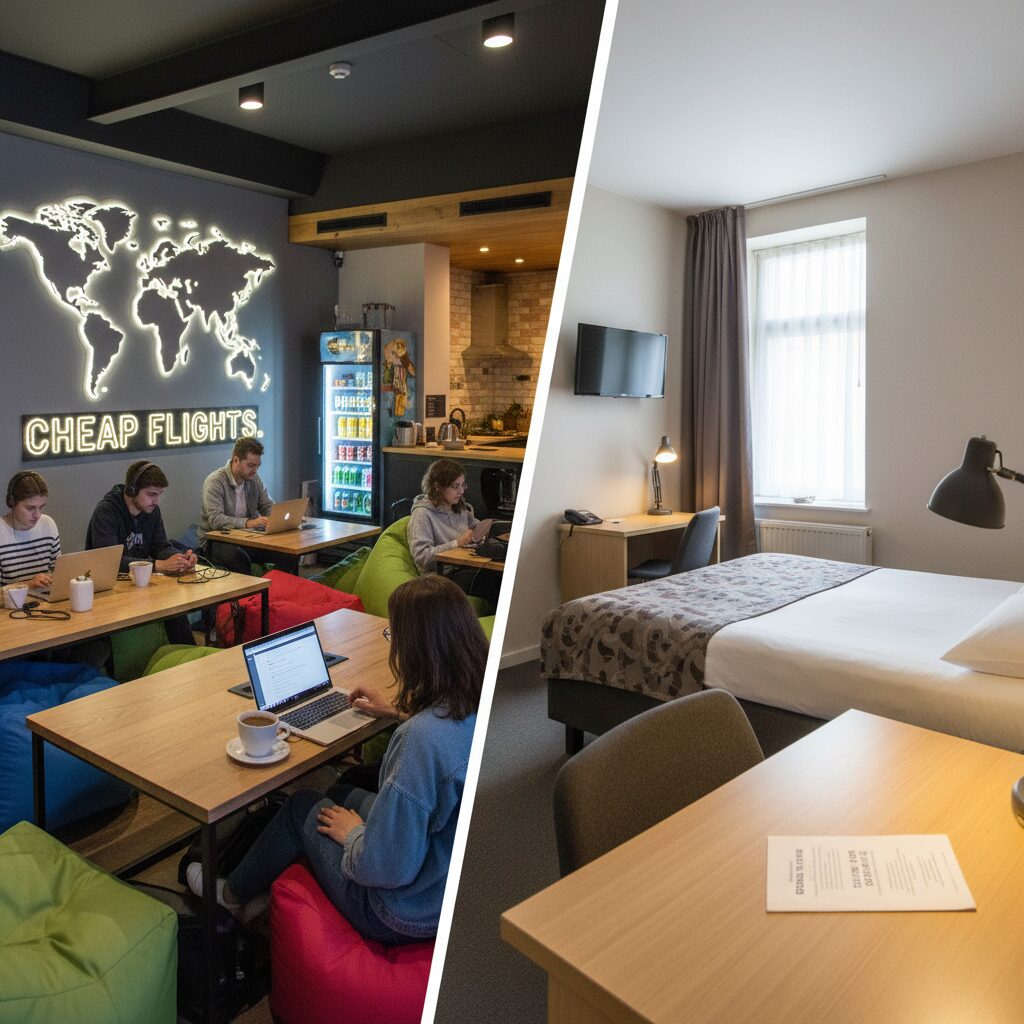
Here is where the definition of “budget” gets interesting. The industry is pivoting toward “Hybrid Hospitality.” This is the sweet spot between a hotel’s amenities and a hostel’s social vibe.
What is a Hybrid Hostel?
Think of it as a hotel that has dorms. You get high-pressure showers, memory foam mattresses, and designer interiors, but you also get the communal bar and the social atmosphere. This isn’t just a trend; it’s a financial powerhouse.
“We can achieve the same rates as a four-star hotel, while operating with one- or two-star costs… Our demographic is social and will spend money on ancillary products like alcohol and food.”
— Alastair Thomann, CEO of Generator Hotels (HotelsMag, 2024)
This business model works. Generator and Freehand Hotels reported an EBITDA increase of 18% in H1 2024. Why does this matter to you? Because it means these companies have the cash to invest in facilities. You aren’t staying in a crumbling building anymore; you’re staying in a facility that rivals a Marriott, for a fraction of the price, if you’re willing to share a room.
Case Study: The Fall and Rebirth of Selina
You can’t talk about modern hostels without mentioning Selina. They tried to take the “Digital Nomad Hostel” global and went public with a $1.2B valuation. However, they filed for insolvency in mid-2024 due to rapid over-expansion.
But here’s the twist: the demand didn’t disappear. The properties were snapped up by Collective Hospitality and are being rebranded as “Socialtels.”
Gary Murray, Founder of Collective Hospitality, noted in 2025 that they are repositioning away from the pure hostel model: “Maybe 15% of our keys are dorm rooms… We’re bringing these back to traditional hotel rooms in many respects.”
This confirms that the “hostel” of 2025 is actually a social hotel. You pay for the network, not just the bed.
The Hidden Economics: Why “Bed Price” Isn’t “Trip Price”
This is the content gap most comparisons miss. We need to talk about the Tuna Pasta Index.
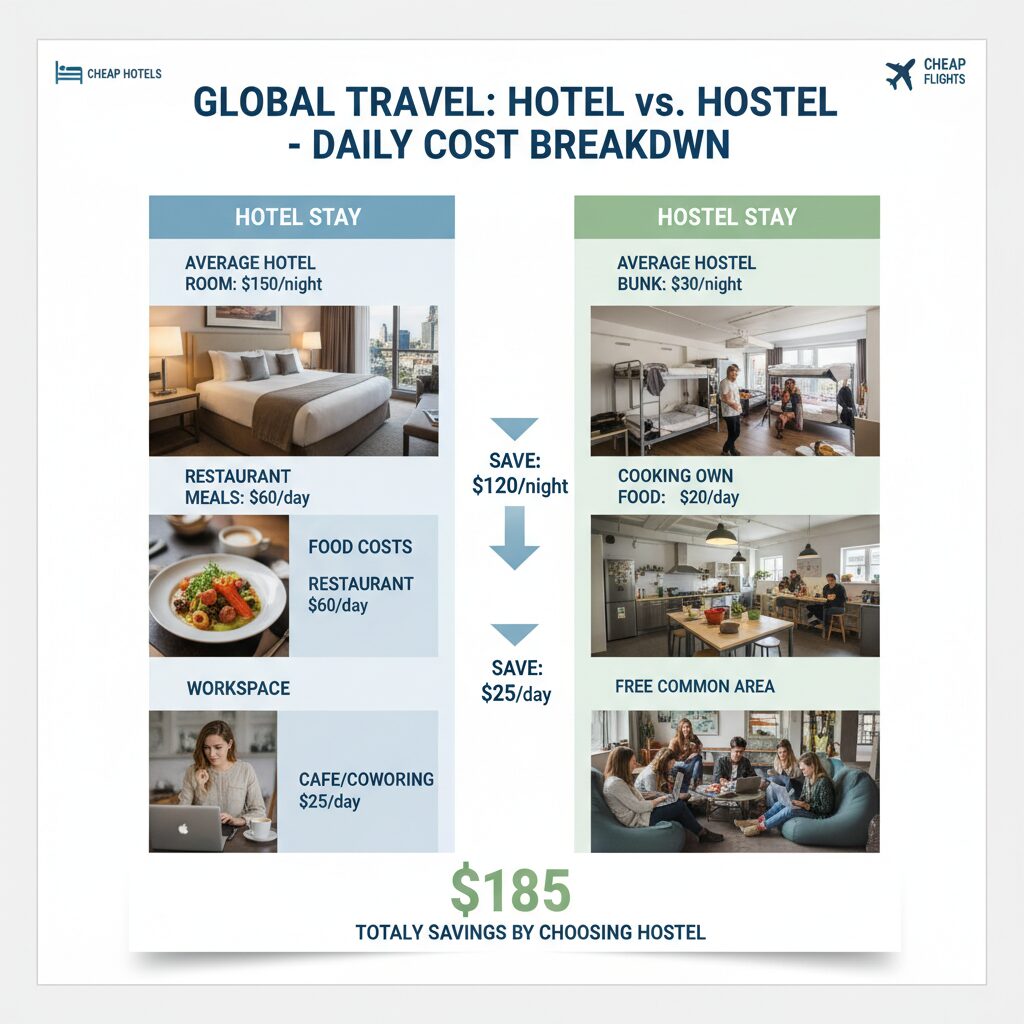
When you stay in a hotel, you must eat out three times a day. In a city like Paris or New York, a basic breakfast is $15, lunch is $20, and dinner is $30+. That’s $65/day minimum on food.
Hostels destroy this cost barrier. By having access to a kitchen, you can cook a decent dinner for $5. I’ve saved thousands of dollars over the years simply by cooking breakfast and dinner in the hostel and eating lunch out.
The Social ROI
Loneliness is the hidden tax of solo travel. Staying in an Airbnb requires serious effort to meet people. You have to find meetups, go to bars alone, or use apps. Hostels automate this.
Most reputable hostels now offer:
- Free walking tours (Value: $15-20)
- Family dinners (Value: $10 savings)
- Coworking spaces (Value: $20/day pass)
If a hostel bed is $40 and a hotel is $100, the saving is $60. But if you add the $40 you save on food and coworking, the real economic value of the hostel is over $100 per day compared to the hotel alternative.
Digital Nomads: Productivity as Currency
For the 35 million digital nomads globally, unreliable Wi-Fi isn’t an annoyance; it’s a loss of income. I’ve lost clients because an Airbnb host promised “high-speed internet” that turned out to be a 3G hotspot in a drawer.
Modern hostels like Tribal in Bali or Viajero in Colombia are built specifically for this. Viajero has won awards not for having the cheapest beds, but for having ergonomic chairs and fiber-optic internet. They charge a premium—often $25-$40 for a dorm—but for a freelancer, that assurance is worth the cost.
In 2025, a hostel isn’t just accommodation; it’s your office. If you rent an Airbnb, you often still need a WeWork membership. In a hybrid hostel, the WeWork is downstairs.
Safety, Privacy, and Demographics in 2025
One of the biggest myths keeping people away from hostels is the safety and age concern. “Am I too old?” or “Is it safe for women?”
The Solo Female Traveler Boom
The industry knows its audience. According to Grand View Research, female solo travelers now account for 54% of the market. Hostels have responded with female-only dorms, keycard access elevators, and 24/7 security that you rarely get in a budget Airbnb.
Private Rooms vs. Hotel Rooms
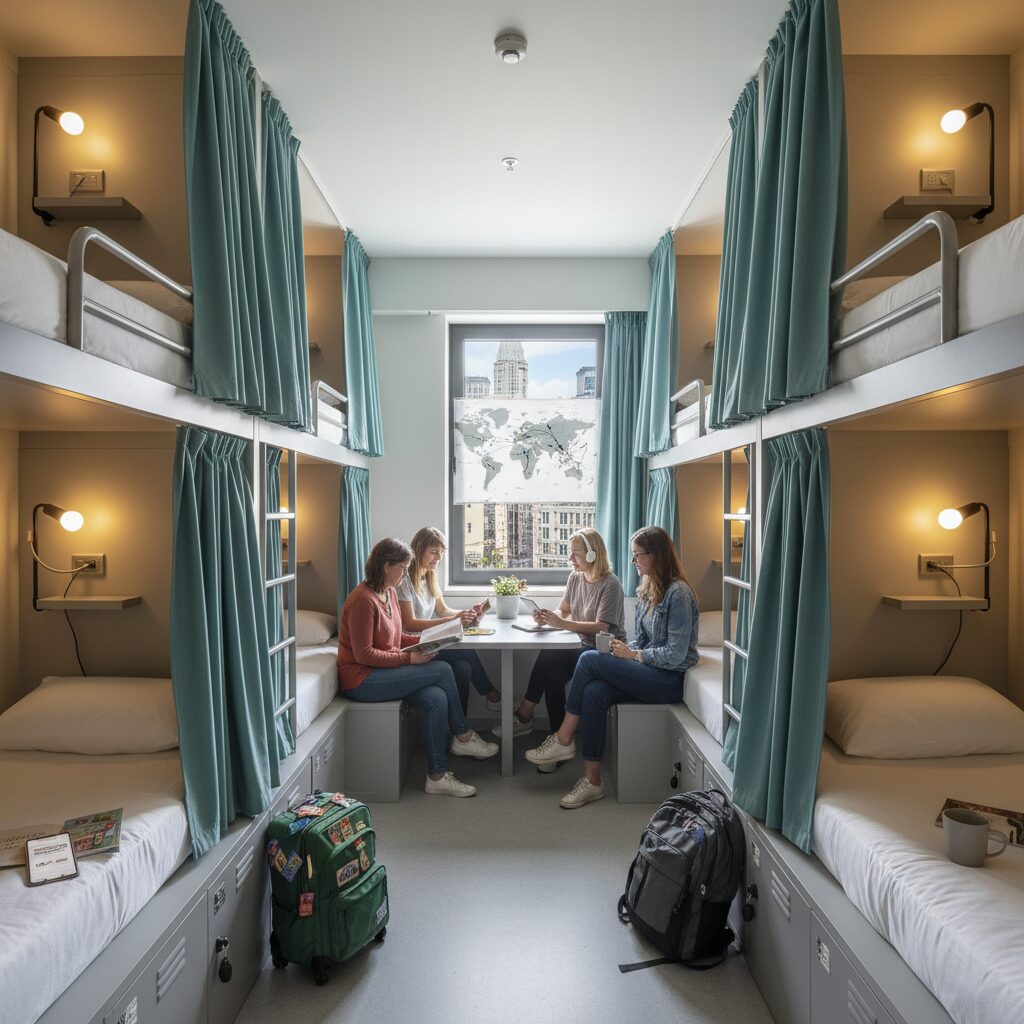
If you crave privacy, the “hostel private room” is the hack. You get the hotel-quality sleep (en-suite bathroom, quiet) with the hostel social life. In Europe, a private room in a hostel is often 30% cheaper than a 3-star hotel in the same neighborhood.
Hostelz.com data shows that average dorm beds in Paris range from €35-€55, while hotels start at $250+. Even a €100 private hostel room offers massive savings.
FAQ: Modern Hostelling Explained
Why are hostels getting so expensive in 2025?
Inflation, energy costs, and the shift to “hybrid” amenities (pools, coworking) have raised overheads. However, compared to the 15% rate hike in Asian hotels and similar spikes in North America, they remain the most stable budget option.
Are hostels safe for older travelers?
Absolutely. The age limit is largely a myth in 2025. “Flashpackers” in their 30s, 40s, and 50s are common in private rooms and boutique hostels. Brands like Generator and Freehand specifically target a more mature demographic.
Is Airbnb cheaper than hostels for couples?
Occasionally, yes. If you are a couple, two dorm beds at $40 each ($80 total) might be more expensive than a budget Airbnb. However, you must factor in cleaning fees. For 1-2 night stays, hostels usually win. For weekly stays, Airbnbs often win for couples.
Conclusion: The Verdict on Value
So, are hostels still best for budget stays? If you define “budget” strictly as the absolute lowest price, the answer is… mostly yes, but the gap is closing. You can sometimes find a dodgy guesthouse in Southeast Asia for less than a high-end hostel dorm.
However, if you define “budget” as Value for Money, hostels in 2025 are unbeatable.
You should choose a hostel if:
- You are a solo traveler (the social ROI is priceless).
- You are staying for less than 4 days (avoids Airbnb cleaning fees).
- You want to save money on food by using a kitchen.
- You are a digital nomad who needs guaranteed connectivity.
The hostel is no longer just a place to sleep; it’s the new country club for the experience-rich, cash-smart traveler. Don’t look at the price of the bed—look at the price of the lifestyle.