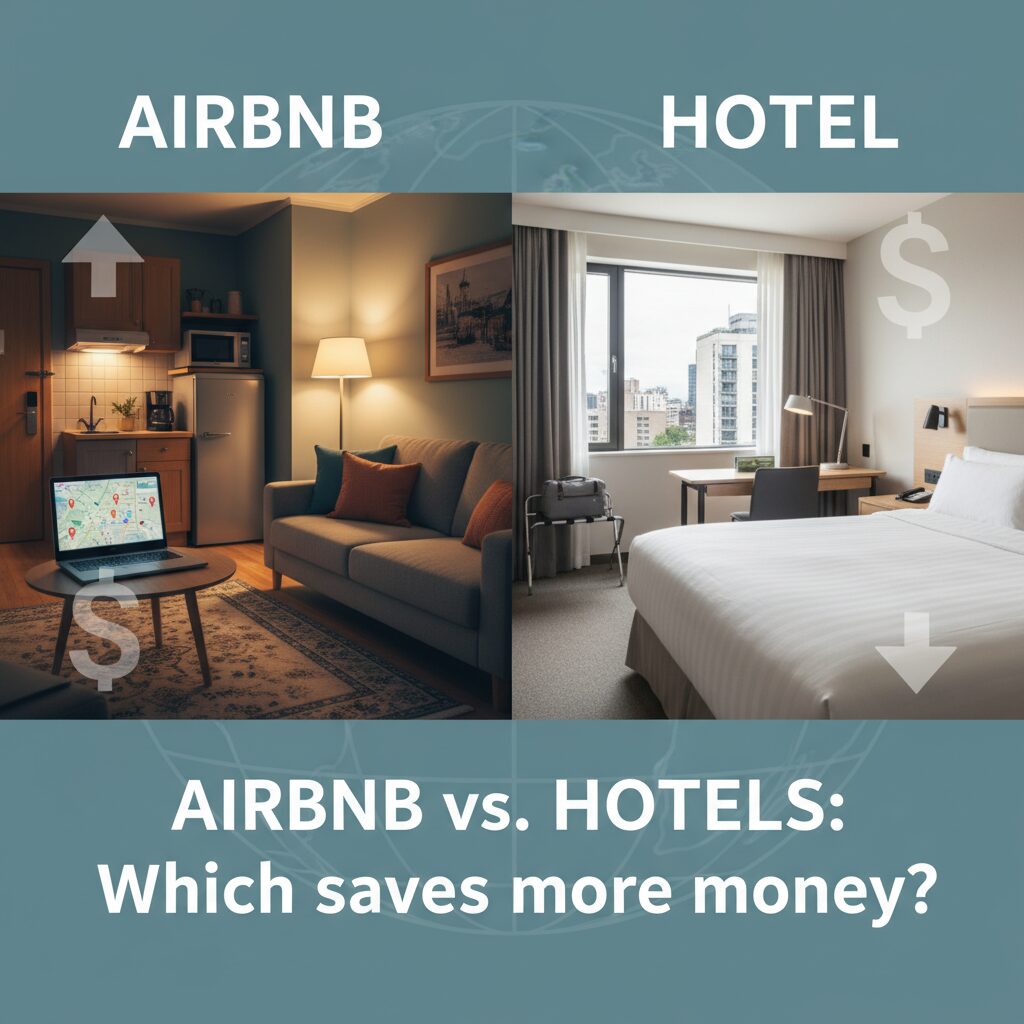
Airbnb vs. Hotels: Which saves more money?
Airbnb vs. Hotels: Which Saves More Money?
I remember booking my first Airbnb in 2014. It felt like hacking the system. I stayed in a massive loft in downtown Chicago for half the price of the Marriott across the street. There were no checkout chore lists, and the cleaning fee was twenty bucks.
Fast forward to 2025, and that same booking feels very different. You’ve probably experienced the sticker shock yourself: you see a nightly rate of $100, but by the time you reach the checkout screen, fees have ballooned the total to $350.
So, is the vacation rental dream dead? Not necessarily. But the math has changed.
We analyzed current market reports from 2024 and 2025, including data from over 100 cities, to create this definitive Airbnb vs. hotel cost comparison. We aren’t looking at “vibes” here—we are looking at your wallet.
The Short Answer: It Comes Down to ‘Heads in Beds’
If you take nothing else away from this guide, remember the “Solo Tax” and the “Group Discount.” The single biggest factor determining whether you save money is how many people you are traveling with.
1. The “Solo Tax”: Why Hotels Win for 1-2 Travelers
If you are traveling alone or as a couple, hotels are statistically the safer financial bet. The economics of short-term rentals—specifically the fixed cleaning and service fees—punish small groups.
According to a comprehensive Nov 2024 study by NerdWallet, the average hotel booking was 29% cheaper than booking an Airbnb for a party of two. When you factor in the time spent communicating with hosts and the lack of amenities like free breakfast, the value gap widens even further.
2. The “Group Discount”: The 33% Savings for Groups
The moment your group size hits six people, the math flips aggressively. This is where Airbnbs still dominate.
The same NerdWallet analysis found that for a group of six, the average Airbnb was 33% cheaper than booking the equivalent three hotel rooms. This makes sense: you are paying one cleaning fee for six people rather than three separate room taxes and resort fees.
The average savings for a group of 6 booking an Airbnb vs. 3 Hotel Rooms (Source: NerdWallet)
Price Breakdown by City (2024/2025 Data)
Geography is the second most critical variable. In my experience analyzing travel budgets for clients, I’ve seen that what works in the Midwest often fails miserably in Europe.
According to data from Upgraded Points released in October 2024, Airbnbs are technically more cost-effective in 71 out of 100 major U.S. cities. On average, staying in an Airbnb can save travelers about $52 per night compared to a hotel ($156 vs $208). However, this average is heavily skewed by large homes in rural areas.
Top Cities Where Airbnbs Win
If you are heading to these cities, check the rentals first. Data indicates significant savings:
- Milwaukee, WI: The highest savings margin, with a nightly difference of roughly $212.
- Chicago, IL: High hotel taxes push travelers toward rentals.
- New York City (Outer Boroughs): While Manhattan has clamped down, outer boroughs still offer value for families.
Top Cities Where Hotels Win
In these destinations, the hotel inventory is so massive that competition drives prices down, or regulations make Airbnbs scarce and expensive.
- Las Vegas, NV: Despite resort fees, the base room rates in Vegas hotels are often unbeatable.
- Austin, TX: A surge in hotel supply has made downtown hotel stays very competitive.
- San Antonio, TX: Similar to Austin, hotel inventory is high.
The International Exception: Why Europe Favors Hotels
Planning a European summer? Don’t assume the U.S. rules apply. A major 2023 report from Which? Travel analyzed 50 European destinations and found that hotels were cheaper than one-bedroom rentals in 38 of them.
The most shocking disparity was in Santorini, Greece. The study found that a one-bedroom rental was, on average, £84 ($106) per night more expensive than a hotel room. In Europe, where historic city centers limit housing stock, short-term rentals often carry a massive premium.

The Battle of Hidden Fees: Cleaning vs. Resort
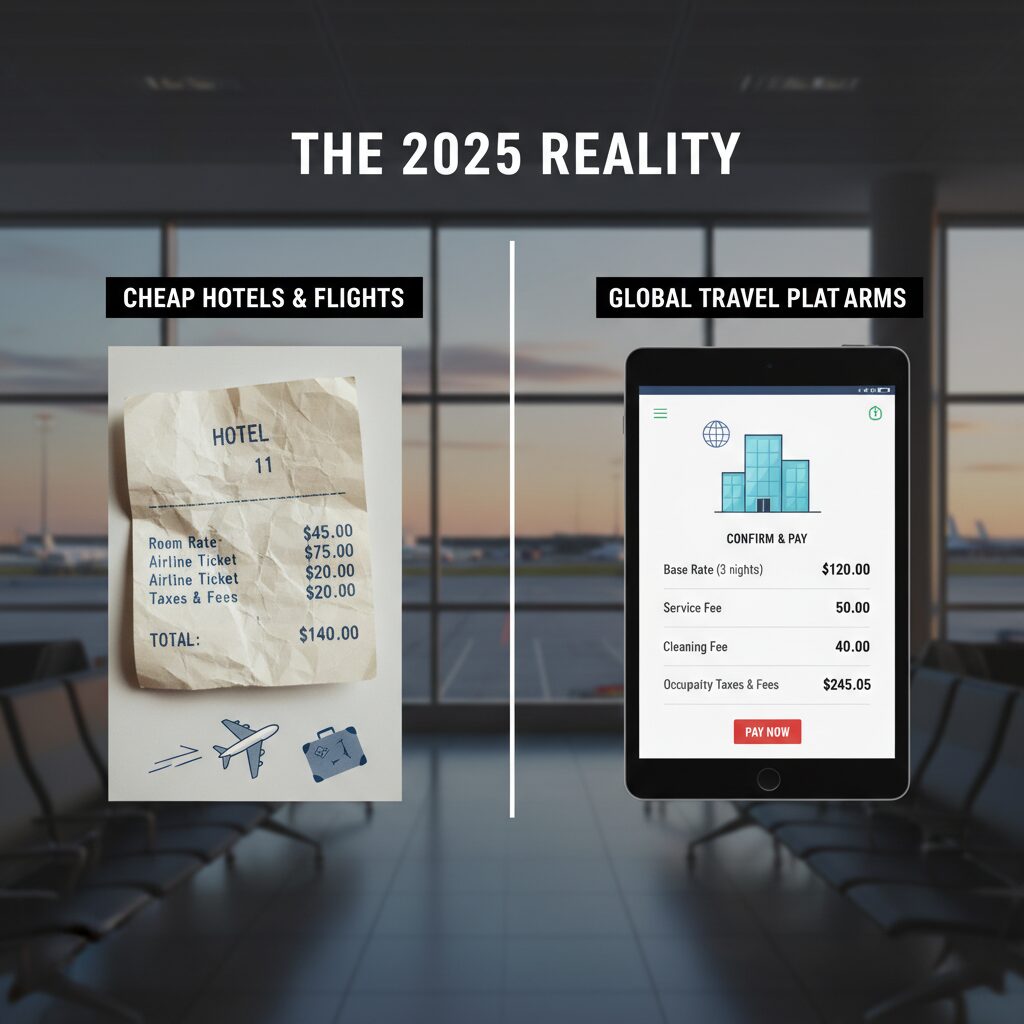
We can’t talk about price without addressing the elephant in the room: the fees that don’t show up until the final click. This is where 76% of travelers feel hotels are more transparent, according to Upgraded Points survey data.
Airbnb’s “Cleaning Fee” Crisis
In 2025, the median cleaning fee for a one-night stay sits at roughly $75, according to NerdWallet analysis. However, for larger family homes (5+ bedrooms), AirDNA data projects fees averaging $357 per stay.
Sébastien Long, CEO of Lodgeur, explains the host’s perspective: “I believe the average cleaning fee of $75 is quite low. If Airbnb hosts outsource the work, it could cost $175 to clean a two-bedroom apartment.” While this may be true for hosts, for you—the traveler—it means a 1-night stay is financially nonsensical.
The Rise of Hotel Resort Fees
Hotels aren’t innocent. The dreaded “Destination Fee” or “Resort Fee” has spread from Las Vegas to city centers like NYC. Industry data indicates the average U.S. resort fee is now $42.41, effectively adding 11% to the advertised rate.
Worse, these fees are rising. Frommer’s reported that MGM Resorts increased fees twice in 2024 alone, with properties like the Bellagio now charging $55/night just for the privilege of being there.
The “Kitchen Factor”: The Hidden $1,000 Savings
Here is the variable that most comparison articles miss completely. If you book a hotel, you are committing to eating out three times a day. If you book an Airbnb, you have a kitchen.
How much is that worth? A lot. According to Journey Foods and Forbes data analysis, the average restaurant meal costs $20.37, compared to just $4.31 for a home-cooked meal.
The Family Math (4 People, 5 Days)
Let’s say a family of four eats breakfast and dinner at the Airbnb, and lunch out.
- Restaurant Breakfast Cost: $15 x 4 people x 5 days = $300
- Airbnb Breakfast Cost: $4 x 4 people x 5 days = $80
- Breakfast Savings: $220
If you repeat this for dinner, you save nearly $500 on food alone in five days. For larger groups, the “Kitchen Factor” can easily offset a higher nightly rate.
Interactive Tool: The “Real Price” Calculator
Don’t guess. Use this simple calculator to check if the Airbnb service fees outweight the hotel convenience for your specific trip.
💰 Hotel vs. Airbnb Breakeven Calculator
Hotel Details
Airbnb Details
Length of Stay: The 7-Day Tipping Point
Duration is the silent killer of Airbnb budgets. Because cleaning fees are fixed, they distort the nightly rate of short stays.
If you book an Airbnb for one night with a $100 rate and a $75 cleaning fee, your effective rate is $175. NerdWallet pricing statistics confirm this “efficiency curve.” They found that the nightly rate for a 7-night Airbnb stay was effectively 32% cheaper than a 1-night stay due to cleaning fee dilution.
Amenities & Non-Monetary Value
Finally, we have to talk about what you are actually getting for your money. It’s not an apples-to-apples comparison.
Hotel Value Proposition
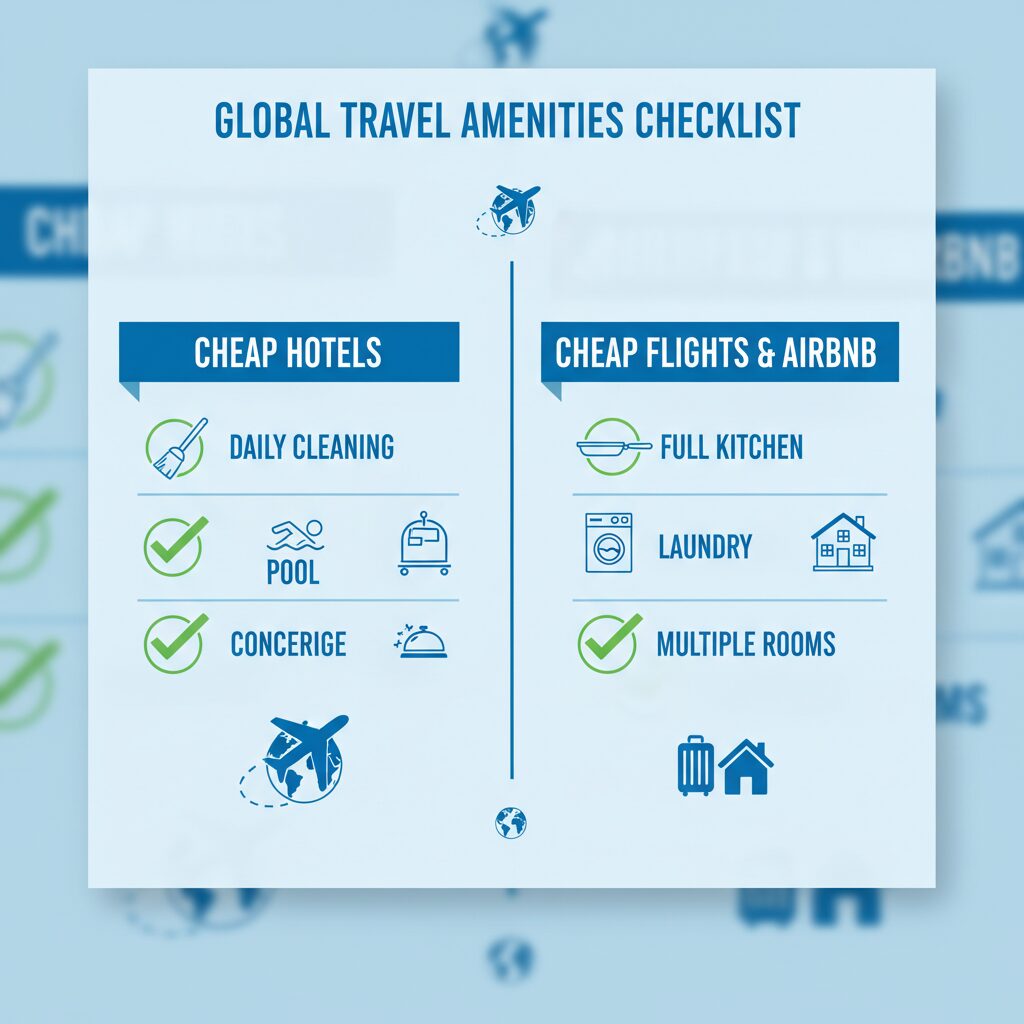
- Gyms and Pools: Unless you are renting a luxury villa, the hotel pool is usually superior.
- Luggage Storage: Need to check out at 11 AM but your flight is at 8 PM? Hotels hold your bags for free. Airbnbs usually can’t.
- Safety: For solo travelers, specifically women, 24/7 front desk security offers peace of mind that a keypad lock on a dark street cannot.
Airbnb Value Proposition
- Laundry: Access to a washer/dryer allows you to pack light, saving on airline baggage fees (another hidden saving!).
- Remote Work: Working from a hotel bed is terrible for your back. A dining table or dedicated desk in an Airbnb is essential for digital nomads.
- Privacy: No housekeeping knocking on your door at 9 AM.
FAQ: Your Booking Cheat Sheet
Do hotels charge cleaning fees?
Generally, no. Daily housekeeping is included in the room rate. However, some budget airlines or extended-stay hotels have started experimenting with “opt-in” housekeeping fees, though it remains rare in standard hotels.
Are Airbnbs cheaper for long-term stays?
Yes. Most hosts offer significant monthly discounts. It is common to see discounts of 40-50% for stays longer than 28 days, which hotels rarely match.
Why are Airbnb cleaning fees so high in 2025?
Labor shortages and higher standards of hygiene post-pandemic have driven up the cost of professional cleaning services. Hosts pass these direct costs to guests.
Conclusion: The Final Decision Matrix
The days of blind loyalty to one platform are over. To save money in 2025, you have to be agnostic.
As Keri Stooksbury from Upgraded Points notes, “When choosing between comfort and uniqueness, cost plays a huge role.” Don’t let the vibe dictate your budget.
Use this simple rule of thumb for your next trip:
| Scenario | The Winner | Why? |
|---|---|---|
| Solo / Couple (1-3 Nights) | HOTEL | Avoids cleaning fees; better amenities. |
| Solo / Couple (7+ Nights) | AIRBNB | Weekly discounts kick in; laundry availability. |
| Group of 4+ (Any Duration) | AIRBNB | Splitting one cleaning fee beats paying for 2+ hotel rooms. |
| Europe City Break | HOTEL | Regulatory pressure has made EU rentals expensive. |
| Special Diet / Tight Budget | AIRBNB | Kitchen access saves ~$50/day per person on food. |
Travel smart. Do the math on the total cost (including food and fees), not just the nightly rate. Your wallet will thank you.