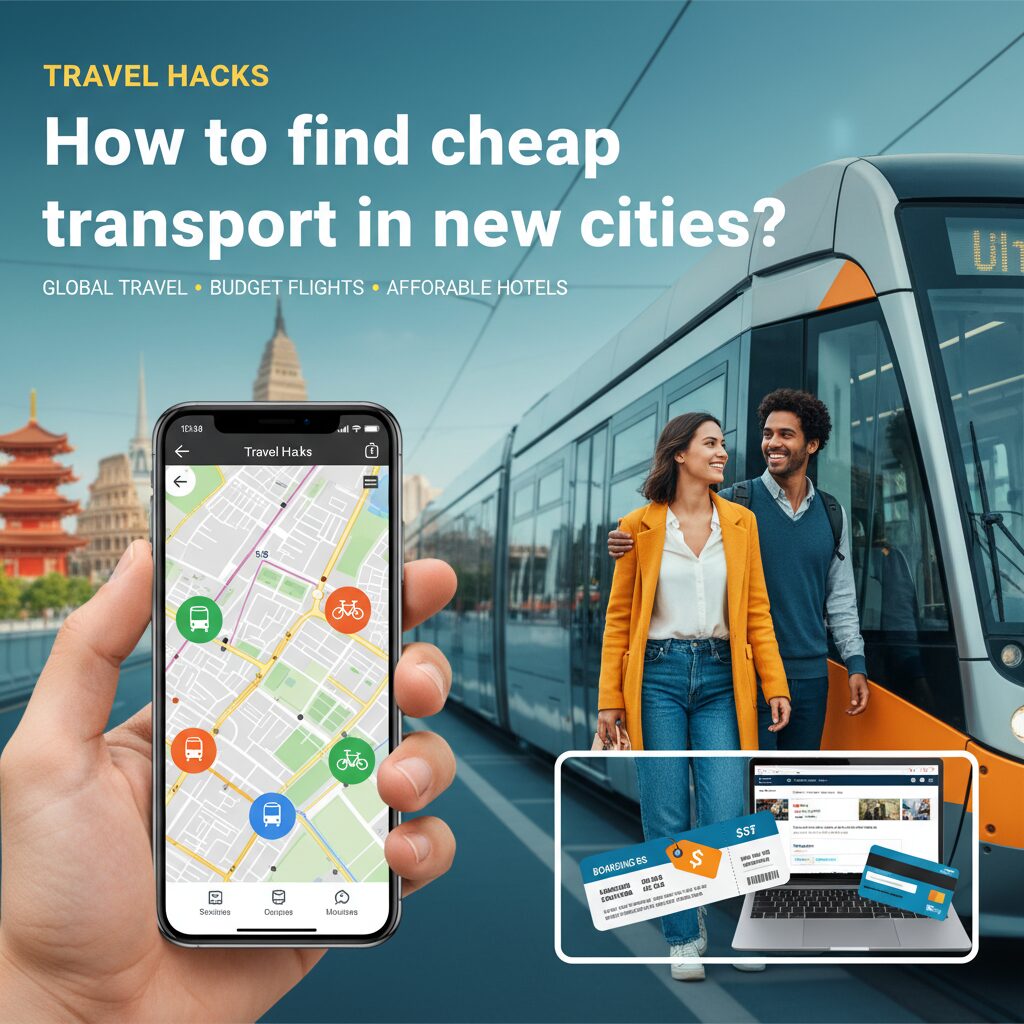
How to find cheap transport in new cities?
How to Find Cheap Transport in New Cities: The Ultimate 2025 Budget Guide
I still remember the sinking feeling I had landing in Tokyo for the first time. Exhausted and confused, I hopped into a taxi, assuming it would cost roughly the same as a cab in New York or London. Forty-five minutes later, I was staring at a meter reading that exceeded my budget for three days of food. I had just fallen into the most common traveler trap: neglecting logistics.
Here’s the reality: Transportation is the second highest household expenditure, totaling over $12,000 annually for average US households, according to data from the Bureau of Transportation Statistics (BTS). When you’re on the road, that percentage can skyrocket if you aren’t careful. But it doesn’t have to be this way.
In 2025, the landscape of urban mobility has shifted. We aren’t just choosing between a bus and a taxi anymore. We have micromobility sharing, AI-optimized route apps, and zone-based fare caps. I’ve spent the last decade navigating over 50 countries, and I’ve found that with the right strategy, you can save up to 60% on getting around without sacrificing comfort.
This isn’t just about “taking the bus.” This is a strategic guide on how to save money on transport in a new city using data-backed methods, break-even math, and the latest tech.
Phase 1: Pre-Trip Research & The “Airport Trap”
The battle for your budget is won or lost before you even leave the tarmac. Most travelers bleed money in the first hour of their trip. Why? Because they prioritize convenience over cost when they are most vulnerable—tired and luggage-laden.
The “Airport Trap”: Avoiding the $50 Mistake
According to a 2024 report from the Bureau of Transportation Statistics, domestic airfare costs rose 3.4% in 2024. With flight prices climbing, you cannot afford to waste money on the ground. The price difference between an airport express train and a standard commuter line can be staggering.
Take London as a prime example. If you land at Heathrow and take the “Heathrow Express,” you’ll pay roughly £25. However, if you take the new Elizabeth Line, you’ll pay about £13.30. That’s a 47% saving for a difference of only about 4 minutes in travel time.
Action Step: Always search “Cheapest way from [Airport] to City Center” before you fly. Look for “commuter” options, not just “express” options.
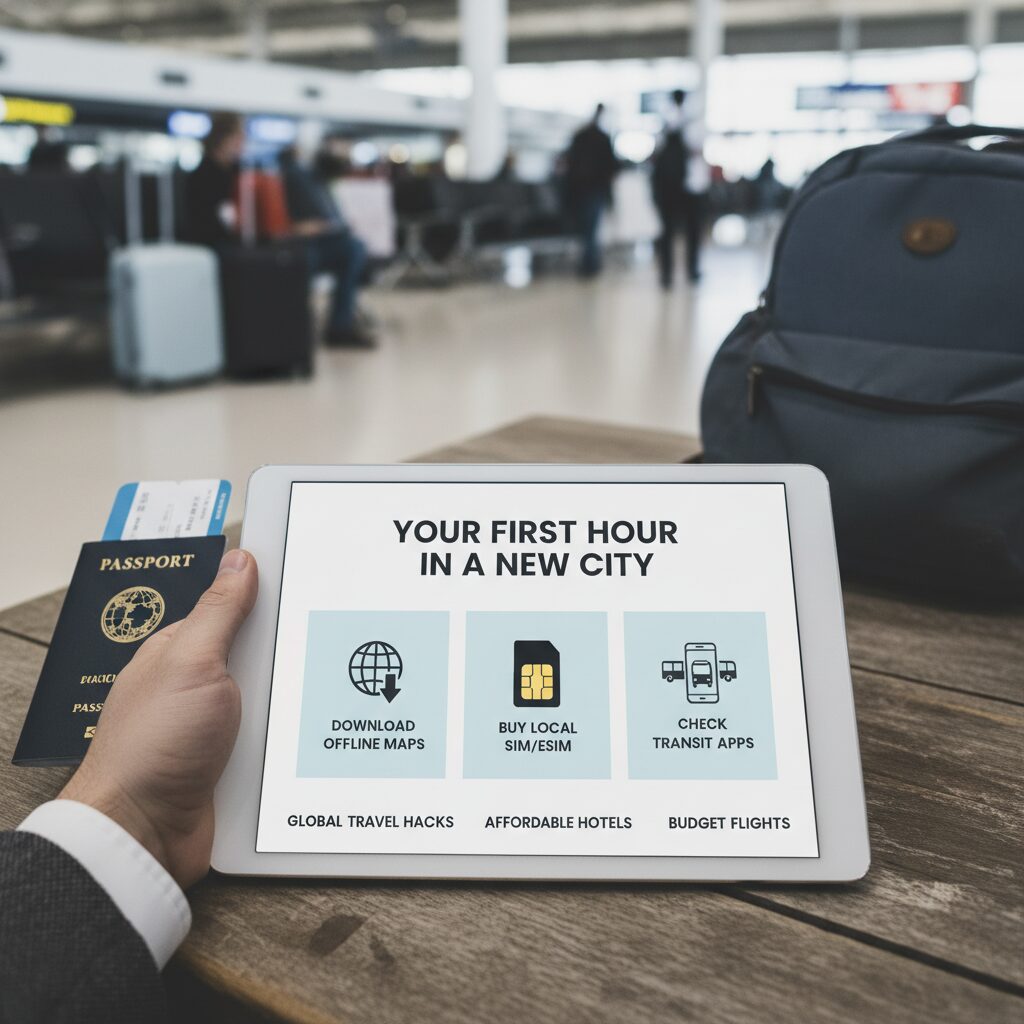
Download These 3 Apps Before You Fly
If you are still relying solely on Google Maps, you are missing out on optimized savings. While Google is great for general direction, it often defaults to the most “standard” route rather than the cheapest or most clever one.
According to a tech review by Software House in November 2024, the integration of walking and cycling routes in apps like Citymapper adds flexibility that major competitors lack. Here is my 2025 app stack:
- Citymapper: Best for major global cities (NYC, London, Paris, Tokyo). It calculates cost alongside time, often suggesting a “bus + walk” combo that saves money.
- Moovit: Essential for reliable bus schedules in secondary cities or developing regions. AI-powered route optimization in apps like Moovit has been shown to reduce average travel time by 18% in 2025 (Software House).
- Rome2Rio: The best tool for inter-city planning. It shows you every mode of transport available, from ferries to shared vans.
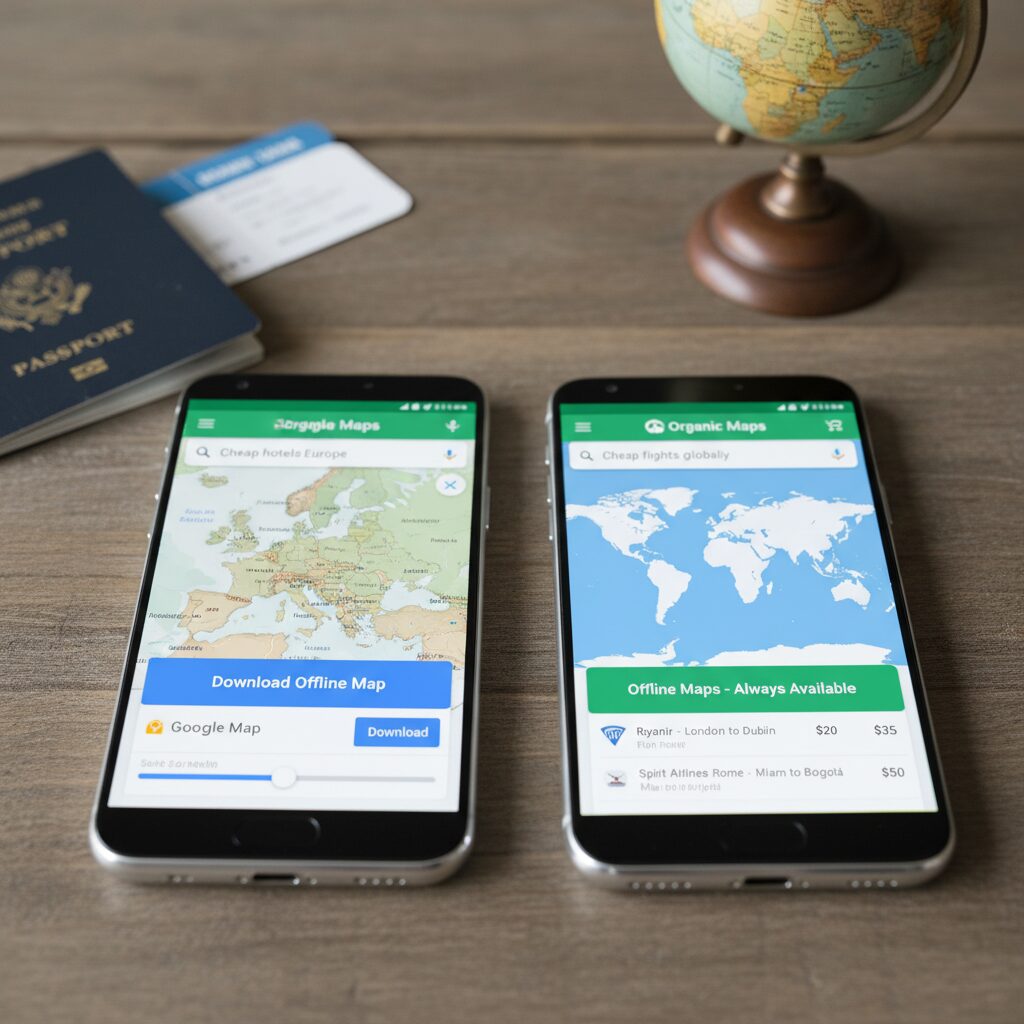
Downloading Offline Maps (The Data Saver)
Nothing kills a budget faster than roaming charges because you needed to look up a bus route. BTS data suggests that inflation impacts travel logistics heavily; don’t let data fees add to that.
Pro Tip: Download the map of your destination on Google Maps while you are still on your home Wi-Fi. Alternatively, use Organic Maps, an open-source app that works entirely offline and often shows small footpaths that Google misses—perfect for the budget traveler willing to walk the last mile.
Phase 2: Mastering Public Transit
Public transport is the backbone of budget travel. It’s reliable, cheap, and increasingly comfortable. According to the American Public Transportation Association (APTA), global public transport ridership reached 7.7 billion trips in 2024, a massive rebound that proves reliability is back.
However, simply buying a ticket isn’t enough. You need to understand the pricing models.
The Math of “City Passes”: When to Buy vs. Pay-Per-Ride
New travelers often buy the “3-Day Tourist Pass” because it feels safe. It’s an unlimited ticket, so it must be a deal, right? Not always. In my experience, you often need to travel aggressively to make these passes worth it.
Let’s look at the “Paris Navigo” break-even math. A single ticket costs roughly €2.15. A weekly pass is around €30.75. To break even, you need to take roughly 15 rides in a week (or roughly 2.2 rides every single day). If you plan on walking around the Louvre and sitting in cafes for two days, you are losing money on the pass.
Utilizing “Fare Capping” Systems
This is the best development for budget travelers in recent years. Cities like London (Oyster/Contactless), New York (OMNY), and Portland (Hop Fastpass) utilize “Fare Capping.”
This means you pay per ride, but once you hit the daily equivalent of a Day Pass, the system stops charging you. You get the flexibility of pay-as-you-go with the safety net of a pass. Always check if your destination city has fare capping—if they do, do not buy a predefined pass. Just use your contactless card.
“With the cost of living in our minds, equitable and inclusive fare policy is a clear objective for our sector… Fare revenues are increasing while policies become more inclusive.”
— UITP Global Economic Outlook Report, August 2024. (Source: UITP)
Phase 3: The Micromobility Revolution (Bikes & Scooters)
Sometimes the bus stop is too far, or the subway is sweltering. Enter micromobility. The global micromobility market was valued at $78.53 billion in 2024, according to Straits Research. But are those electric scooters actually cheap?
Cost Comparison: Lime/Bird vs. Local Bike Share
There is a massive price discrepancy between venture-backed scooter apps (Lime, Bird) and city-subsidized bike shares (Citi Bike in NYC, Santander Cycles in London, Vélib’ in Paris).
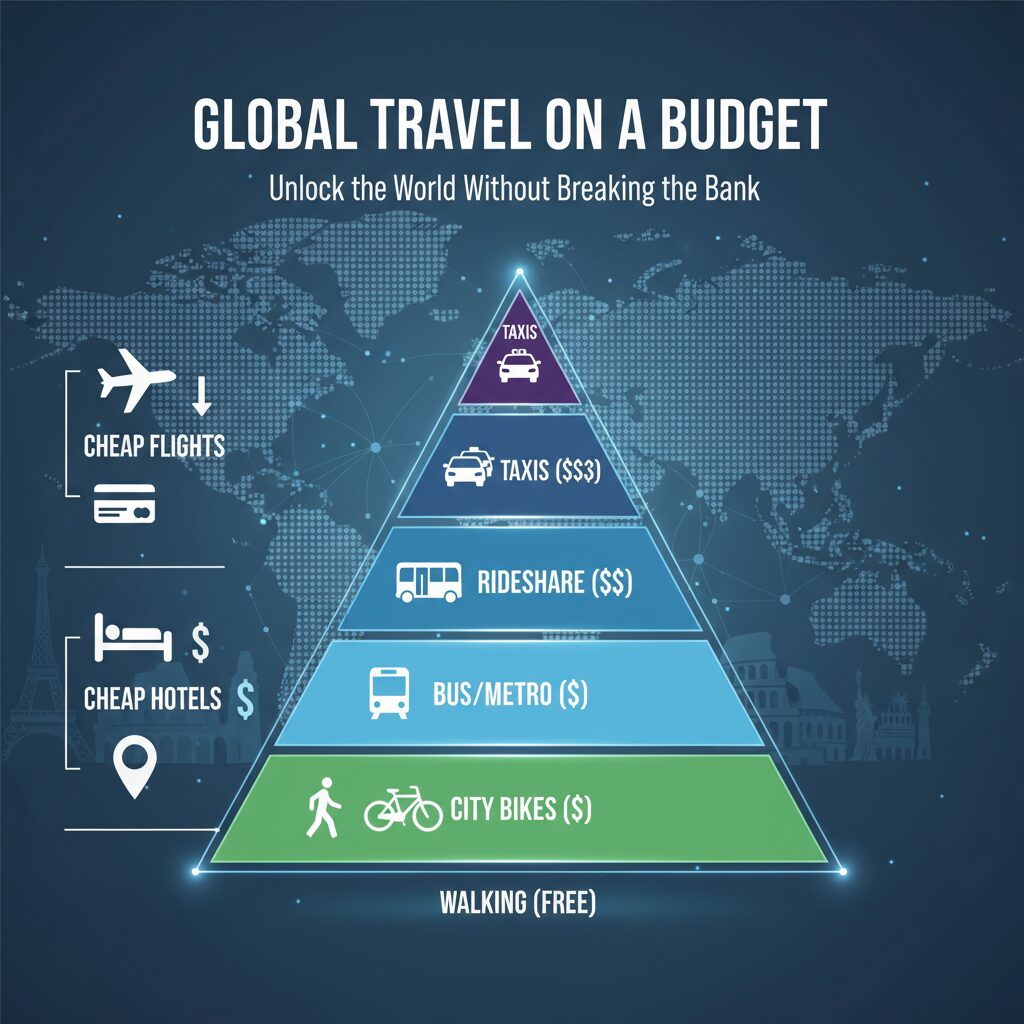
The Scooter Trap: Most scooters charge an “unlock fee” (approx $1.00) plus a per-minute fee ($0.30 – $0.45). A 20-minute ride can easily cost $7.00 to $10.00. For two people, that’s $14.00—often more expensive than an Uber.
The Bike Share Win: Local docked bike systems are almost always cheaper. In many cities, a 30-minute ride is under $4.00, or sometimes included in your transit pass.
Micromobility in Asia
If you are traveling in the Asia-Pacific region, micromobility is even more dominant. According to Precedence Research, Asia-Pacific dominates the market with 46% revenue share. In cities like Taipei or Seoul, the local bike systems are incredibly efficient and cost pennies compared to Western counterparts.
Phase 4: Rideshare Alternatives (The “Not Uber” List)
Sometimes you just need a car. Maybe it’s late, maybe it’s raining. But opening the Uber app is often the most expensive reflex you can have. While public transport costs decreased by 1.8% from 2023 to 2024, private transportation costs hit an all-time high (BTS Year-in-Review 2024).
Why Local Apps are Cheaper
Local competitors often have lower commission rates for drivers and lower fares for passengers. They understand the local market better. Here is the regional breakdown you need for 2025:
🌍 Regional Rideshare Kings
- Southeast Asia: Grab (The undisputed king) & Gojek (Indonesia/Vietnam)
- Europe: Bolt (Often 10-15% cheaper than Uber)
- Latin America: Cabify & DiDi
- USA: Lyft (Check “Wait & Save” options)
I recently tested this in Bangkok. A Grab ride was priced at 250 THB. The exact same route on Uber (which redirects to local partners in some regions) was quoted at nearly double the price through hotel concierge services. Always download the local equivalent.
Phase 5: Foot Power & Free Options
It sounds obvious, but walking is the only inflation-proof transport method. With lower-income households spending nearly 30% of their after-tax income on transportation (ITDP 2024 Report), walking is the ultimate equalizer.
Free City Circulator Buses
Many cities offer free “circulator” buses in downtown tourist areas to reduce congestion. These are often poorly advertised to tourists but well-known to locals.
- Los Angeles: The LADOT DASH buses were free through 2024 and are now only $0.50—practically free compared to an LA Uber.
- Melbourne: The City Circle Tram (Route 35) is completely free and hits most major tourist spots.
- Kuala Lumpur: The GoKL bus service offers free rides on several lines through the city center.
Research Hack: Google “[City Name] free downtown bus map” before you arrive. You will be surprised how often a free bus mimics the route of a paid Hop-On Hop-Off bus.
FAQ: Navigating Transport Like a Pro
Do I need cash for public transport in 2025?
In most major global hubs, no. Contactless payment is the standard. However, in parts of Latin America (like Buenos Aires requiring a SUBE card) or Japan (where some ticket machines still prefer cash for initial card purchase), carrying small bills is wise. But generally, your credit card is your ticket.
Is the “City Pass” worth it for transportation?
As we calculated above, only if you travel aggressively. If you take fewer than 3 rides a day, Pay-Per-Ride (especially with fare capping) is usually cheaper. Don’t pay for convenience you won’t use.
What is the safest cheap transport at night?
While buses are cheap, night schedules can be spotty. I recommend “Pool” options in rideshare apps (like UberX Share or Lyft Shared). You split the cost with a stranger, reducing the fare by up to 20-30%, and there is safety in numbers.
Conclusion: Your 2025 Transport Checklist
Finding cheap transport in a new city isn’t about being stingy; it’s about being smart. The money you save on a 20-minute taxi ride can be better spent on a local meal, a museum ticket, or saving for your next trip.
As travel costs rise—transportation remains the fourth highest household expenditure—taking control of your logistics is one of the few ways you can actively lower the cost of your adventure. Remember, bus ridership has recovered to 81% of pre-pandemic levels for a reason: it works.
Your Action Plan:
- Research Airport Transfers: Avoid the taxi line; look for the commuter train.
- Download Local Apps: Get Citymapper, Grab, or Bolt depending on your region.
- Do the Math: Use the break-even calculator before buying a 7-day pass.
- Walk the Last Mile: It’s free, healthy, and lets you see the city up close.
Travel smarter, not harder.