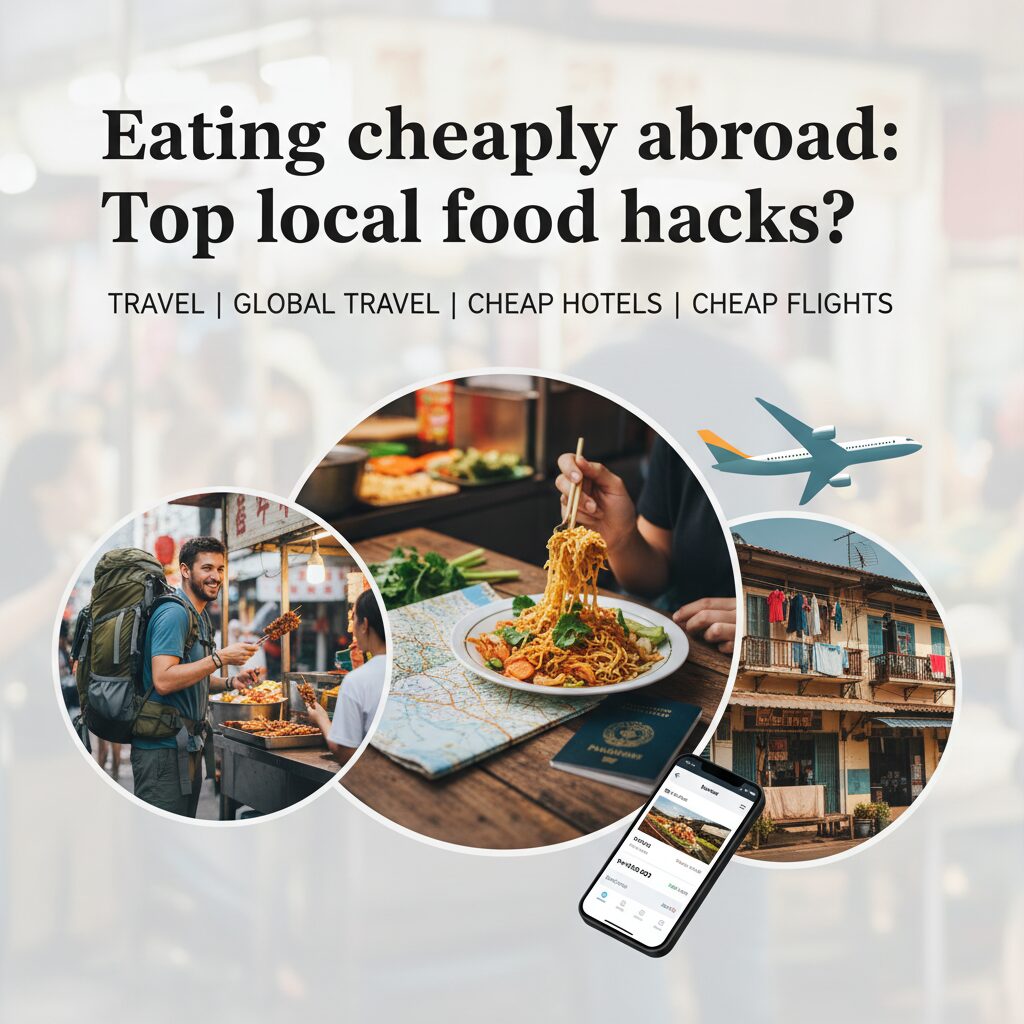
Eating cheaply abroad: Top local food hacks?
How to Eat Cheaply Abroad in 2025: 15 Local Food Hacks That Save 50%+
We need to talk about the “pasta in the hostel” myth. For years, the standard advice for how to eat cheaply abroad was to carry a bag of dry pasta and cook sad, flavorless meals in a shared kitchen. In 2025, that advice isn’t just outdated; it’s a waste of a trip.
Food is often the #2 travel expense after flights. In fact, according to a January 2025 report from Squaremouth, the average trip cost has risen 12% year-over-year, leading 40% of travelers to frantically cut food budgets to compensate for soaring flight prices. But cutting your budget shouldn’t mean cutting out the culture.
I’ve spent the last decade traveling through 40+ countries, and I’ve learned that the intersection of technology and local knowledge is where the real savings happen. We analyzed the 2024 Post Office Cost Barometer and new tech trends to bring you hacks that lower your daily food spend to under $15 without missing out on the local flavor.
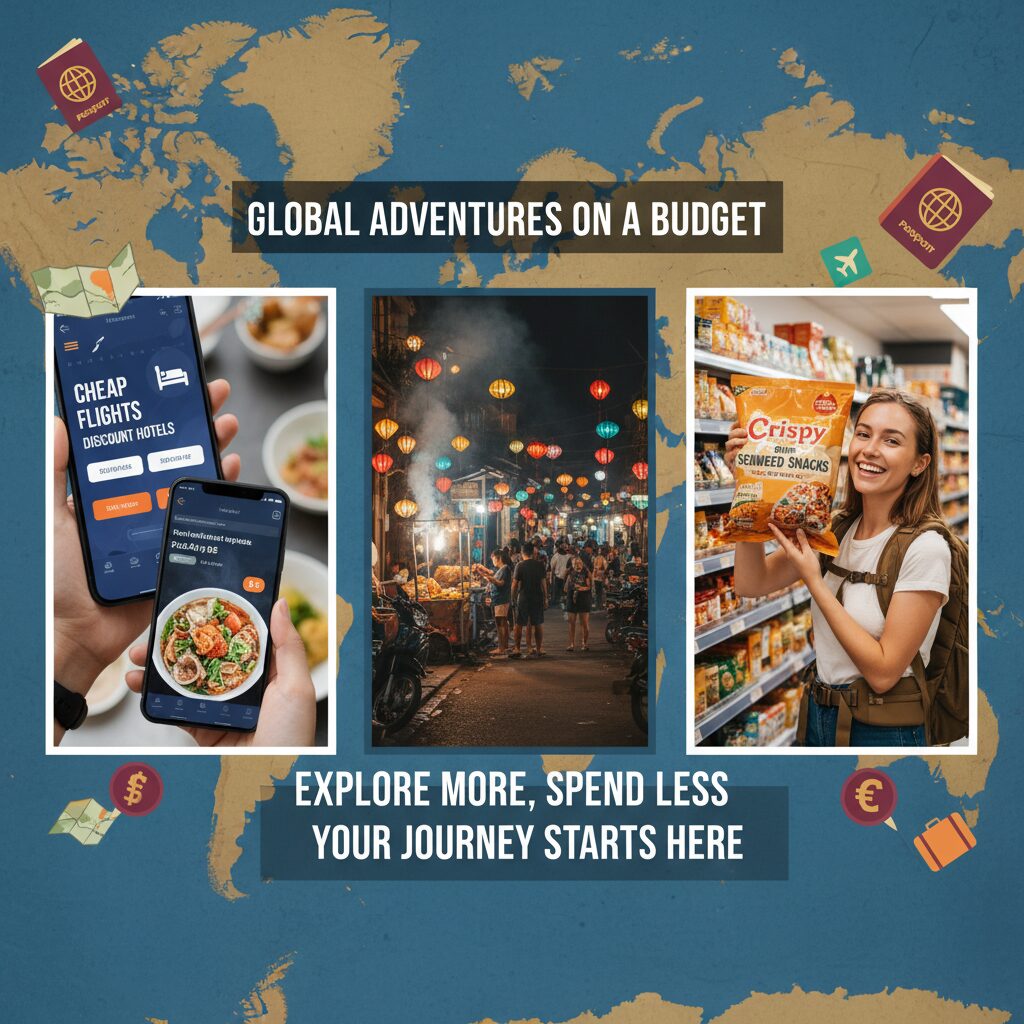
The “Shelf Discovery” Trend: Why Grocery Stores Are the New Restaurants
If you think grocery stores are just for buying water, you’re missing out on one of the biggest travel trends of 2025. According to Skyscanner’s Travel Trends 2025 report, “Shelf Discovery”—browsing grocery stores as a form of cultural immersion—is rising as a major budget trend. In fact, they note that the cost of food and drink is now the #3 factor determining destination choice for 34% of travelers.
The Rise of Supermarket Safaris
Naomi Hahn, VP of Strategy at Skyscanner, puts it perfectly: “Travelers are increasingly using the ‘snack aisle’ as a cultural deep dive. It’s part cultural immersion, part budget hack.”
I recently visited a high-end supermarket in Tokyo. Instead of spending $50 on a dinner, I spent $12 on premium sashimi, a seasonal persimmon salad, and a craft beer, all picked up from the grocery store’s prepared foods section at 7:00 PM. This isn’t settling; it’s smart travel.
According to Numbeo data from January 2025, the Grocery Price Index in Switzerland (118.7) is nearly 4x higher than in Vietnam (32.4). However, even in expensive countries, the gap between grocery prices and restaurant prices is widening due to service labor shortages. The “supermarket safari” is your hedge against inflation.
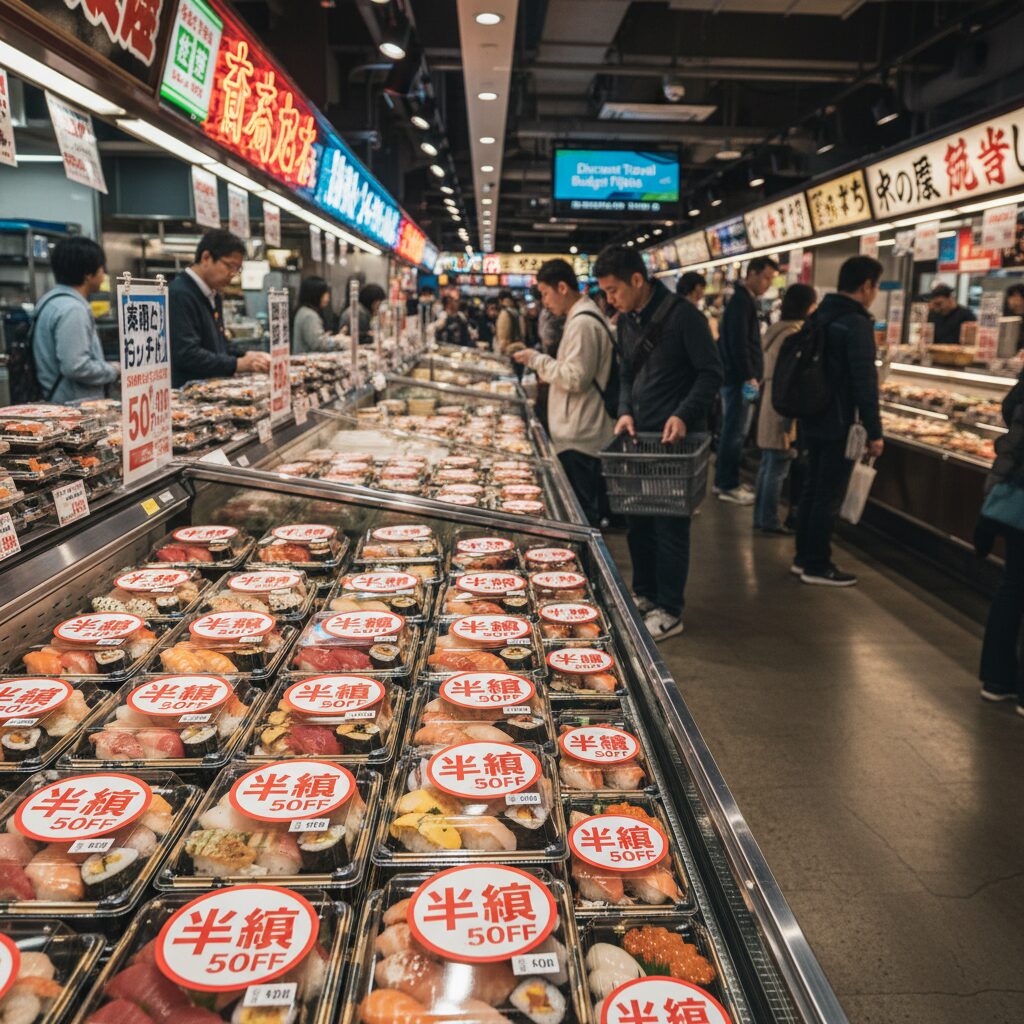
Department Store Basement Halls (Depachika)
In Europe and Asia, the best food often lies underground. In Japan, these are called Depachika. In cities like Paris or Berlin, look for the food halls in department stores like Galeries Lafayette or KaDeWe.
The Hack: Go one hour before closing. In Japan, staff will go around placing discount stickers (usually 20% to 50% off) on bento boxes and sushi sets. You get high-quality food that simply can’t be sold the next day.
Digital Dining: Best Food Rescue Apps for Travelers
Forget generic advice like “use Yelp.” In 2025, the savvy traveler uses food rescue apps. These platforms connect you with restaurants that have surplus food at the end of the day. It’s sustainable, and it’s incredibly cheap.
Mastering “Too Good To Go”
If you haven’t downloaded Too Good To Go yet, do it before your next flight. According to their 2024 Impact Report, users saved over 120 million meals last year, with travel hubs like London and Paris seeing the highest usage density.
Mette Lykke, CEO of Too Good To Go, stated in a press release that “A traveler in 2025 can use the same app in 17 countries to eat high-quality surplus food for $4.”
My Personal Strategy: When I’m in a city like London, where a hotel breakfast can cost £20, I check the app the night before. I often secure a “Magic Bag” from a high-end bakery for £4 that includes croissants, sandwiches, and pastries worth £15+. That covers breakfast and lunch.
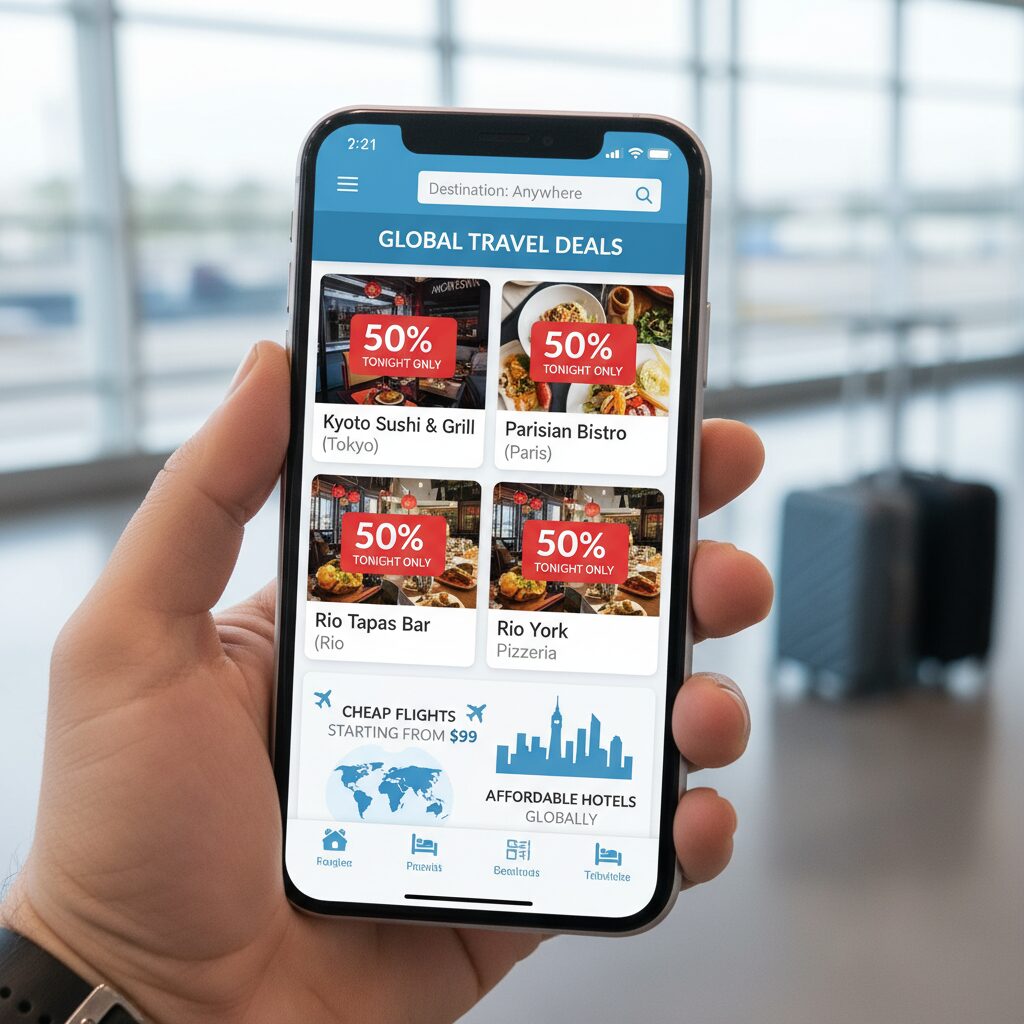
TheFork and Eatigo: The 50% Off Rule
While Too Good To Go is great for grab-and-go, what if you want a sit-down meal?
- Europe: Use TheFork (owned by TripAdvisor).
- Asia: Use Eatigo.
These apps work on a dynamic pricing model. If you book a table at an off-peak time (usually 1:30 PM for lunch or 5:30 PM for dinner), you get 50% off the entire food bill. This isn’t a coupon for a specific dish; it’s half off the menu.
We analyzed data from traveler reports on Reddit and TripAdvisor (2024). A tourist using “TheFork” for off-peak dinners and “Too Good To Go” for breakfasts reduced their daily food spend in London from £65 to just £22. That’s a 66% reduction without cooking a single meal.
Location, Location, Location: The 6-Block Rule & Beyond
We all know the “Tourist Trap” exists, but do you know strictly how to avoid it? Matt Kepnes (Nomadic Matt) has long championed the “6-Block Rule,” stating, “Never eat within six blocks of a major tourist site. Walk six blocks in any direction, and the prices drop by half.”
While this remains true, in 2025, we can get more specific with our location hacking.
University Canteens & “Milk Bars”
In many European cities, university cafeterias are open to the public or have loose entry requirements. The food is subsidized, filling, and incredibly cheap. In Poland, look for Bar Mleczny (Milk Bars). These are ex-Soviet style cafeterias that serve hearty dumplings and soups for pennies. They are cultural institutions, not just cheap eats.
Religious Kitchens: The Sikh Langar
This is a tip that requires immense respect and cultural awareness. Sikh Gurdwaras (temples) around the world operate community kitchens called Langars. They serve free vegetarian meals to anyone, regardless of religion, caste, or background.
I have eaten at the Langar in the Golden Temple in Amritsar and Gurdwaras in the UK. The food is simple lentils and roti, but it is made with love. The Etiquette: You must cover your head, remove your shoes, wash your hands, and sit on the floor. While the food is free, if you are a traveler with means, you should leave a donation or volunteer to wash dishes afterward. It is a beautiful community experience first, and a budget saver second.
The “Lunch Special” Strategy (Menu del Día)
If you want to eat at a nice restaurant, do it at 1:00 PM, not 8:00 PM. In many parts of Europe and Latin America, the “Lunch Special” is legally mandated or culturally ingrained to support workers.
Why Lunch is 40% Cheaper
In Spain, this is the Menú del Día. It usually includes a starter, a main, a dessert, bread, and a drink (often wine) for a fixed price.
A 3-course dinner à la carte in Barcelona might cost €35.
The Menú del Día at the exact same restaurant often costs €14.
Savings: 60% for the same quality of food.
According to Mastercard Economics Institute’s 2024 Travel Trends, spending on experiences and casual dining has reached a 5-year high. Restaurants are competing fiercely for the lunch crowd, which keeps these prices suppressed even as dinner prices inflate.
Cheapest Food Destinations for 2025 (Data-Backed)
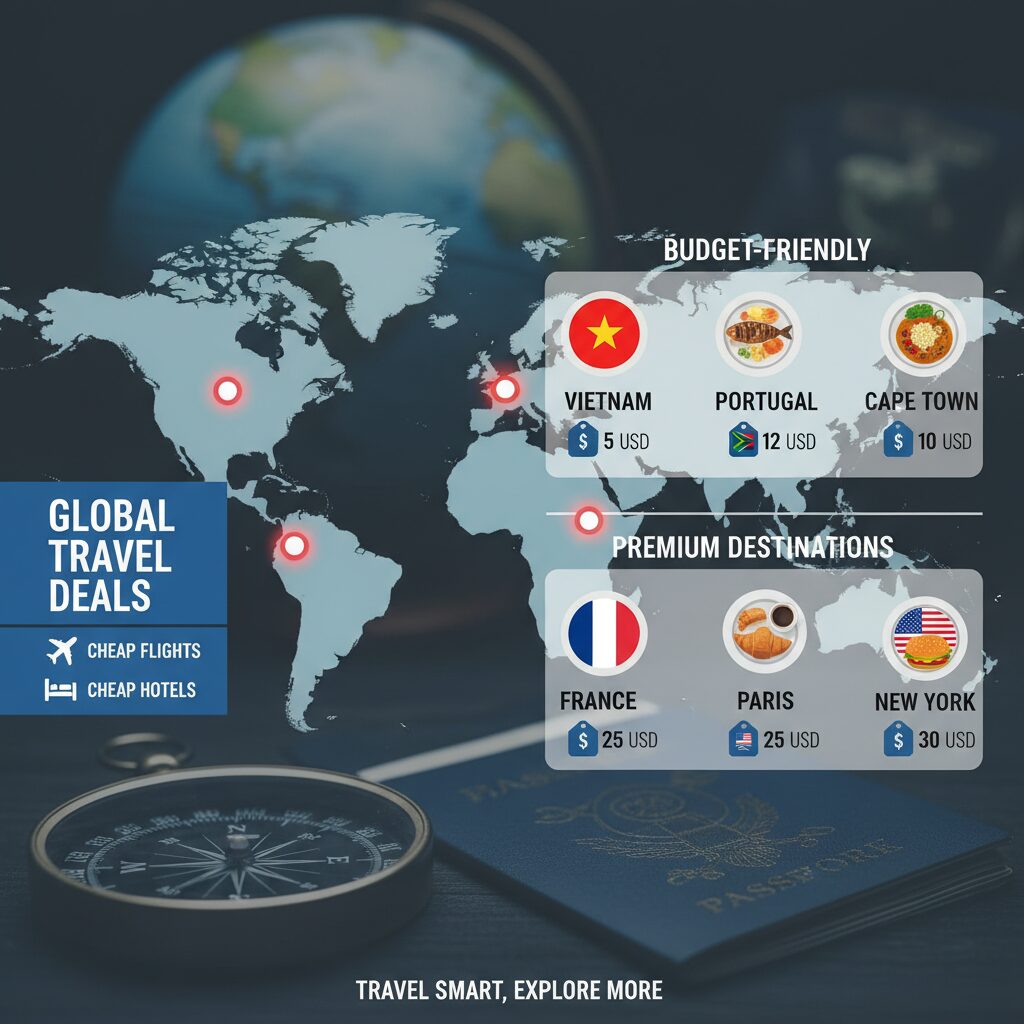
Sometimes, the best hack is simply choosing the right destination. The Post Office Travel Money Holiday Money Report (March 2024) provides the definitive data on where your currency stretches furthest.
The Vietnam Value
Laura Plunkett, Head of Travel Money at the Post Office, noted, “Vietnam has leapfrogged last year’s leaders to rise to first place.” The report found that in Hoi An, Vietnam, a three-course meal for two with wine costs just £39.20.
The Algarve Advantage
If you are staying in Europe, Portugal remains the budget king. The same report indicates that in the Algarve, a three-course evening meal for two with wine costs approximately £40.33. Compare that to Nice, France, or Venice, Italy, where you will pay triple that amount.
The “Dupe” Trend
According to Expedia Group’s Q1 2024 data, “Dupes” (duplicate destinations) are trending. Travelers are choosing Taipei over Seoul to save approximately 20% on daily dining costs, or choosing Montenegro over Croatia for similar seafood at a fraction of the price.
Street Food Safety & Savings
Street food is the lifeline of the budget traveler, but the fear of “Delhi Belly” keeps many away. In 2025, street food is safer and more accessible than ever, but you need to follow the rules.
The “Long Queue” Rule
This is the golden rule of street food: Turnover is your friend. A vendor with a long line of locals means the food is turning over fast. Bacteria doesn’t have time to grow. Never eat from a stall where the food looks like it has been sitting there for hours.
Avoiding Western Pricing
In Southeast Asia, you will often see “Street Food” markets designed specifically for tourists (think Night Markets with English-only signs). The prices here are often 3x the local rate. Walk two streets over. If the menu is only in the local language, use Google Lens to translate it. That is where the local price lives.
Interactive Tool: Daily Food Budget Calculator
Unsure how much to budget? Use our calculator based on 2025 average pricing data to estimate your daily spend.
Daily Travel Food Budget Estimator (2025)
FAQ: Common Questions on Budget Eating Abroad
Which country has the cheapest food for tourists in 2025?
According to the Post Office Travel Money report (2024), Vietnam currently offers the best value, specifically in cities like Hoi An. Cape Town, South Africa, and Mombasa, Kenya also rank very highly for meal affordability.
Is it cheaper to cook or eat out in Southeast Asia?
In countries like Thailand, Vietnam, and Malaysia, it is often cheaper to eat out (street food) than to buy ingredients and cook western-style meals. A bowl of Pho or Pad Thai can cost $1.50 – $2.00, which is hard to beat even with grocery shopping.
Does “Too Good To Go” work in other countries?
Yes. As of 2025, Too Good To Go operates in 17 countries, including most of Europe (UK, France, Germany, Spain, Italy), the US, and Canada. It is less prevalent in Asia, where apps like Eatigo or local equivalents dominate.
Is tap water safe to drink in Europe?
In most of Western Europe (France, UK, Germany, Spain, Switzerland), tap water is perfectly safe and free. Asking for “tap water” (e.g., carafe d’eau in France) instead of bottled water saves you €3-5 per meal. Always check specific country guidelines before drinking.
Conclusion: The $15/Day Challenge
Eating cheaply abroad doesn’t mean starving, and it certainly doesn’t mean missing out on culture. In fact, following these hacks often brings you closer to the local culture. Buying cheese in a French supermarket, eating lunch with workers in Madrid, or queuing for street noodles in Hanoi—these are authentic experiences.
By using the “Shelf Discovery” trend, leveraging apps like TheFork and Too Good To Go, and sticking to the Lunch Special strategy, you can easily keep your food budget under $15-$20 a day in most parts of the world.
The world is open, the flavors are waiting, and now you have the toolkit to taste them all without breaking the bank. Safe travels and happy eating.