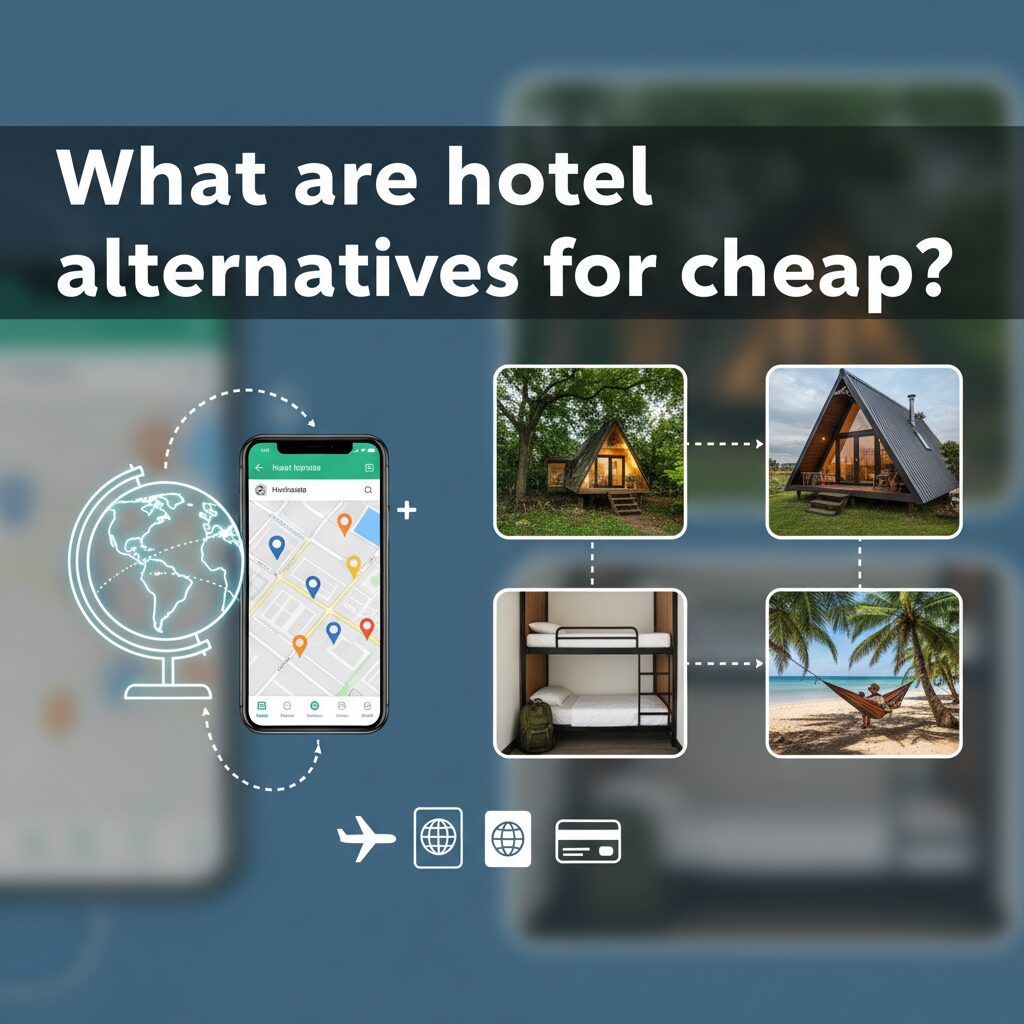
What are hotel alternatives for cheap?
15 Cheap Hotel Alternatives That Save You 50%+ in 2025 (Ranked)
Let’s be real: looking at hotel prices lately feels like a punch to the gut. In major cities like New York, London, or Tokyo, the “standard” rate for a mediocre room has surged well past $150 a night. If you’re planning a two-week trip, you’re looking at dropping two grand just for a bed to sleep in. That’s not a vacation; that’s a financial burden.
I’ve been traveling professionally for over a decade, and I’ve watched the landscape shift. We are now in the era of “Hybrid Travel.” Accommodation isn’t just a utility anymore—it’s part of the experience. But more importantly, the smartest travelers in 2025 aren’t paying hotel rates. They are leveraging the sharing economy, academic resources, and social networks to stay for a fraction of the cost—or sometimes, for free.
In this guide, I’m cutting through the fluff. I’m not just giving you a list of websites; I’m breaking down the verified, data-backed alternatives that are actually working right now. From luxury house sitting to monastery stays, here is your roadmap to dodging inflation.

The “Free” Economy: Stay for $0 (Service-Based)
The “Holy Grail” of travel is keeping your accommodation cost at zero. This requires a shift in mindset: you are trading value (care, trust, or assets) instead of cash.
1. House & Pet Sitting: The Luxury Exchange
If you love animals, this is arguably the highest-value travel hack in existence. Platforms like TrustedHousesitters connect travelers with homeowners who need someone to watch their pets while they are away. You stay in their home (often fully equipped houses, not small apartments) for free in exchange for feeding the cat or walking the dog.
📊 The 2024 Surge
This isn’t a fringe movement anymore. According to the TrustedHousesitters Impact Report 2024, the platform welcomed 77,244 new pets in 2024 alone, bringing their community to over 234,000 pets. That is a massive inventory of potential free stays.
The Catch (and the Math): It’s not technically free to start. You usually pay an annual membership fee (around $129-$160). However, think about the math. If you stay just one night in a decent city, you’ve paid off the membership. I’ve personally used this to stay in a London townhouse for two weeks—a stay that would have cost me $3,000 in a hotel—for the cost of a yearly subscription.
2. Home Swapping: “You Stay in Mine, I Stay in Yours”
Perfect for families who need kitchens and multiple bedrooms. Sites like HomeExchange operate on a reciprocal basis. You can do a simultaneous swap (I go to your house while you come to mine) or use a “points” system to stay later.
In my opinion, this is the most underutilized tool for families. You get a whole house, toys for the kids, and a local’s guide to the neighborhood.
— Jessica Poillucci, PR Manager at HomeExchange (Source: PhocusWire Interview, May 2024)
According to a HomeExchange Press Release from Dec 2024, the platform officially reached 200,000 active members worldwide, an increase of 35% in just one year. The inventory is there; you just need to list your own place.
3. Couchsurfing 2.0: Is it Dead?
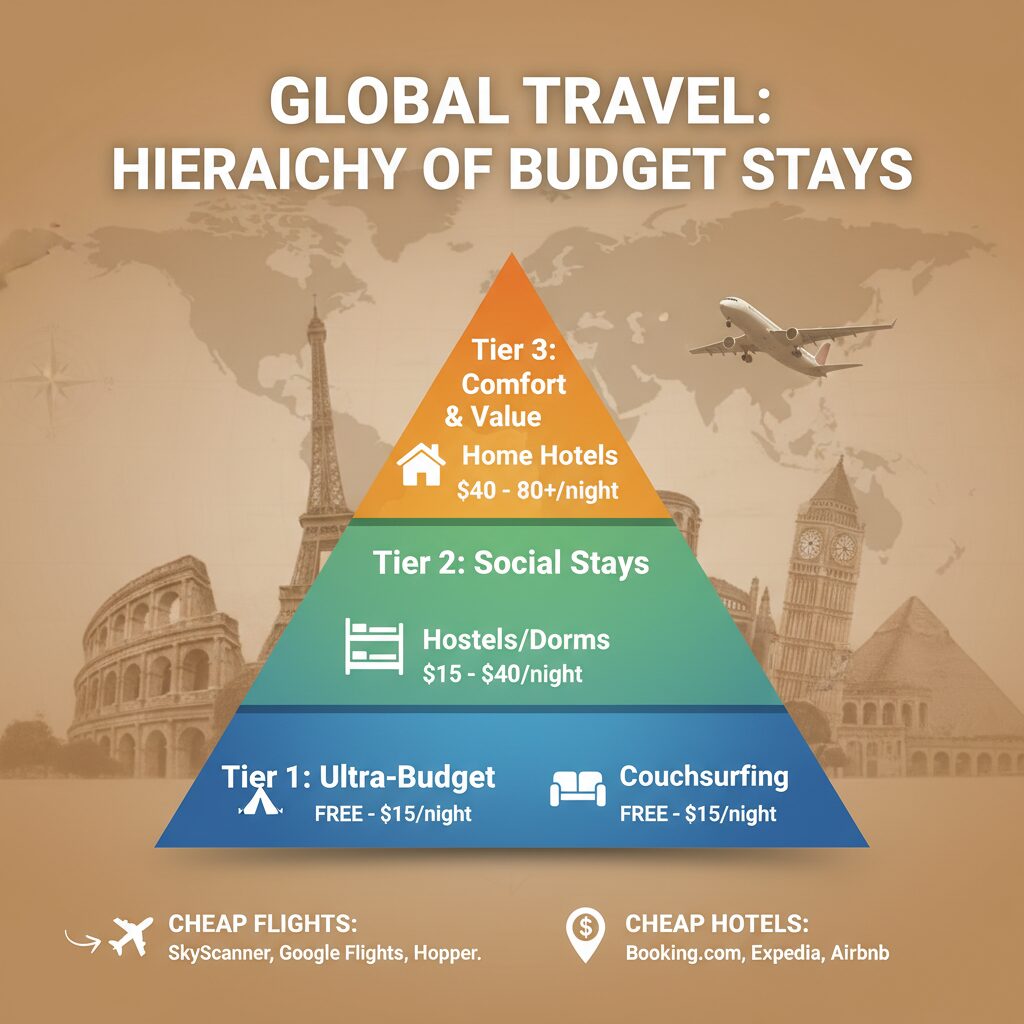
Many blogs will tell you Couchsurfing is dead. It’s not, but it has changed. It is no longer purely free in many regions; there is a small monthly contribution required to verify your identity. This has actually improved safety by weeding out inactive or fake profiles.
Safety Note: For solo female travelers, I always recommend looking for hosts with “Ambassador” badges and reading references specifically from other women. It remains the best way to meet locals, but for 2025, I rank it below house sitting for comfort.
The “Social” Economy: Low Cost & High Connection
If you are willing to pay a little to gain a community, the social economy is where the industry is pivoting. We are seeing a massive rise in “Bleisure” (Business + Leisure) travel.
4. Poshtels (Luxury Hostels)
Forget the dirty, crowded dorms of the early 2000s. The “Poshtel” movement has taken over. Chains like Generator and Selina offer boutique hotel designs, coworking spaces, and yoga classes, often for $40-$60 a night.
Data from Hostelworld’s Preliminary Results 2024 indicates a massive shift, noting that 80% of all bookings in 2024 were made by “Social Members.” This proves travelers are choosing hostels specifically for the community aspect, not just the price tag.
Most modern hostels offer private rooms with ensuite bathrooms. You get the privacy of a hotel room but the social vibe (and bar prices) of a hostel, usually for 30% less than a standard hotel nearby.
5. Co-Living Spaces for Digital Nomads
Companies like Outsite provide accommodation specifically for remote workers. You aren’t just renting a bed; you’re renting a lifestyle with reliable high-speed Wi-Fi and networking events.
— Chris Nassetta, CEO of Hilton (Source: Hilton 2025 Trends Reveal)

The “Hidden Gem” Economy: Unique Fixed-Rate Stays
These are the options that usually don’t appear on Expedia or Booking.com, which is exactly why they remain cheap.
6. University Dorms (Academic Housing)
When students go home for the summer, universities don’t let those rooms sit empty. Sites like UniversityRooms.com allow you to book campus accommodation. I’ve stayed in Oxford University colleges for a fraction of the price of a local B&B. It’s safe, central, and often historic.
7. Religious Housing (Monasteries & Convents)
You do not need to be religious to stay here. MonasteryStays operates throughout Europe (especially Italy). The rooms are simple, clean, and incredibly cheap. The only catch is usually a curfew (often around 10 or 11 PM).
This aligns perfectly with the “MeMooner” trend. According to the Hilton 2025 Trends Report, 64% of solo travelers prefer traveling with a book, seeking quiet and reflection. A monastery is the ultimate “MeMooner” destination.
8. Agri-Tourism & Farm Stays
If you’re willing to get your hands dirty, WWOOF (World Wide Opportunities on Organic Farms) offers food and board in exchange for labor. If you prefer not to work, many farms offer “Agriturismo” stays (especially in Tuscany and Provence) where you pay a fixed, low rate to stay on a working farm.
The “Rental” Economy: Beyond Airbnb
9. Why Airbnb is No Longer the “Cheap” Option
I need to be honest with you: Airbnb is rarely the cheapest option for short stays in 2025. Between cleaning fees and service charges, a $100/night listing often becomes $180 at checkout.
10. Direct Booking & Local Platforms
To save money on rentals, look for local equivalents. In France, use Gites de France. In the UK, look for Holiday Cottages. By bypassing the global giants, you often find lower rates and speak directly to owners.
This is crucial for the “Frolleague” trend. The Hilton 2025 Trends Report notes that nearly 30% of global travelers now travel with “Frolleagues” (friends who are colleagues). These groups need shared kitchens and living spaces that hotels simply can’t provide.
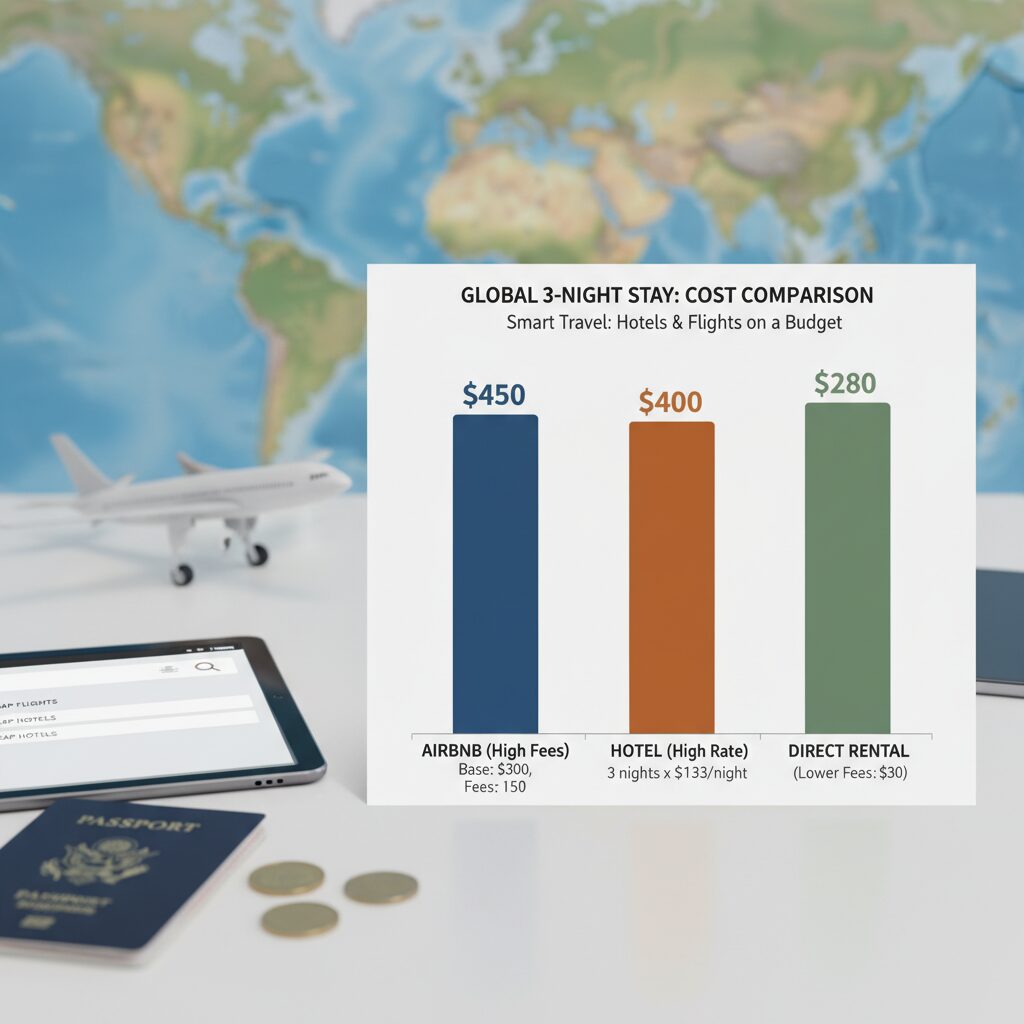
2025 Travel Trends: Specialized Budget Stays
11. Capsule Hotels & Pods
Once a Japanese novelty, capsule hotels are going global. They are perfect for the solo traveler who just needs a bed and a shower.
The demand is real. According to Booking.com’s Travel Predictions 2025, 38% of Millennials and 34% of Gen Z are specifically interested in airport sleep pods as a hotel alternative. They prioritize efficiency and cost over square footage.
12. “Noctourism” Escapes
As global temperatures rise, travelers are shifting to night-time activities—a trend Booking.com calls “Noctourism.” This impacts accommodation; travelers are looking for cheaper, simpler places to sleep during the day (with blackout curtains and AC) so they can explore at night. Budget pods and basement rentals are seeing a surge here.
Comparison Matrix: Choosing Your Alternative
| Alternative | Cost Factor | Comfort Level | Social Level | Best For |
|---|---|---|---|---|
| House Sitting | Free (w/ annual fee) | ⭐⭐⭐⭐⭐ | ⭐ | Pet lovers, Long stays |
| Home Swap | Low (Membership) | ⭐⭐⭐⭐⭐ | ⭐⭐ | Families, Homeowners |
| Poshtels | $$ | ⭐⭐⭐ | ⭐⭐⭐⭐⭐ | Solo travelers, Extroverts |
| University Dorms | $$ | ⭐⭐ | ⭐⭐ | Summer travel, History buffs |
| Monasteries | $ | ⭐⭐ | ⭐ | Quiet seekers, Solo females |
FAQ: Your Wallet-Friendly Stay Questions Answered
What is cheaper than a hotel?
The cheapest verified alternatives are House Sitting (TrustedHousesitters) and Home Swapping (HomeExchange). For paid options, hostels, university dorms (in summer), and religious guest houses generally cost 50-70% less than standard hotels.
Is house swapping safe?
Yes, major platforms use verification systems, deposit guarantees, and insurance. Because it is a reciprocal arrangement (“I stay in yours, you stay in mine”), there is a mutual destruction assurance—both parties are highly motivated to treat the other’s home with respect.
How do I find house sitting jobs with no experience?
Start local. Do a few weekend sits for friends or neighbors to get written references. Build a complete profile with photos showing you with animals. When applying on platforms, write personalized messages to the homeowner—don’t copy-paste.
What is the best app for cheap accommodation in 2025?
For free stays, TrustedHousesitters dominates the market. For cheap bookings, Hostelworld is essential for solo travelers, while Booking.com remains strong for finding guest houses and apartments.
Conclusion
The days of defaulting to a generic hotel chain are over. The data from 2024 and 2025 is clear: travelers are prioritizing connection, uniqueness, and value over cookie-cutter luxury.
Whether you choose to care for a cat in Paris to stay for free, swap your suburban home for a city loft, or book a private room in a high-end hostel, the options are vast. The biggest barrier isn’t price—it’s the willingness to try something new.
My advice? Start with one. Download one app, browse the listings, and calculate the savings for your next trip. You’ll likely find that the alternative isn’t just cheaper—it’s better.